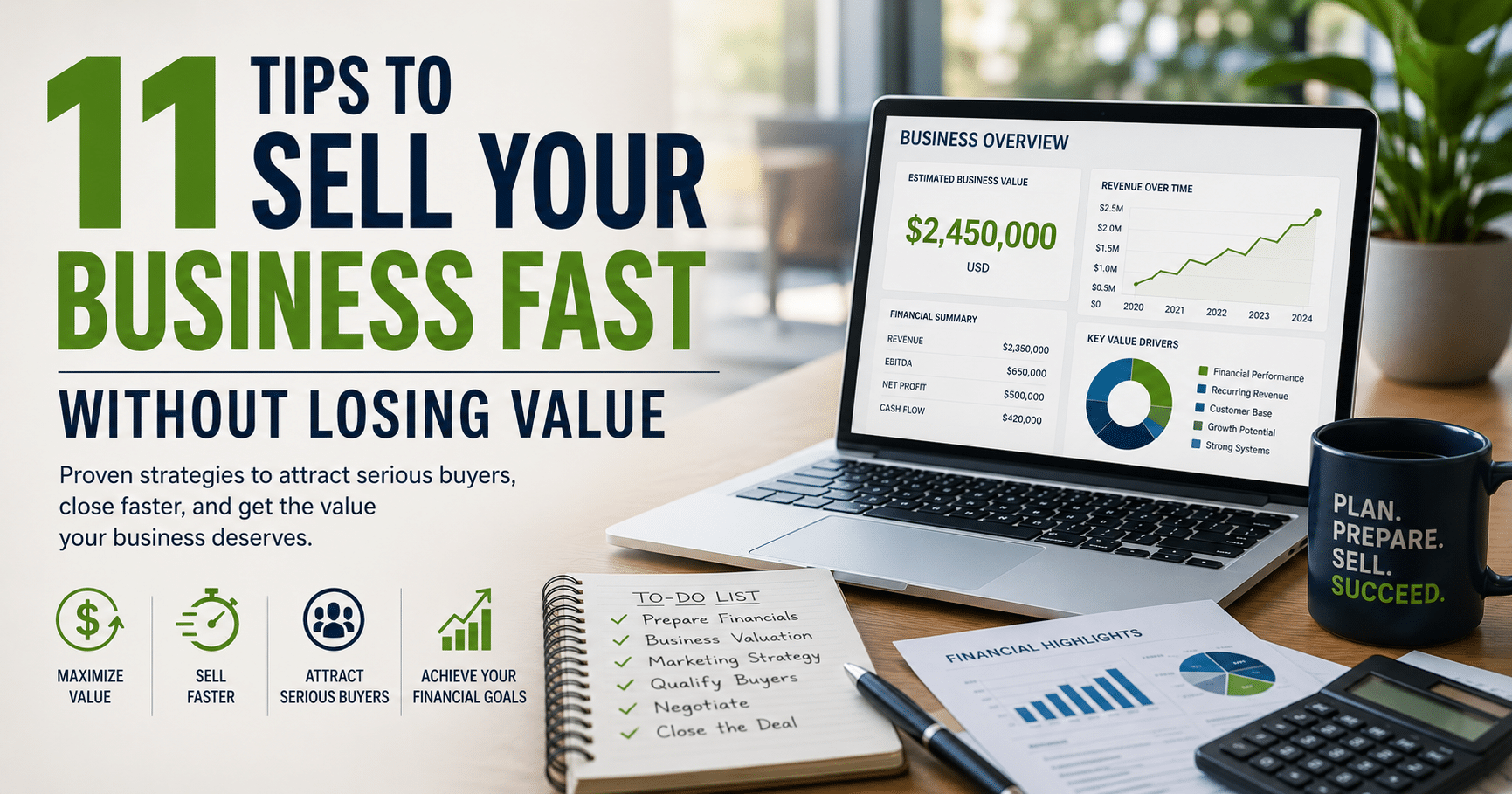
If you want to sell your business fast, preparation is far more important than rushing the process. Many business owners assume that accepting the first offer is the quickest path to closing a deal, but that approach often results in leaving money on the table.
The businesses that sell quickly usually have something in common: they’re properly valued, financially organized, and marketed to qualified buyers. Whether you’re retiring, pursuing a new opportunity, or simply ready for a change, having a clear strategy can help you attract serious buyers while protecting the value you’ve worked hard to build.
In this guide, you’ll learn 11 practical tips to sell your business fast without sacrificing its worth.
How to Sell Your Business Fast
If you’re looking for the fastest way to sell your business, focus on these essentials:
- Organize your financial records.
- Get a professional business valuation.
- Prepare buyer-ready documentation.
- Market your business to qualified buyers.
- Respond quickly to inquiries.
- Stay flexible during negotiations.
A well-prepared business often sells faster and commands stronger offers than one rushed to market.
Why Selling Fast Doesn’t Mean Selling Cheap
Many owners believe that speed and value can’t go together. In reality, businesses that sell quickly are often those that inspire buyer confidence from the start.
When financial statements are accurate, operations are documented, and the asking price reflects market value, buyers spend less time questioning the opportunity and more time moving toward an offer. Preparation shortens negotiations and helps prevent unnecessary delays during due diligence.
1. Organize Your Financial Records
Serious buyers want clear financial information before making an offer. Disorganized records can delay negotiations or cause buyers to lose confidence.
Before listing your business, prepare:
- Profit and loss statements
- Balance sheets
- Cash flow statements
- Tax returns from the last three years
- Accounts receivable reports
- Accounts payable reports
Clean, accurate financials make due diligence faster and demonstrate that your business is professionally managed.
2. Know What Your Business Is Worth
One of the biggest reasons businesses remain on the market is unrealistic pricing.
Some owners overvalue their company because of emotional attachment, while others price too low in hopes of generating quick interest. Neither approach leads to the best outcome.
A professional business valuation helps you:
- Set a competitive asking price
- Support negotiations with objective data
- Build buyer confidence
- Reduce pricing disputes
- Avoid undervaluing your business
A realistic valuation increases your chances of attracting qualified buyers early in the sales process.
3. Showcase Your Business’s Value
Buyers don’t just purchase revenue—they invest in future potential.
Highlight the strengths that make your business attractive, such as:
- Recurring revenue
- Strong profit margins
- Loyal customers
- Long-term contracts
- Diversified customer base
- Experienced employees
- Efficient operating systems
- Growth opportunities
Instead of simply describing your business, demonstrate why it’s a valuable investment.
4. Prepare a Professional Sales Package
Providing buyers with organized information upfront reduces uncertainty and speeds up decision-making.
Your sales package should include:
- Executive summary
- Business history
- Financial highlights
- Customer overview
- Employee information
- Equipment and assets
- Growth opportunities
- Transition plan
A comprehensive information package allows buyers to evaluate the opportunity more efficiently while minimizing back-and-forth communication.
5. Market to Qualified Buyers
Listing your business in the right places can significantly reduce the time it takes to find a buyer.
Consider advertising on reputable business-for-sale marketplaces and industry-specific platforms where buyers actively search for acquisition opportunities.
Your listing should clearly explain:
- Business overview
- Revenue and profitability
- Industry
- Reason for selling
- Growth potential
- Asking price (when appropriate)
A professionally written listing generates higher-quality inquiries than vague or incomplete descriptions.
6. Use Your Professional Network
Not every buyer comes through an online listing.
Many successful business sales happen through referrals from trusted professionals.
Consider informing your:
- Accountant
- Attorney
- Financial advisor
- Industry contacts
- Vendors
- Business associates
Someone within your network may already know a qualified buyer looking for an opportunity like yours.
7. Protect Confidential Information
Selling a business requires sharing sensitive information, but that doesn’t mean every interested party should receive unrestricted access.
Require prospective buyers to sign a Non-Disclosure Agreement (NDA) before sharing confidential documents such as:
- Customer lists
- Supplier agreements
- Financial statements
- Employee information
- Operating procedures
Qualified buyers expect confidentiality requirements and are generally willing to sign an NDA before reviewing detailed business information.
8. Respond Quickly to Buyer Inquiries
Speed matters throughout the sales process.
Prompt communication shows professionalism and keeps interested buyers engaged.
Aim to:
- Reply within 24 hours
- Schedule meetings promptly
- Provide requested documents quickly
- Answer questions thoroughly
- Maintain consistent communication
Delayed responses often cause buyers to pursue competing opportunities.
9. Consider Seller Financing
Seller financing can make your business more attractive by expanding the pool of potential buyers.
Benefits may include:
- Faster negotiations
- More qualified buyers
- Higher selling prices
- Increased buyer confidence
If you’re considering this option, consult your attorney or financial advisor to determine whether it aligns with your financial goals and risk tolerance.
10. Work With Experienced Professionals
Selling a business involves more than finding a buyer. Contracts, due diligence, tax planning, and negotiations all require careful attention.
Depending on your situation, you may benefit from working with:
- Business attorneys
- Certified public accountants
- Business valuation professionals
- M&A advisors
- Tax professionals
Professional guidance helps reduce costly mistakes and keeps the transaction moving toward a successful closing.
11. Stay Flexible During Negotiations
The fastest transactions usually involve reasonable compromise.
While you shouldn’t accept an offer below your business’s value, flexibility in certain areas can help move negotiations forward.
You may be able to negotiate:
- Closing timelines
- Transition assistance
- Training periods
- Payment structures
- Seller support after closing
Knowing where you’re willing to compromise helps prevent unnecessary delays while protecting your overall objectives.
Common Mistakes That Slow Down a Business Sale
Even profitable businesses can sit on the market when owners make avoidable mistakes.
Some of the most common include:
- Setting an unrealistic asking price
- Poor financial documentation
- Waiting too long to respond to buyers
- Sharing confidential information without an NDA
- Failing to qualify prospective buyers
- Relying on a single marketing channel
Avoiding these issues can significantly improve your chances of selling your business quickly.
Frequently Asked Questions
What is the fastest way to sell a business?
The fastest way to sell your business is to prepare your financial records, obtain a professional valuation, create a complete sales package, and market your business to qualified buyers. Businesses that are well-prepared generally attract stronger offers and close faster.
How long does it take to sell a business?
Most small businesses sell within six to twelve months. However, businesses with realistic pricing, organized documentation, and strong financial performance may sell considerably faster.
Should I get a business valuation before selling?
Yes. A professional valuation provides an objective estimate of your business’s worth, supports negotiations, and helps establish a competitive asking price.
Can I sell my business without a broker?
Yes. Many business owners successfully sell independently by using reputable business marketplaces, working with attorneys, and obtaining professional valuation services. Complex transactions, however, may benefit from guidance from an experienced M&A advisor or business broker.
What makes a business sell faster?
Businesses with recurring revenue, clean financial records, diversified customers, documented operating procedures, and realistic pricing typically attract more qualified buyers and move through the sales process more efficiently.
Ready to Sell Your Business Fast?
Selling your business quickly doesn’t mean accepting less than it’s worth. It means preparing your company so buyers can move confidently through the purchasing process.
By organizing your financials, understanding your business’s value, marketing to qualified buyers, and working with experienced professionals, you can reduce delays while maximizing your final sale price.
Whether you’re planning your retirement, exploring new opportunities, or preparing for your next venture, a strategic approach will help you sell your business fast without sacrificing the value you’ve spent years building.
If you’re ready to take the next step, start with a professional business valuation and a clear exit strategy. The better prepared you are before listing your business, the faster and more successful your sale is likely to be.