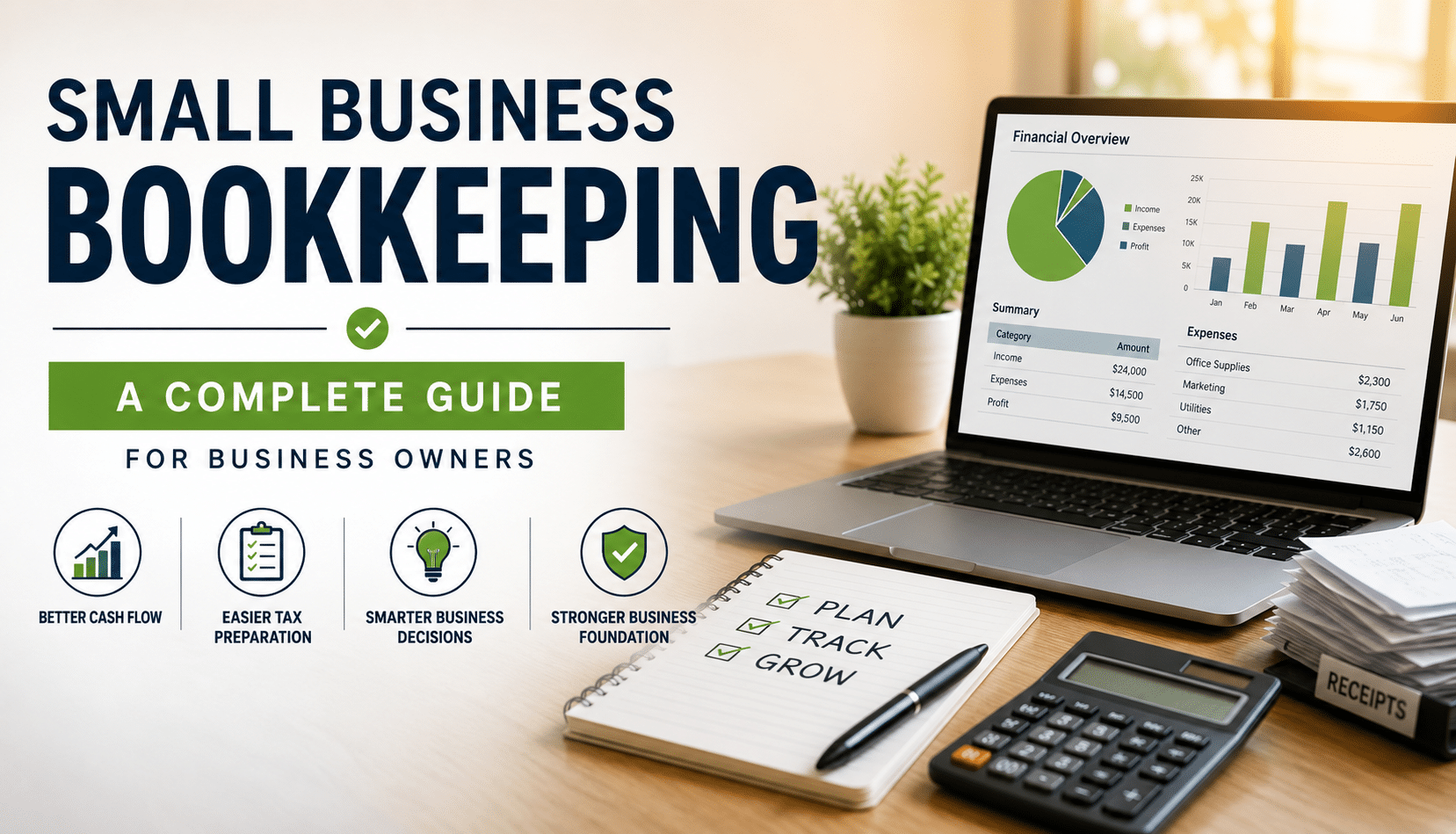
Running a successful business isn’t just about making sales—it’s about knowing where your money comes from and where it goes. Whether you’re launching a startup or managing an established company, small business bookkeeping is one of the most important financial practices you can implement.
Accurate bookkeeping helps you understand your company’s financial health, prepare for tax season, improve cash flow, and make informed business decisions. It also makes your business more attractive to lenders, investors, and potential buyers if you ever decide to sell.
In this guide, we’ll explain everything you need to know about small business bookkeeping, including best practices, common mistakes to avoid, and how good financial records can support long-term growth.
What Is Small Business Bookkeeping?
Small business bookkeeping is the process of recording, organizing, and maintaining a company’s financial transactions. Every sale, expense, payment, invoice, and bank transaction should be accurately documented.
Bookkeeping provides the financial data needed to create reports such as:
- Profit and Loss Statement
- Balance Sheet
- Cash Flow Statement
- Accounts Receivable Reports
- Accounts Payable Reports
Unlike accounting, which focuses on analyzing financial information and preparing tax returns, bookkeeping focuses on recording daily financial activity accurately.
Why Small Business Bookkeeping Matters
Many business owners only think about bookkeeping during tax season. Unfortunately, waiting until the last minute often leads to missing records, inaccurate reports, and unnecessary stress.
Proper bookkeeping provides several benefits.
Better Cash Flow Management
Cash flow is one of the biggest reasons small businesses struggle. Bookkeeping helps you monitor incoming revenue and outgoing expenses so you always know how much cash is available.
When your records are current, you can identify slow-paying customers, unnecessary expenses, and seasonal fluctuations before they become major problems.
Easier Tax Preparation
Accurate bookkeeping simplifies tax filing because your financial information is already organized.
Instead of searching for receipts and invoices at the end of the year, you’ll already have categorized income and expenses ready for your accountant or tax software.
This also reduces the risk of:
- Missed deductions
- Filing errors
- IRS penalties
- Late tax payments
Smarter Business Decisions
Financial reports help answer important questions, including:
- Which products generate the most profit?
- Are expenses increasing?
- Can the business afford to hire another employee?
- Is it time to expand?
Without reliable bookkeeping, these decisions become educated guesses instead of informed business strategies.
Improved Business Valuation
If you eventually decide to sell your business, buyers will expect organized financial records.
Incomplete bookkeeping often delays due diligence and may reduce your company’s value because buyers perceive additional risk.
Clean books demonstrate that your business is professionally managed and financially stable.
What Does a Small Business Bookkeeper Do?
A bookkeeper performs several important financial tasks that keep your records accurate and current.
Typical responsibilities include:
- Recording daily transactions
- Managing invoices
- Tracking expenses
- Reconciling bank accounts
- Monitoring accounts receivable
- Tracking accounts payable
- Maintaining payroll records
- Preparing monthly financial reports
- Organizing receipts and supporting documents
These records become the foundation for accounting, tax preparation, budgeting, and financial planning.
Essential Bookkeeping Tasks
Record Every Transaction
Every financial transaction should be recorded, including:
- Sales
- Vendor payments
- Customer refunds
- Loan payments
- Business purchases
- Credit card transactions
Missing transactions create inaccurate financial statements.
Track Business Expenses
Keeping detailed expense records allows you to monitor spending while maximizing tax deductions.
Common business expenses include:
- Office supplies
- Utilities
- Software subscriptions
- Marketing
- Insurance
- Professional services
- Travel expenses
- Equipment purchases
Reconcile Bank Accounts
Bank reconciliation compares your bookkeeping records against your bank statements.
This process helps identify:
- Duplicate transactions
- Missing deposits
- Bank errors
- Unauthorized charges
Monthly reconciliation improves accuracy and prevents larger financial issues.
Organize Receipts
Digital receipt storage has become much easier with bookkeeping software.
Keeping receipts organized supports:
- Tax deductions
- Expense verification
- Financial audits
- Warranty claims
Manage Accounts Receivable
Late customer payments hurt cash flow.
Monitor outstanding invoices regularly by:
- Sending invoices promptly
- Following up on overdue balances
- Offering convenient payment methods
- Reviewing aging reports
Manage Accounts Payable
Paying bills on time helps maintain positive supplier relationships while avoiding late fees.
Track:
- Due dates
- Vendor balances
- Payment history
- Recurring bills
Single-Entry vs. Double-Entry Bookkeeping
There are two common bookkeeping systems.
Single-Entry Bookkeeping
Single-entry bookkeeping records each transaction once.
It works well for:
- Freelancers
- Sole proprietors
- Very small businesses
Advantages:
- Simple
- Easy to maintain
- Lower learning curve
Disadvantages:
- Limited reporting
- Higher risk of errors
Double-Entry Bookkeeping
Double-entry bookkeeping records every transaction twice:
- One debit
- One credit
This method produces more accurate financial statements and is the preferred system for most growing businesses.
Advantages include:
- Better accuracy
- Detailed financial reporting
- Easier error detection
- Improved financial analysis
DIY Bookkeeping vs. Hiring a Professional
Many entrepreneurs begin by managing their own books.
DIY bookkeeping can save money if your finances are relatively simple.
However, as your business grows, bookkeeping often becomes more time-consuming.
Hiring a professional bookkeeper may be worthwhile if:
- Transactions increase significantly
- Payroll becomes more complex
- Inventory management is required
- Financial reporting becomes more important
- You’re preparing to seek financing or sell the business
Professional bookkeeping allows owners to focus on growing the business rather than managing spreadsheets.
Best Bookkeeping Software for Small Businesses
Modern bookkeeping software automates many repetitive tasks.
Popular options include:
- QuickBooks Online
- Xero
- FreshBooks
- Wave Accounting
- Zoho Books
These platforms can automatically import bank transactions, generate invoices, reconcile accounts, and create financial reports.
When choosing software, consider:
- Ease of use
- Pricing
- Integrations
- Reporting features
- Scalability
Common Bookkeeping Mistakes
Many small businesses make avoidable bookkeeping errors.
The most common include:
Mixing Personal and Business Finances
Always maintain separate business bank accounts and credit cards.
Combining personal and business expenses creates confusion and tax complications.
Falling Behind
Waiting several months before updating financial records often leads to missing information.
Set aside time every week to update your books.
Ignoring Bank Reconciliation
Unreconciled accounts can hide errors, duplicate transactions, or fraudulent activity.
Monthly reconciliation should become part of your regular routine.
Poor Expense Categorization
Incorrectly categorized expenses can produce misleading financial reports and inaccurate tax filings.
Maintain consistent categories throughout the year.
Losing Receipts
Receipts support tax deductions and verify business expenses.
Use cloud storage or bookkeeping software to store digital copies.
Best Practices for Small Business Bookkeeping
Successful business owners often follow these habits:
- Separate business and personal finances.
- Update bookkeeping weekly.
- Automate recurring transactions when possible.
- Back up financial records securely.
- Review monthly financial statements.
- Monitor cash flow regularly.
- Keep detailed documentation for every transaction.
- Work with a qualified accountant for tax planning.
Consistency is more important than perfection.
How Good Bookkeeping Increases Business Value
If your long-term goal is to sell your business, bookkeeping plays a critical role in maximizing value.
Potential buyers want confidence that financial information is accurate and complete.
Well-maintained books help:
- Speed up due diligence
- Build buyer trust
- Support higher business valuations
- Reduce unexpected financial surprises
- Demonstrate operational stability
Businesses with organized financial records are generally easier to evaluate and more attractive to qualified buyers.
Frequently Asked Questions
What is small business bookkeeping?
Small business bookkeeping is the process of recording and organizing a company’s financial transactions to maintain accurate financial records.
Can I do my own bookkeeping?
Yes. Many small business owners manage their own bookkeeping using accounting software, especially during the early stages of their business.
How often should bookkeeping be updated?
Weekly bookkeeping is recommended to keep financial records current and identify issues before they become significant problems.
What’s the difference between bookkeeping and accounting?
Bookkeeping focuses on recording financial transactions, while accounting analyzes financial data, prepares tax returns, and provides strategic financial advice.
Which bookkeeping software is best?
The best software depends on your needs. Popular choices include QuickBooks Online, Xero, FreshBooks, Wave Accounting, and Zoho Books.
Final Thoughts
Effective small business bookkeeping is more than an administrative task—it’s a key part of running a healthy, profitable business. Organized financial records help you manage cash flow, simplify tax preparation, and make informed decisions with confidence.
Whether you’re handling your books yourself or working with a professional, maintaining accurate records today can save significant time and money in the future. And if you’re planning to grow, secure financing, or eventually sell your business, strong bookkeeping practices can make the process much smoother.
Ready to strengthen your business finances? BizProfitPro helps small business owners improve financial visibility, prepare for growth, and build stronger businesses through strategic financial guidance. Contact us today to learn how we can help you achieve your goals.