Blog

Small Business Day 2026: How to Grow Revenue and Value

Small Business Day 2026 is not just about celebrating entrepreneurship. It is a moment to pause, take stock, and ask an important question: is your business actually growing in the right direction?

For many owners, day-to-day operations take over. You are focused on clients, customers, payroll, and putting out fires. Small business day gives you a built-in reason to step back and look at revenue, visibility, and long-term business value, not just short-term survival.

If you use small business day intentionally, it can become a turning point instead of just another hashtag.

Why Small Business Day Matters More Than Ever in 2026

The business landscape in 2026 is crowded, fast-moving, and competitive. Customers have more choices, shorter attention spans, and higher expectations. At the same time, many people genuinely want to support small businesses that feel human, local, and values-driven.

Small business day taps into that mindset. It reminds people that behind every brand is a real person taking real risks. For business owners, it is a reminder that growth does not have to be chaotic or reactive. It can be strategic.

This day is less about celebrating how far you have come and more about deciding where you want to go next.

How to Grow Revenue Without Burning Yourself Out

Revenue growth does not always mean doing more. Often, it means doing smarter.

One of the easiest ways to grow revenue around small business day is to focus on your existing audience. Past customers already trust you. Reconnecting with them through a simple email or message can unlock sales without chasing new leads.

Bundling is another smart move. Instead of discounting a single product or service, combine complementary offers. This increases your average transaction value and positions your business as solution-focused rather than price-driven.

You can also use small business day to test premium options. Limited-time upgrades, add-ons, or higher-touch services often perform better than expected because customers are already in a supportive mindset.

The key is to avoid panic promotions. If your offer feels rushed or desperate, customers feel it. Keep it intentional and aligned with your brand.

Using Small Business Day to Increase Visibility

Visibility is not about being everywhere. It is about being clear and consistent.

Small business day is the perfect excuse to tell your story again. Why did you start this business? Who do you serve? What problem do you actually solve? These stories resonate far more than polished ads.

Social media works best when it feels real. Behind-the-scenes content, lessons learned, customer shoutouts, and honest reflections tend to outperform overly curated posts.

Collaborations also matter. Partnering with another small business that serves a similar audience can instantly expand your reach. Cross-promotions feel natural on small business day because support is the theme.

From a search standpoint, this is also a good time to refresh your website content. Updating blog posts or landing pages with timely references to small business day helps keep your site relevant and discoverable.

Growing Business Value Beyond Monthly Revenue

Revenue keeps the lights on, but business value determines freedom.

Business value is about how stable, transferable, and attractive your business is, whether you plan to sell or not. Small business day is a great time to think like an investor instead of just an operator.

Clean financials matter more than most owners realize. Organized books, consistent reporting, and predictable cash flow instantly increase business value.

Systems also play a huge role. If your business only works when you are involved in every decision, it is fragile. Documented processes, repeatable workflows, and delegated responsibilities make your business stronger and easier to scale.

Customer concentration is another factor. If one client or platform accounts for most of your revenue, your risk is higher than it needs to be. Diversifying income streams increases stability and long-term value.

Marketing That Feels Human, Not Salesy

Small business day marketing does not need to be complicated.

Email marketing remains one of the most effective tools. A simple message thanking customers for supporting your business and sharing a meaningful offer often outperforms aggressive sales emails.

On social platforms, authenticity wins. People want to support businesses they feel connected to. Share wins, lessons, and even challenges if they align with your brand voice.

If you create content regularly, publishing a blog or article around small business day can drive both engagement and long-term traffic. This kind of content keeps working long after the day passes.

Paid ads can help, but they work best when you retarget existing audiences rather than chasing cold traffic.

Small Business Day as a Strategic Reset

One of the most valuable things small business day offers is perspective.

Ask yourself what actually worked this year. Which clients energized you? Which projects drained you? Where did your best leads come from?

These answers point directly to smarter growth decisions.

This is also a good moment to think about the future. Even if selling your business is not on your radar right now, understanding what increases value gives you leverage. Optionality is power.

Resources from organizations like the Small Business Administration consistently emphasize planning, financial clarity, and operational efficiency, and those fundamentals still matter just as much in 2026.

Final Thoughts on Small Business Day 2026

Small business day is not just a celebration. It is an opportunity.

It is a chance to grow revenue without burning out, increase visibility without chasing trends, and build business value without adding chaos.

You do not need a massive campaign or a perfect plan. One intentional move can create momentum that lasts well beyond small business day.

If you use this moment to reflect, refine, and refocus, small business day 2026 can become more than a date on the calendar. It can become a turning point for how you grow your business moving forward.
How to Increase Business Profits by Fixing Hidden Problems

Most business owners believe they know how to increase business profits. The usual advice sounds familiar: raise prices, cut expenses, sell more.

Those tactics can help in the short term, but they often miss the real issue.

Profit problems rarely come from one obvious mistake. They usually come from hidden weaknesses across the business that quietly drain cash, time, and momentum. These issues compound over time, which is why many businesses grow revenue yet still struggle financially.

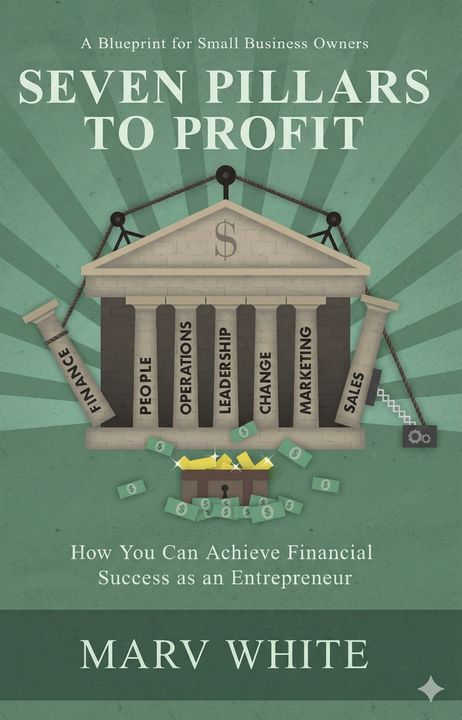
This is exactly the problem addressed in Seven Pillars to Profit, a practical blueprint that focuses on strengthening the core areas that actually drive sustainable profitability.

Instead of chasing quick wins, this framework helps business owners fix what’s breaking beneath the surface.

Why Working Harder Doesn’t Automatically Increase Profits

One of the biggest misconceptions about profitability is that effort equals results.

Many owners work longer hours, push their teams harder, and chase more customers, yet profits remain flat. That’s because profit is not created by effort alone. It’s created by alignment.

When finances, sales, marketing, operations, leadership, and people are misaligned, money leaks out faster than it comes in. The Seven Pillars framework focuses on closing those gaps so profit becomes a natural outcome, not a constant struggle.

Pillar 1: Finance — You Can’t Fix What You Can’t See

If you want to increase business profits, financial visibility is non-negotiable.

Many owners rely on revenue totals or bank balances to judge success. That approach hides the truth. Real financial clarity means understanding:

  • Which services or customers are actually profitable

  • Where margins are shrinking

  • How cash flows month to month

When finances are unclear, decisions are reactive instead of strategic. Clear numbers lead to confident, profit-focused choices.

Pillar 2: Sales — Predictability Protects Profit

Inconsistent sales create stress, rushed decisions, and unnecessary discounting.

A structured sales process turns revenue into something you can plan around. Predictable sales:

  • Stabilize cash flow

  • Reduce pressure on pricing

  • Support smarter hiring and growth decisions

Profit increases when sales become reliable instead of random.

Pillar 3: Marketing — Profit Comes From the Right Customers

Marketing does not increase profits if it attracts the wrong audience.

Broad, unfocused marketing often leads to:

Profitable marketing attracts customers who value outcomes, not just low prices. When messaging is clear and targeted, conversion improves and operational strain decreases.

Pillar 4: Operations — Inefficiency Is a Silent Profit Killer

Operational chaos is expensive, even when revenue looks strong.

When processes live only in the owner’s head:

  • Mistakes increase

  • Delivery slows

  • The business becomes fragile

Strong operations reduce waste, protect margins, and allow growth without burnout. Efficiency is not about cutting corners. It’s about removing friction.

Pillar 5: People — Profits Don’t Scale Without the Right Team

A business that depends entirely on the owner eventually stalls.

This pillar focuses on:

  • Clear roles and accountability

  • Proper training and expectations

  • Aligning performance with business goals

When employees understand how their work impacts results, productivity improves naturally and profits follow.

Pillar 6: Leadership — Direction Drives Results

Leadership is the multiplier behind every other pillar.

Without clear leadership:

  • Teams lose focus

  • Priorities shift constantly

  • Execution breaks down

Strong leadership creates alignment and accountability. It ensures every part of the business is working toward sustainable profitability, not just staying busy.

Pillar 7: Change — Adaptability Protects Long-Term Profits

Markets change. Customer expectations evolve. Technology moves fast.

Businesses that resist change slowly lose margin and relevance. The final pillar emphasizes continuous improvement and the willingness to adjust systems, strategies, and offers as conditions shift.

Adaptability keeps profits durable over time.

How the Seven Pillars Help Increase Business Profits

The power of this framework is not in any single pillar. It’s in how they work together.

Weakness in one area drags down the rest:

  • Strong sales with weak operations create burnout

  • Great marketing with poor finances hides losses

  • Good people without leadership lose direction

By strengthening all seven pillars, businesses stop leaking profit and start compounding it.

Want a Proven Framework to Increase Business Profits?

Many of the principles outlined above are explained in greater depth in Seven Pillars to Profit, a practical guide designed for business owners who want clarity, structure, and long-term profitability.

The book breaks profit improvement into seven core areas, helping owners identify hidden problems and turn them into measurable gains.

👉 Learn more or get your copy on Amazon.

Final Thoughts

If you are serious about learning how to increase business profits, the answer is rarely a single tactic. It’s about fixing the hidden problems that quietly hold your business back.

The Seven Pillars approach shows that profit is not accidental. It is built through alignment, structure, and intentional leadership.

Fix the foundation, and profit becomes repeatable instead of stressful.

How to Buy an Existing Business With No Money

Buying a business is often seen as something only wealthy investors can do. Many aspiring owners assume they need a large down payment, perfect credit, or years of savings before they can even start looking. That belief alone keeps thousands of capable people stuck on the sidelines.

The reality is this: how to buy an existing business with no money has far less to do with cash and far more to do with deal structure, negotiation, and understanding what sellers actually want. Every year, small businesses change hands without buyers putting their own money down at closing.

This guide walks through the realistic, proven ways buyers make that happen.

Is It Really Possible to Buy an Existing Business With No Money?

Yes, but it is important to define what “no money” actually means.

In most cases, buying an existing business with no money means:

  • You are not using personal savings

  • The purchase is funded by the seller, partners, or the business itself

  • Payments are made over time using future profits

This is not a passive strategy. You are stepping into active ownership and taking responsibility for running and improving the business.

Why Sellers Agree to No-Money-Down Deals

Understanding seller motivation is one of the most important parts of learning how to buy an existing business with no money.

Many sellers are not chasing the biggest lump sum possible. Instead, they care about:

  • Retirement income stability

  • A smooth transition for staff and customers

  • Preserving the reputation they built

  • Reducing taxes on a large one-time sale

A buyer who offers continuity, leadership, and reliability can be more attractive than a buyer offering cash but no long-term plan.

1. Seller Financing (The Foundation of Most Deals)

Seller financing is the most common method used to buy an existing business with no money.

Instead of paying the full price upfront, the seller agrees to:

  • Receive payments over several years

  • Earn interest on the balance

  • Stay partially invested in the success of the business

How it works

  • A purchase price is agreed upon

  • A small or zero down payment is negotiated

  • Monthly payments are made from business cash flow

Why it benefits both sides

  • The seller earns steady income and interest

  • The buyer avoids bank loan barriers

  • Deals close faster with fewer third parties

Seller financing is especially common in small, owner-operated businesses where the owner wants to retire but not walk away abruptly.

2. Earn-Outs: Paying Based on Performance

An earn-out ties part of the purchase price to future results rather than upfront cash.

With an earn-out:

  • You pay a portion of the price later

  • Payments depend on revenue or profit targets

  • Risk is shared between buyer and seller

Earn-outs work well when:

  • Financials are solid but not perfectly documented

  • The seller expects strong future growth

  • You plan to improve operations or marketing

This approach protects you from overpaying and reduces the amount needed at closing.

3. Using the Business’s Own Cash Flow

Another core strategy in how to buy an existing business with no money is letting the business pay for itself.

This can include:

  • Using monthly profits to repay the seller

  • Refinancing or restructuring existing debt

  • Leveraging long-term contracts or predictable revenue

This works best for businesses with:

  • Stable recurring income

  • Predictable expenses

  • Healthy profit margins

Service-based businesses are especially well-suited for this approach because they typically have lower overhead and inventory costs.

4. Partnerships and Sweat Equity Deals

If you bring operational skills but lack capital, partnerships can unlock opportunities.

Common structures include:

  • A capital partner funds the deal while you operate

  • You earn equity over time instead of paying cash

  • Ownership increases as performance targets are met

These arrangements are attractive when:

  • A business is underperforming due to poor management

  • The owner wants to step back gradually

  • Growth is possible with better systems and leadership

Clear legal agreements and defined roles are essential to avoid conflict later.

5. Targeting the Right Type of Business

Not every business can be bought with no money down. Choosing the right type dramatically improves your odds.

The best candidates often share these traits:

  • Owner fatigue or retirement pressure

  • Consistent revenue with limited growth

  • Simple operations that rely on the owner

  • Loyal customer base but outdated systems

Industries that commonly work well include:

  • Local service businesses

  • B2B service companies

  • Cleaning, maintenance, logistics, IT services

  • Marketing and digital service firms

Businesses that require heavy inventory or constant reinvestment are usually harder to acquire with no money upfront.

6. What You Must Bring to the Table

If you want to buy an existing business with no money, you must replace cash with value.

Sellers look for buyers who bring:

  • Industry or management experience

  • Operational improvement ideas

  • A clear transition plan

  • Credibility and commitment

A strong buyer profile can often outweigh a weak cash position.

Common Mistakes Buyers Make

Even though no-money-down deals are possible, many fall apart due to avoidable errors.

Watch out for:

  • Overestimating future cash flow

  • Ignoring working capital needs

  • Failing to document agreements properly

  • Assuming every seller will agree to creative terms

Preparation, conservative projections, and professional advice matter more than enthusiasm.

Final Thoughts

Learning how to buy an existing business with no money is not about shortcuts or loopholes. It is about understanding deal structures, seller psychology, and your own value as an operator.

Cash is only one way to close a deal. For the right business and the right buyer, leadership, strategy, and structure can replace it entirely.

If you are serious about buying a business, focus on education, realistic expectations, and building credibility before approaching sellers. That foundation is what turns “no money” from a limitation into a workable acquisition strategy.

7 Profit Strategies for Entrepreneurs Who Want More Than Just Survival

Running a business is not just about working harder or chasing more revenue. Many entrepreneurs hit a frustrating ceiling where sales exist, customers are buying, but profits feel unpredictable and fragile. That is where intentional profit strategies for entrepreneurs matter most.

Real profit is built through structure, clarity, and decisions made with the long game in mind. One of the most practical frameworks for doing this comes from Seven Pillars to Profit: How You Can Achieve Financial Success as an Entrepreneur by Marvin G. White. The book breaks profitability down into systems any entrepreneur can apply, whether they are running a startup or an established small business.profit strategies for entrepreneurs

This article walks through the core ideas behind those principles and how entrepreneurs can turn them into actionable profit strategies.

Why Profit Strategies for Entrepreneurs Often Fail

Most entrepreneurs focus on effort first and structure later. They sell more, market harder, and put in longer hours hoping profit will eventually follow. The problem is that profit does not automatically appear just because revenue increases.

According to White’s framework, businesses fail not because owners lack motivation, but because they lack a system for improvement. Without clear visibility into finances, operations, sales, and leadership, decisions are reactive instead of strategic.

Effective profit strategies for entrepreneurs start with understanding where the business actually stands today, not where the owner hopes it is.

Profit Strategy #1: Know the True Value of Your Business

One of the most overlooked profit strategies for entrepreneurs is understanding business valuation. Profit is not just what you take home each month. It is also what your business would be worth if you sold it.

White emphasizes that valuation reflects the health of your business. Strong financial records, repeatable systems, and predictable cash flow all increase value. Entrepreneurs who track only income and expenses miss the bigger picture.

When you understand valuation, every decision becomes clearer. You stop asking whether something feels profitable and start asking whether it increases long-term value.

Profit Strategy #2: Build Systems, Not Dependencies

Many small businesses depend entirely on the owner. The owner sells, manages, decides, and fixes everything. This limits profit and caps growth.

A critical profit strategy for entrepreneurs is systemization. This means documented processes, defined roles, and operations that can function without constant owner involvement.

Businesses with systems scale more easily, attract better buyers, and generate more consistent profit. Systems turn effort into leverage.

Profit Strategy #3: Focus on the Right Pillar First

One of the most powerful ideas in Seven Pillars to Profit is that entrepreneurs do not need to fix everything at once. Every business has multiple opportunities for improvement, but not all changes produce equal results.

The framework identifies seven core pillars that exist in every business:

  • Finance

  • Sales

  • Marketing

  • Operations

  • Human Resources

  • Leadership

  • Change management

Effective profit strategies for entrepreneurs focus on identifying which pillar will deliver the biggest gain with the least risk right now. Improving the wrong area wastes time and money.

Profit Strategy #4: Measure What Actually Drives Profit

Entrepreneurs often rely on gut feelings. While intuition matters, profit strategies for entrepreneurs must be supported by data.

Key measurements include cash flow, break-even points, customer concentration, gross margins, and operating efficiency. White stresses that businesses should generate regular financial reports and review them frequently.

If you cannot measure it, you cannot improve it. Measurement turns profit from a mystery into a managed outcome.

Profit Strategy #5: Reduce Risk Through Diversification

Profit is fragile when it depends on one customer, one product, or one revenue stream. A single disruption can erase years of progress.

Reducing customer concentration is a powerful profit strategy for entrepreneurs. When no single client controls your survival, you gain negotiating power, stability, and confidence.

The same applies to products and services. Businesses that diversify intelligently protect profits while creating new growth paths.

Profit Strategy #6: Improve Customer Experience to Increase Profit

Customer satisfaction is not a soft metric. It directly affects profit.

White highlights the importance of customer engagement and loyalty. Businesses that turn customers into promoters benefit from repeat purchases, referrals, and reduced marketing costs.

Improving customer experience often increases profit without increasing expenses. Small improvements in retention can create massive financial impact over time.

Profit Strategy #7: Make Decisions With a Long-Term Lens

Short-term profit decisions often reduce long-term value. Cutting staff, skipping systems, or underinvesting in leadership may improve numbers temporarily, but they weaken the business.

One of the most overlooked profit strategies for entrepreneurs is decision analysis. Every major decision should be evaluated for risk, reward, and long-term impact.

Profitable businesses think in years, not weeks.

Why This Framework Works for Entrepreneurs

What makes Seven Pillars to Profit stand out is its practicality. It is not theory or motivation. It is a step-by-step system built from real-world business experience.

Entrepreneurs are guided to assess where they are, identify opportunities, and take action in the right order. This reduces overwhelm and increases momentum.

Instead of guessing, entrepreneurs gain clarity.

A Smart Resource for Entrepreneurs Serious About Profit

If you are looking for proven profit strategies for entrepreneurs that go beyond surface-level advice, Seven Pillars to Profit is a strong starting point. The book provides a structured roadmap for improving profitability, increasing business value, and reducing chaos.

You can find the book here.

Profit is not accidental. It is built deliberately through systems, focus, and smart decisions. Entrepreneurs who adopt a framework instead of chasing tactics put themselves in a position to win for the long term.

Profit Blueprint for Small Business: How to Build a More Profitable Company

Every small business owner wants the same thing: consistent profit without constant chaos. Yet many businesses stay stuck working harder instead of smarter—because they don’t have a clear profit blueprint for small business success.

Here’s the reality: profit isn’t accidental. It’s built through structure, systems, and strategic focus. That’s exactly where a true profit blueprint comes in—and why the framework taught in Seven

Pillars to Profit: A Blueprint for Small Business Success has become such a powerful resource for business owners.

What Is a Profit Blueprint for Small Business?

A profit blueprint for small business is a structured framework that helps owners understand what actually drives profitability—and what quietly destroys it.

Instead of guessing or reacting, a blueprint helps you:

  • Identify weak areas in your business

  • Prioritize changes that impact profit

  • Build systems that support growth

  • Make decisions with clarity instead of emotion

Most businesses don’t fail because owners lack effort.
They struggle because they lack a blueprint.

Why Small Businesses Struggle Without a Profit Blueprint

Without a clear profit framework, many owners experience:

  • Inconsistent cash flow

  • Strong sales but weak margins

  • Dependence on the owner for every decision

  • Burnout from constant firefighting

I’ve seen this pattern repeatedly: businesses grow in activity but not in profit. Revenue increases, stress increases—but profit doesn’t follow.

That’s exactly the problem Seven Pillars to Profit addresses.

The Core of a Strong Profit Blueprint

A real profit blueprint for small business focuses on fundamentals—not shortcuts.

Financial Visibility

You can’t improve what you don’t measure. Understanding cash flow, margins, and true profitability is the foundation of every successful business.

Sales That Support Profit

Not all revenue is good revenue. A strong blueprint helps you focus on customers, offers, and pricing that actually improve margins.

Systems and Operations

Profit disappears when everything depends on the owner. Systems reduce errors, improve efficiency, and create stability.

Leadership and Accountability

Clear roles, expectations, and decision-making structures are essential for sustainable growth.

These pillars work together. Ignore one, and the entire structure weakens.

Why Seven Pillars to Profit Is a Practical Profit Blueprint for Small Business

Many business books talk about motivation or mindset. This one focuses on structure.

Seven Pillars to Profit breaks business success into clear, actionable components that owners can evaluate and improve—without fluff or theory.

The book helps you:

  • Diagnose profit leaks

  • Understand which pillars need attention

  • Build a business that works without constant micromanagement

  • Shift from reactive management to strategic leadership

It’s not about hustle. It’s about alignment.

Profit Blueprint vs. Hustle Culture

Hustle culture says:

  • Work longer hours

  • Do more tasks

  • Push harder

A profit blueprint says:

  • Focus on leverage

  • Build repeatable systems

  • Fix what actually drives profit

Profit comes from clarity—not exhaustion.

That’s why business owners who apply structured frameworks outperform those who rely on effort alone.

How a Profit Blueprint Builds Long-Term Value

A strong profit blueprint for small business doesn’t just improve today’s numbers—it increases long-term value.

It leads to:

  • More predictable income

  • Easier scaling

  • Stronger teams

  • Higher business valuation

  • Better exit opportunities

Whether you want to grow, stabilize, or eventually sell your business, profit structure matters.

How to Start Applying a Profit Blueprint Today

You don’t need to overhaul everything at once. Start here:

  1. Identify which area of your business feels most chaotic

  2. Assess where profit is leaking

  3. Prioritize one improvement at a time

  4. Build systems before adding complexity

Frameworks simplify decisions—and simplicity drives profit.

Recommended Reading: Build Your Profit Blueprint

If you want a proven framework you can actually apply, Seven Pillars to Profit: A Blueprint for Small Business Success is an excellent place to start.

👉 Get the paperback on Amazon here

It’s a practical guide for owners who want structure, clarity, and sustainable profitability—not just motivation.

Final Thoughts

Most small businesses don’t need more ideas.
They need a clearer blueprint.

A strong profit blueprint for small business removes guesswork, reduces stress, and turns effort into results. When the foundation is right, profit stops feeling unpredictable—and starts feeling intentional.

Profit isn’t luck. It’s built.

Small Business Funding: How to Get the Capital You Need to Grow

Small business funding is one of the most talked-about—and misunderstood—topics in entrepreneurship. Every week, business owners ask the same question in different ways: How do I get the money I need to grow without putting my business or personal finances at risk?

Here’s the truth: funding isn’t just about getting approved for a loan. It’s about choosing the right type of capital, at the right time, with the right structure. When done correctly, small business funding becomes a growth tool—not a financial burden.

Let’s break it down clearly and practically.

What Is Small Business Funding?

Small business funding refers to the ways business owners raise capital to start, operate, expand, or acquire a business. Funding can come from traditional lenders, alternative sources, investors, or creative deal structures—depending on your business model and goals.

And no, funding is not one-size-fits-all.
The best option for your business depends on cash flow, credit, risk tolerance, and long-term plans.

Why Small Businesses Need Funding

Most businesses don’t seek funding because they’re failing—they seek it because they’re growing or positioning for growth.

Common reasons include:

  • Expanding operations or opening a new location

  • Hiring employees or contractors

  • Purchasing equipment or inventory

  • Improving cash flow stability

  • Marketing and customer acquisition

  • Buying an existing business

Smart funding supports momentum. Poorly structured funding creates stress.

Traditional Small Business Funding Options

These are the most common and familiar routes for business owners.

1. Bank Loans

Traditional bank loans usually offer lower interest rates, but they come with strict requirements:

  • Strong credit

  • Solid financial statements

  • Proven operating history

They’re best for established businesses with predictable cash flow.

2. SBA Loans

SBA-backed loans reduce risk for lenders, making them more accessible than standard bank loans.

  • Longer repayment terms

  • Lower down payments

  • Competitive rates

However, the approval process can be slow and documentation-heavy.

3. Business Lines of Credit

Lines of credit offer flexibility.

  • Borrow only what you need

  • Pay interest only on what you use

  • Ideal for cash flow gaps

They work well for ongoing operational expenses.

Alternative Small Business Funding Options

Traditional loans aren’t your only option—and in many cases, they’re not the best one.

4. Investors and Equity Partners

Instead of debt, you exchange ownership for capital.

  • Angel investors

  • Strategic partners

This can be powerful—but it also means shared control. Equity should be traded strategically, not emotionally.

5. Revenue-Based Financing

Repayment is tied to revenue performance.

  • Lower pressure during slower months

  • Faster access to capital

This option works well for businesses with consistent sales.

6. Seller Financing (When Buying a Business)

One of the most overlooked forms of small business funding.

Rather than borrowing all the money, the seller finances part of the purchase price. This:

  • Reduces upfront cash needs

  • Aligns seller and buyer incentives

  • Often speeds up deals

In many cases, it’s easier to fund a business purchase than a startup.

Can You Get Small Business Funding With Bad Credit?

Yes—credit matters, but it’s not the whole picture.

Lenders and investors also evaluate:

  • Cash flow and profitability

  • Business performance trends

  • Assets and collateral

  • Risk mitigation

  • Deal structure

I’ve seen businesses secure funding not because their credit was perfect—but because the numbers and structure made sense.

How to Improve Your Chances of Getting Approved

Before applying for small business funding, prepare strategically.

Key steps:

  • Clean and organize financial statements

  • Understand your cash flow inside and out

  • Define exactly how the funds will be used

  • Create a clear growth or acquisition plan

  • Explore multiple funding paths

Preparation gives you leverage. Desperation removes it.

Small Business Funding vs. Starting From Scratch

Here’s a hard reality many entrepreneurs overlook:

It’s often easier to get small business funding to buy an existing business than to start a new one.

Why?

  • Proven revenue

  • Established customers

  • Existing systems

  • Reduced risk for lenders

Funding follows certainty—and existing businesses offer more of it.

Final Thoughts: Small Business Funding Is a Strategy, Not a Shortcut

Small business funding should never feel like a gamble. When aligned with clear goals and proper structure, it becomes one of the most powerful tools for growth.

The most successful business owners don’t ask:
“Can I get funding?”

They ask:
“What’s the smartest way to structure this opportunity?”

If you’re exploring small business funding—whether to grow, acquire, or strategically position your business—schedule a free consultation with a BizProfitPro advisor.

No pressure. No hard sales. Just honest guidance built around your goals.

Business Profit Blueprint: Why Your Company Needs One

Many businesses don’t fail because of a lack of effort. They fail because they grow without a plan for profit.

Owners work longer hours, chase more clients, and push for higher revenue, yet the numbers still don’t add up. Margins stay thin. Stress stays high. And growth feels unpredictable.

That’s usually a sign of one missing piece: a business profit blueprint.

Without a clear structure for how profit is created, protected, and scaled, most companies end up reacting instead of leading. This is exactly why so many businesses struggle to become consistently profitable, even when sales look good on paper.

What Is a Business Profit Blueprint?

A business profit blueprint is the framework that connects every part of your company to profitability.

It answers questions like:

  • Where is profit actually coming from?

  • What systems protect it?

  • Which activities move the business forward and which ones drain resources?

Instead of guessing, a blueprint gives clarity. Instead of chaos, it creates alignment. And instead of hoping profit shows up at the end of the month, it builds profit into how the business operates.

This is the core idea behind Seven Pillars to Profit: A Blueprint for Small Business Success, a practical guide designed to help business owners stop winging it and start building intentionally.

👉 You can get the book here:
https://www.amazon.com/Seven-Pillars-Profit-Blueprint-Business/dp/B019SQIOMC/

Why Most Companies Struggle Without a Profit Blueprint

The absence of a business profit blueprint leads to predictable problems. These struggles show up across industries, company sizes, and experience levels.

1. Revenue Is Confused With Profit

Many companies celebrate sales numbers while ignoring margins, costs, and cash flow. Revenue growth feels good, but without structure, it often hides deeper profit issues.

A profit blueprint forces the business to focus on what actually stays in the bank, not just what comes in.

2. Systems Are Built for Survival, Not Profit

When businesses grow without a plan, systems evolve reactively. Processes are patched together just to keep things moving.

Over time, this leads to inefficiency, duplicated work, and decisions that cost more than they create. A business profit blueprint replaces survival systems with intentional, profit-driven ones.

3. Owners Become the Bottleneck

Without clear structure, owners end up making every decision, solving every problem, and approving everything.

This limits growth and creates burnout. A profit blueprint introduces clarity around roles, responsibilities, and leadership so the business can function without constant owner intervention.

4. Marketing and Sales Feel Random

Many businesses try one strategy after another, hoping something sticks. When results slow down, panic sets in.

A business profit blueprint aligns marketing and sales with clear goals, defined audiences, and realistic conversion targets, making growth predictable instead of stressful.

5. Change Feels Risky Instead of Strategic

Without a framework, change feels dangerous. Owners hesitate to adjust pricing, restructure teams, or invest in growth because they don’t know how it will impact profit.

A strong profit blueprint makes change manageable by showing how each decision fits into the bigger picture.

The Role of the Seven Pillars to Profit

The Seven Pillars to Profit framework exists to solve these exact challenges. It breaks profitability down into core areas every business must strengthen to grow sustainably.

These pillars focus on:

  • Financial clarity

  • Strong leadership

  • Operational efficiency

  • Effective people management

  • Strategic marketing and sales

  • Adaptability and change

  • Intentional profit planning

Together, they form a business profit blueprint that supports long-term success instead of short-term wins.

Rather than focusing on quick fixes, the framework helps business owners build something stable, scalable, and resilient.

Who Needs a Business Profit Blueprint?

This approach is especially valuable for:

  • Small business owners who feel stuck despite steady sales

  • Entrepreneurs working harder but earning less than expected

  • Leaders preparing for growth, sale, or long-term sustainability

  • Businesses that want systems instead of constant firefighting

If profit feels inconsistent or exhausting, it’s usually not an effort problem. It’s a structure problem.

Profit Is Built on Purpose

Profit doesn’t happen by accident. It’s the result of intentional decisions, aligned systems, and a clear blueprint that guides the business forward.

Without a business profit blueprint, companies rely on luck, hustle, and guesswork. With one, profit becomes repeatable, measurable, and sustainable.

For business owners ready to stop guessing and start building with clarity, Seven Pillars to Profit offers a practical starting point.

👉 Get the blueprint here.

How to Increase Business Profit: A 7-Pillar Framework That Actually Works

Most business owners want the same thing: more profit.

Yet many focus on growing revenue instead. The problem? Revenue growth does not guarantee profitability. In fact, for many businesses, higher sales often lead to higher stress, tighter cash flow, and more complexity.

If you want to understand how to increase business profit, the answer is not working longer hours or chasing more leads. The answer is structure.

This approach is inspired by the principles outlined in Seven Pillars to Profit, a practical framework that breaks profitability into clear, manageable building blocks.

Why Increasing Business Profit Is Harder Than Increasing Revenue

Revenue is visible. Profit is not.

Many businesses appear successful on the surface but struggle behind the scenes due to:

  • Poor cash flow management

  • Inconsistent sales

  • Rising operational costs

  • Owner dependence

Without systems, profit leaks quietly. Fixing profit requires clarity across the entire business, not just the sales line.

Pillar 1: Financial Visibility Is the Foundation of Business Profit

You cannot increase business profit if you do not clearly understand where money is being made or lost.

This pillar focuses on:

  • Knowing the difference between revenue, profit, and cash flow

  • Identifying which products, services, or clients are most profitable

  • Tracking margins, not just total sales

Financial clarity allows owners to focus on what actually drives profit instead of guessing.

Pillar 2: Predictable Sales Increase Business Profit

Unpredictable sales create unpredictable profit.

A consistent sales system improves profitability by:

  • Stabilizing cash flow

  • Reducing reactive decision-making

  • Improving pricing discipline

Instead of chasing volume, profitable businesses focus on consistency and conversion.

Pillar 3: Marketing That Attracts Profitable Customers

Not all customers are equal.

Marketing plays a major role in how to increase business profit because it determines who enters your pipeline. Strong marketing:

  • Attracts customers willing to pay for value

  • Aligns messaging with higher-margin services

  • Reduces wasted ad spend

Better marketing is about alignment, not noise.

Pillar 4: Streamlined Operations Protect Profit Margins

Operational inefficiencies quietly drain profit.

This pillar focuses on:

  • Reducing errors and rework

  • Creating repeatable processes

  • Improving delivery consistency

When operations are streamlined, margins improve without raising prices.

Pillar 5: The Right Team Improves Business Profit

People costs are one of the largest expenses in most businesses.

Profit improves when teams have:

  • Clear roles and expectations

  • Proper training and accountability

  • Lower turnover and friction

Strong teams support growth without increasing chaos.

Pillar 6: Leadership Decisions That Increase Business Profit

Leadership is not about doing more. It is about deciding better.

Profit-focused leaders:

  • Say no to unprofitable work

  • Prioritize high-impact activities

  • Use data to guide decisions

Leadership discipline prevents profit erosion over time.

Pillar 7: Adaptability Protects Long-Term Profit

Markets change. Costs rise. Customer expectations shift.

Businesses that maintain profitability are adaptable. This pillar focuses on:

  • Adjusting pricing and offerings when needed

  • Monitoring industry trends

  • Identifying risks early

Adaptability ensures today’s profit lasts into the future.

Practical Steps to Increase Business Profit Starting Now

To take action:

  1. Review each pillar honestly

  2. Identify the weakest area

  3. Make one focused improvement

  4. Measure results consistently

Small, targeted changes often create the biggest profit gains.

Why Increasing Business Profit Also Increases Business Value

Profit is more than income. It is leverage.

Businesses with stable, predictable profit:

  • Command higher valuations

  • Attract stronger buyers

  • Are easier to operate and scale

Even if selling is not on your radar, profit strengthens every option you have.

Final Thoughts: Profit Is Built, Not Chased

Learning how to increase business profit starts with structure, not hustle.

The 7 Pillars framework provides a clear way to strengthen the foundation of your business so profit becomes consistent instead of accidental.

If you want a deeper dive into the framework behind these principles, Seven Pillars to Profit is available on Amazon.

What Buyers Look for When Buying a Business: The 7 Pillars That Shape Every Deal

When business owners ask, “What is my business really worth?” the more important question is often this: what buyers look for when buying a business.

Buyers don’t evaluate businesses the same way owners do. Owners tend to focus on years of effort, revenue growth, and personal sacrifice. Buyers, on the other hand, focus on structure, risk, predictability, and transferability. They are not buying your past. They are buying their future.

Across thousands of transactions, valuations, and due diligence processes, the same themes appear again and again. Businesses that sell well tend to align with a small set of core principles. Those that struggle usually fall short in one or more of them.

These principles closely mirror what many advisors refer to as the Seven Pillars to Profit—a framework that helps explain why some businesses attract strong offers while others face discounts, delays, or failed deals.

Below is a practical breakdown of what buyers look for when buying a business, using those seven pillars as a guide.

Why Buyers and Sellers Often See Value Differently

One of the biggest disconnects in a sale process is perspective.

Sellers often price based on revenue, personal workload, or what they believe the business should be worth. Buyers price based on risk, sustainability, and how easily the business can perform without the current owner.

From a buyer’s perspective, profit is only valuable if it is repeatable, defensible, and transferable. This is why two businesses with similar revenue can sell for very different prices.

Understanding this gap is the first step in understanding what buyers look for when buying a business.

The Seven Pillars Behind What Buyers Look for When Buying a Business

This framework breaks down the core factors buyers consistently evaluate when considering an acquisition. Rather than focusing on revenue alone, these seven pillars reflect how buyers assess risk, sustainability, and long-term value during valuation and due diligence. Understanding these pillars helps business owners see their company through a buyer’s lens and identify what truly influences price, terms, and deal success.

Pillar 1: Consistent and Defensible Profitability

Buyers don’t just look at profit. They look at the quality of profit.

They want to know whether earnings are consistent year over year and whether those earnings can reasonably continue after the ownership transition. One strong year followed by volatility raises questions. Clean trends build confidence.

Buyers also scrutinize add-backs, owner compensation, and one-time expenses. The more explanation required to justify earnings, the less reliable those profits appear.

At its core, buyers are asking: Are these profits real, and will they survive after closing?

Pillar 2: Predictable and Diversified Revenue

Another critical factor in what buyers look for when buying a business is revenue stability.

Customer concentration is one of the most common red flags in due diligence. If one client accounts for a large percentage of revenue, buyers see risk. The same applies to reliance on a single channel, vendor, or contract.

Recurring or repeat revenue is especially attractive because it reduces uncertainty. Predictability allows buyers to forecast cash flow, secure financing, and plan for growth with more confidence.

Diversified revenue streams almost always support stronger valuations.

Pillar 3: Operational Independence From the Owner

Owner dependency is one of the fastest ways to reduce buyer interest.

If the business relies heavily on the owner for sales, operations, or key relationships, buyers worry about continuity. Even motivated buyers hesitate when they feel the business cannot function without the founder.

Buyers look for documented processes, trained staff, and systems that allow the business to operate day to day without constant owner involvement. The more transferable the operations, the easier it is for a buyer to step in.

This pillar alone can significantly influence deal structure, earnouts, and transition periods.

Pillar 4: Market Position and Competitive Advantage

Buyers want to understand why customers choose your business and why they will continue to do so.

A clear market position, strong reputation, or defensible niche helps buyers justify paying a premium. Businesses that compete solely on price are harder to protect and harder to grow.

This pillar is about differentiation. Whether it’s brand strength, specialized expertise, long-term contracts, or switching costs, buyers want to see a reason your business wins consistently in the marketplace.

Strong positioning reduces competitive risk, which directly impacts valuation.

Pillar 5: Clean and Transparent Financials

Few things derail deals faster than unclear financials.

Buyers expect organized, accurate records that align with tax returns and bank statements. They want to understand margins, expenses, and trends without excessive explanation.

When financials are messy, buyers lose confidence. That loss of confidence often leads to lower offers, longer due diligence periods, or deals falling apart entirely.

Transparency builds trust, and trust is essential in every successful transaction.

Pillar 6: Scalable Growth Without Added Risk

Growth matters, but not at any cost.

Buyers value businesses that offer realistic upside without requiring extreme effort, major reinvestment, or increased personal risk. They want opportunities they can pursue after acquisition, not growth that depends on the owner working longer hours.

Scalable systems, available capacity, and logical expansion opportunities all support this pillar. Growth should feel optional and strategic, not necessary to justify the purchase.

This is a subtle but important part of what buyers look for when buying a business.

Pillar 7: Risk Reduction and Transferability

Ultimately, buyers price risk.

Legal exposure, regulatory issues, supplier dependency, outdated contracts, and aging equipment all raise concerns during due diligence. Each unresolved risk increases the likelihood of price reductions, holdbacks, or earnouts.

Buyers prefer businesses where risks are known, managed, and documented. The fewer surprises uncovered during diligence, the smoother the transaction tends to be.

Lower risk translates directly into higher confidence, stronger terms, and better outcomes for sellers.

How the Seven Pillars Framework Aligns With Buyer Thinking

Many of the factors discussed above align closely with the principles outlined in The Seven Pillars to Profit: Blueprint to Build a Business That Lasts.

The framework emphasizes building businesses that are profitable, resilient, and transferable—the same qualities buyers consistently pay for. While the book is not about selling a business specifically, its principles map directly to buyer expectations in real-world transactions.

For owners planning an eventual exit, buyers evaluating opportunities, or operators focused on long-term value creation, the framework provides a useful lens for decision-making.

You can learn more about the book here:
https://www.amazon.com/Seven-Pillars-Profit-Blueprint-Business/dp/B019SQIOMC/

Common Mistakes Owners Make When Ignoring These Pillars

Many businesses sell below expectations not because they lack revenue, but because they fail to align with buyer priorities.

Common mistakes include waiting too long to prepare, underestimating risk, overestimating goodwill, and assuming buyers will “fix things later.” In reality, buyers price problems immediately.

Understanding what buyers look for when buying a business allows owners to address weaknesses early, preserve leverage, and improve outcomes.

Final Thoughts

Profit alone does not determine value. Value is determined by how profit, operations, and risk come together in a way buyers can trust.

If you understand what buyers look for when buying a business, you gain clarity, leverage, and control—whether you plan to sell soon or years down the road.

If you’re ready to understand how buyers would evaluate your business, or what to improve before going to market, schedule a free consultation to discuss buying, selling, or improving a business.

📞 Call us today between 9 AM and 5 PM to speak directly with an experienced business advisor, or schedule a convenient time using this link — No hard sales, just honest advice. Let’s take the first step together with the right approach for a smooth, profitable experience.

7 Pillars to Profit for Business Growth

Most business owners do not struggle because they lack ambition or work ethic.

They struggle because growth adds complexity faster than their business systems can handle it.

Revenue increases, but profit feels inconsistent. The team grows, but the owner is still involved in everything. Opportunities appear, yet decisions feel riskier instead of easier.

This is where the 7 Pillars to Profit framework becomes essential. Rather than focusing on short-term tactics, it addresses the foundational areas that determine whether a business can grow without becoming fragile, chaotic, or owner-dependent.

Growth Is Easy. Sustainable Growth Is Not.

Many businesses can grow for a year or two by pushing harder.

Long-term growth is different.

It requires:

  • Financial discipline

  • Repeatable revenue systems

  • Clear leadership

  • Strong operations

  • A team that functions without constant supervision

The 7 Pillars to Profit framework exists because long-term growth only works when all of these areas are developed together.

The book makes one thing clear: when even one pillar is weak, growth amplifies the problem.

What Makes the 7 Pillars to Profit Framework Different

Most business books focus on one area at a time. Sales. Marketing. Leadership. Mindset.

The 7 Pillars to Profit framework shows how these areas are connected.

It helps business owners stop asking:

“What tactic should I try next?”

And start asking:

“What part of my business needs strengthening before I grow further?”

That shift alone saves owners years of frustration and costly mistakes.

Financial Clarity Turns Growth Into Confidence

One of the strongest themes in the 7 Pillars to Profit is financial awareness.

Not just knowing revenue, but understanding:

  • True profitability

  • Cash flow timing

  • Cost structure

  • Financial risk

When owners have this clarity, growth decisions become intentional instead of emotional. They know when to invest, where to invest, and when not to.

This is the difference between growth that feels exciting and growth that feels dangerous.

Sales and Marketing Create Stability, Not Pressure

Unstructured growth often creates pressure on the owner to “keep selling.”

The 7 Pillars to Profit framework emphasizes:

  • Clear sales processes

  • Consistent lead generation

  • Alignment between marketing and conversion

When sales and marketing are structured, revenue becomes predictable. That predictability is what allows businesses to plan, hire, and expand with confidence.

Operations Protect the Business as It Scales

Many businesses fail not because of lack of demand, but because operations cannot keep up.

The 7 Pillars to Profit place heavy importance on:

  • Documented processes

  • Consistency in delivery

  • Efficiency as volume increases

Strong operations prevent growth from turning into stress. They allow the business to serve more customers without sacrificing quality or control.

People and Leadership Create Leverage

Long-term growth requires leverage.

The framework shows owners how:

  • Clear roles reduce confusion

  • Accountability improves performance

  • Leadership provides direction instead of micromanagement

When people and leadership systems are strong, the business stops relying on the owner for every decision. This is where real freedom begins.

Change Management Keeps Growth From Breaking the Business

Growth changes everything: systems, expectations, and complexity.

The final pillar of the 7 Pillars to Profit ensures businesses can:

  • Adapt without disruption

  • Improve continuously

  • Handle transitions smoothly

This ability to evolve is what separates businesses that last from those that peak and decline.

Why Business Owners Buy This Book

Business owners are drawn to Seven Pillars to Profit because it does not overwhelm them.

It:

  • Explains complex ideas simply

  • Gives a clear framework instead of scattered advice

  • Helps owners see their business objectively

  • Can be revisited as the business grows

It is not a book you read once and forget. It becomes a reference point for better decisions.

Who This Book Is Best For

This book is especially valuable for:

  • Owners who want profit without burnout

  • Entrepreneurs planning to grow or eventually sell

  • Business owners tired of chasing tactics

  • Anyone who wants their business to feel more controlled and predictable

If you want growth that feels stable instead of stressful, the 7 Pillars to Profit framework delivers exactly that.

Final Thought

Long-term business growth is not about moving faster.

It is about building stronger foundations before you accelerate.

The 7 Pillars to Profit framework gives business owners a clear, proven way to do that. And Seven Pillars to Profit: A Blueprint for Small Business Success explains the framework in a way that is practical, grounded, and immediately useful.

If you want a business that grows without chaos and delivers profit you can rely on, this book is worth owning.

👉 You can find Seven Pillars to Profit: A Blueprint for Small Business Success on Amazon here:
https://www.amazon.com/Seven-Pillars-Profit-Blueprint-Business/dp/B019SQIOMC/

How to Sell an Ecommerce Business in 2026

Selling an online store isn’t the same as selling a local service business or a brick-and-mortar shop.

When you sell an ecommerce business, buyers are looking past pretty websites and big revenue screenshots. They want predictable cash flow, clean data, and systems that run without you glued to Slack at midnight.

Going into 2026, ecommerce buyers are smarter, more selective, and far less emotional than they were a few years ago. The good news? If you prepare the right way, this is still a very sellable asset class.

This guide breaks down exactly how to sell an ecommerce business in 2026, what buyers care about now, and how to avoid the mistakes that quietly kill deals.

What’s Different About Selling an Ecommerce Business in 2026

Ecommerce exits have matured.

Buyers are no longer impressed by growth spikes alone. They care about durability.

Here’s what has changed:

  • Higher scrutiny on margins due to rising ad costs

  • Deeper analysis of customer concentration and retention

  • More skepticism around “founder-dependent” brands

  • Strong preference for businesses with diversified traffic

If you plan to sell an ecommerce business in 2026, you need to show that it can survive without heroic effort.

Step 1: Get Your Financials Buyer-Ready

This is where most ecommerce deals stumble.

To successfully sell an ecommerce business, your numbers need to be clear, consistent, and defensible.

Buyers expect:

  • Monthly P&Ls for at least 24–36 months

  • Accurate COGS including shipping, refunds, and payment fees

  • Clear separation of personal and business expenses

  • Clean add-backs that are easy to explain

If your financials require a long explanation call, buyers assume risk.

Clean numbers build confidence. Confidence closes deals.

Step 2: Understand How Ecommerce Businesses Are Valued

Most ecommerce businesses are valued using Seller’s Discretionary Earnings (SDE) or EBITDA, multiplied by a market-based multiple.

In 2026, ecommerce multiples are driven by:

  • Consistency of earnings

  • Customer acquisition efficiency

  • Traffic diversity (paid vs organic vs email)

  • Platform risk and vendor dependency

A business doing $500k in revenue can be worth less than a $300k store if the cash flow quality is stronger.

If your goal is to sell an ecommerce business for top dollar, valuation starts with quality, not size.

Step 3: Reduce Owner Dependency Before You Sell

One of the biggest red flags when buyers evaluate an ecommerce brand is founder dependency.

Buyers ask questions like:

  • Who manages ads?

  • Who handles supplier relationships?

  • Who runs fulfillment issues and customer support?

If the answer is “me,” your valuation suffers.

To prepare to sell an ecommerce business in 2026:

  • Document SOPs for ads, inventory, and fulfillment

  • Delegate customer support

  • Remove yourself from daily order processing

The easier it is to step away, the easier it is to sell.

Step 4: De-Risk Your Traffic Sources

Buyers in 2026 are wary of one-channel businesses.

If 80% of your revenue comes from one ad platform, the business feels fragile.

Strong ecommerce exits show:

  • A balance of paid, organic, and email traffic

  • Repeat customers and strong LTV

  • A reliable email or SMS list that converts

Diversification doesn’t have to be perfect. It just has to be intentional.

This alone can significantly increase your ability to sell an ecommerce business at a premium multiple.

Step 5: Clean Up Inventory, Suppliers, and Fulfillment

Operational mess kills momentum during due diligence.

Before going to market:

  • Reconcile inventory counts

  • Clarify supplier contracts and MOQs

  • Document fulfillment timelines and costs

  • Remove dead SKUs that distort margins

Buyers want to see that the business runs cleanly today, not that it could be cleaned up later.

Step 6: Decide How You Want to Exit

Not all ecommerce exits look the same.

In 2026, common exit structures include:

  • 100% cash at close (rare, premium assets)

  • Cash + seller financing

  • Earn-outs tied to performance

  • Partial sales with retained equity

The “best” deal isn’t always the highest price. It’s the deal that actually closes and fits your risk tolerance.

When you sell an ecommerce business, flexibility often increases buyer interest.

Step 7: Time the Market, But Don’t Chase It

Trying to time a perfect peak is risky.

The better approach is selling when:

  • Cash flow is stable

  • Financials are clean

  • Growth is believable, not forced

  • You’re not burned out

Buyers can sense when a seller is desperate. Preparation removes that pressure.

Common Mistakes When Selling an Ecommerce Business

If you want to sell an ecommerce business smoothly, avoid these traps:

  • Inflating add-backs without proof

  • Hiding operational issues until due diligence

  • Over-reliance on screenshots instead of real data

  • Waiting too long to prepare financials

Most failed deals don’t fail on price. They fail on trust.

The Bottom Line

Selling an online store in 2026 is absolutely possible, but the bar is higher.

Buyers want ecommerce businesses that are profitable, organized, and resilient. If you focus on cash flow quality, systemization, and transparency, you dramatically improve your chances of a strong exit.

If you’re planning to sell an ecommerce business, preparation isn’t optional. It’s the strategy.

Ready to Talk Through Your Ecommerce Exit?

If you’re thinking about selling now or just want to understand what your ecommerce business might be worth:

👉 Schedule a free consultation to discuss buying, selling, or improving a business

No pressure. No sales pitch. Just clarity on your next move.

Selling a Plumbing Business: How to Prepare for a Profitable Exit

Selling a plumbing business can be very profitable—but only if it’s prepared correctly. Many plumbing business owners assume strong revenue and years of hard work will automatically translate into a smooth, high-value exit. In reality, buyers look far beyond top-line numbers. They evaluate risk, systems, and whether the business can continue running without the owner at the center of everything.

If you’re thinking about selling a plumbing business in the next few years, preparation matters more than timing. The earlier you start, the more control you have over price, deal terms, and buyer quality.

Why Selling a Plumbing Business Is Different From Other Businesses

Plumbing businesses are attractive to buyers because demand is steady and services are essential. But they also come with unique challenges. Skilled labor, licensing requirements, emergency service work, and customer relationships often revolve heavily around the owner.

Buyers know this. That’s why they scrutinize plumbing businesses closely to see whether revenue is driven by systems—or by the owner’s daily involvement. A business that runs smoothly without constant owner oversight commands a higher multiple and attracts more serious buyers.

What Buyers Look for When Selling a Plumbing Business

When evaluating a plumbing business, buyers focus on predictability and risk. They want to see consistent cash flow, clean financials, and reliable operations. They also look closely at owner involvement, technician retention, and how jobs are scheduled, priced, and billed.

The easier it is for a buyer to step in and understand how the business operates, the more confident they feel—and confidence drives value.

Step 1: Know What Your Plumbing Business Is Worth

Before going to market, it’s critical to understand what your plumbing business is worth today. Valuation isn’t just about setting a sale price. It highlights strengths, weaknesses, and value gaps that can often be improved with time.

Most plumbing businesses are valued based on cash flow, not revenue. Factors like recurring service work, customer concentration, margins, and owner involvement all influence the multiple a buyer is willing to pay. Knowing these drivers early allows you to make smarter decisions before selling.

Step 2: Clean Up Financials Before You Sell

Messy financials are one of the fastest ways to lose buyer trust.

When selling a plumbing business, buyers expect clear income statements, documented add-backs, and a clean separation between personal and business expenses. If financials are unclear or inconsistent, buyers assume risk—and discount their offers accordingly.

Clean financials don’t just support a higher price. They also speed up due diligence and reduce deal friction.

Step 3: Reduce Owner Dependency

Many plumbing businesses struggle to sell well because the owner is the business.

If you’re handling dispatch, estimating, customer relationships, and problem-solving, buyers see a job—not a transferable asset. Reducing owner dependency means delegating responsibilities, documenting processes, and building a structure where the business can operate without you being involved in every decision.

The more replaceable the owner is, the more valuable the business becomes.

Step 4: Strengthen Operations and Systems

Strong operations protect profit and reduce buyer risk.

Buyers want to see clear systems for dispatching, invoicing, job tracking, warranties, and customer follow-up. They also look for documented SOPs so technicians and office staff can operate consistently.

Well-documented systems make the business easier to transfer, easier to scale, and more attractive to buyers.

Step 5: Build and Retain a Strong Team

People matter more than equipment when selling a plumbing business.

Buyers want to know that technicians are trained, licensed, and likely to stay after the sale. High turnover, key-person risk, or poor documentation around certifications and compliance can derail deals.

Investing in retention, training, and clear roles helps reduce transition risk and supports a higher valuation.

Step 6: Address Risk Factors Early

Certain issues consistently hurt plumbing business valuations. These include heavy reliance on one or two customers, declining margins, frequent callbacks, warranty issues, or reputation risks.

Identifying and fixing these problems early gives you leverage. Waiting until buyers uncover them during due diligence almost always weakens your negotiating position.

Step 7: Prepare for Due Diligence

Due diligence is where many deals slow down or fall apart.

Buyers will request financials, contracts, licenses, insurance records, employee information, and operational documentation. Preparing these materials in advance reduces delays, builds confidence, and keeps you in control of the process.

Prepared sellers close faster—and on better terms.

Common Mistakes Owners Make When Selling a Plumbing Business

Many owners wait until burnout hits before thinking about an exit. Others overprice based on emotion or assume buyers will “figure it out” if things aren’t clearly documented.

Selling a plumbing business successfully requires planning, clarity, and realistic expectations. The good news is that most mistakes are avoidable with early preparation.

When to Start Preparing to Sell a Plumbing Business

If you’re within two to three years of a potential exit—or even just thinking about your long-term options—now is the right time to start preparing. Early planning gives you flexibility, leverage, and the ability to sell on your terms rather than out of urgency.

Final Thoughts

Selling a plumbing business is not an event. It’s a process.

The strongest exits come from businesses that are system-driven, financially clear, and less dependent on the owner. Whether you plan to sell soon or simply want to improve your options, preparation is what creates value.

If you want clarity on where your plumbing business stands today—and what to focus on next—you can schedule a confidential conversation here:
👉 https://bizprofitpro.com/need-a-business-valuation/

Seven Pillars to Profit: Why Every Business Owner Should Understand This Framework

Many business owners work harder every year yet still feel unsure about where their profits are really coming from—or why growth feels harder than it should. Revenue might be increasing, but cash flow stays tight. Decisions feel reactive instead of intentional. This is exactly the problem Seven Pillars to Profit was written to address.

Rather than offering quick fixes or generic advice, the book introduces a practical framework that helps business owners step back and evaluate their companies as complete systems. The goal isn’t just more profit this month or this quarter. It’s building a business that is healthier, more resilient, and ultimately more valuable.

What Are the 7 Pillars to Profit?

The Seven Pillars to Profit are seven core areas that influence how well a business performs and how profitable it can become over time. The key idea behind the framework is simple but powerful: no business problem exists in isolation. Weakness in one area almost always affects the others.

Instead of guessing what to fix next, the Seven Pillars approach helps business owners identify where their business is underperforming and which area, if improved, would create the biggest positive impact with the least risk. It replaces reactive decision-making with a structured way to think about growth and profitability.

The seven pillars are Finance, Sales, Marketing, Operations, Human Resources, Leadership, and Change. Every business has opportunities in all seven, but the framework emphasizes focusing on the right pillar at the right time.

The Seven Pillars Explained

Pillar 1: Finance

Finance is the foundation of every profitable business. Understanding true profitability means knowing where your cash actually comes from, where it goes, and what’s left after all obligations are met. Clean, consistent financials give business owners clarity and control, allowing them to make decisions based on facts instead of assumptions. Without financial visibility, even growing businesses can quietly move toward trouble.

Pillar 2: Sales

Sales is about predictability, not pressure. Businesses that rely on sporadic wins or last-minute deals often struggle to plan and grow. This pillar focuses on creating repeatable sales processes that generate steady revenue and reduce reliance on guesswork. When sales become intentional and structured, revenue becomes easier to forecast and manage.

Pillar 3: Marketing

Marketing supports sales by attracting the right customers consistently. It’s not about being everywhere or doing more—it’s about clear positioning and messaging that communicates value. Strong marketing ensures that sales efforts aren’t starting from zero each month and that the business remains visible to the customers it wants most.

Pillar 4: Operations

Operations is where profit is either protected or slowly eroded. Inefficient workflows, inconsistent delivery, and unclear processes all create unnecessary costs. This pillar emphasizes building systems that improve efficiency and consistency so the business can scale without chaos. Strong operations help maintain margins while improving customer experience.

Pillar 5: Human Resources

People are critical to sustainable growth. A business that depends entirely on the owner is fragile and difficult to scale. This pillar focuses on building a team that supports the business through proper hiring, training, accountability, and culture. Reducing owner dependency increases stability and long-term value.

Pillar 6: Leadership

Leadership sets the tone for every other pillar. Clear direction, confident decision-making, and accountability drive results across the organization. This pillar recognizes leadership as a measurable contributor to performance, not just a soft skill. Strong leadership aligns people, priorities, and execution.

Pillar 7: Change

Markets shift, customer expectations evolve, and competition never stands still. The Change pillar focuses on adapting early—before small issues become major problems. Businesses that resist change often lose relevance, while those that embrace it stay competitive. Managing change proactively is essential to long-term success.

Together, these seven pillars form the framework introduced in Seven Pillars to Profit, helping business owners understand not just what to improve, but where to focus first for the greatest impact.

Why Business Owners Should Read Seven Pillars to Profit

This book resonates with business owners because it reflects how businesses actually operate. It doesn’t assume perfect conditions or unlimited resources. Instead, it acknowledges that most owners are juggling multiple responsibilities while trying to make smart decisions under pressure.

Reading Seven Pillars to Profit helps owners stop chasing symptoms and start addressing root causes. It provides clarity when things feel scattered and offers a way to prioritize improvements without overwhelming the business. For owners who feel stuck, uncertain, or stretched too thin, the framework creates direction.

Who This Book Is Best For

The book is especially valuable for small business owners, entrepreneurs, and founders who want more control over their profit and future. It’s useful for owners preparing for growth, thinking about long-term value, or simply trying to make better decisions with limited time and resources. It also resonates with those who want to build a business that can eventually run without constant owner involvement.

How the Seven Pillars Tie Into Business Value

One of the most important takeaways from the framework is how closely it aligns with business valuation. Buyers don’t just look at revenue. They evaluate financial clarity, operational systems, leadership strength, team structure, and the company’s ability to adapt. Businesses that are strong across the Seven Pillars are easier to run, easier to grow, and easier to transfer.

Strengthening these pillars doesn’t just improve day-to-day operations—it increases confidence, reduces risk, and builds long-term value.

Where to Buy Seven Pillars to Profit

Seven Pillars to Profit: The Blueprint for Business Success is available on Amazon in print and digital formats. You can find it here.

Final Thoughts

Profit isn’t luck. It’s the result of structure, discipline, and focusing on the right priorities at the right time. The Seven Pillars to Profit framework gives business owners a practical way to evaluate their companies, make better decisions, and build stronger foundations for the future. Whether you’re trying to stabilize your business, grow it, or prepare for what’s next, understanding these pillars is a powerful place to start.

Fractional Controller Services: What They Are and When Your Business Needs One

Growing businesses often reach a point where basic bookkeeping is no longer enough, but a full-time controller feels premature. That gap is exactly where fractional controller services come in. These services give owners access to higher-level financial oversight without the cost or commitment of a full-time hire. For companies focused on profitability, clarity, and exit readiness, a fractional controller can be a smart next step.

What Are Fractional Controller Services?

Fractional controller services provide part-time or outsourced financial leadership focused on accuracy, controls, and reporting. Unlike bookkeepers who record transactions, controllers ensure the numbers are reliable, structured, and decision-ready. A fractional controller typically works on a monthly or project basis, scaling involvement as the business grows. This model gives owners experienced financial oversight without adding permanent payroll.

What a Fractional Controller Actually Does

Fractional controller services go beyond closing the books. Core responsibilities often include:

  • Monthly financial statement review and accuracy checks

  • Implementing internal controls and approval processes

  • Managing accruals, reconciliations, and adjustments

  • Standardizing financial reporting

  • Supporting budgeting and cash flow forecasting

  • Preparing clean financials for lenders, buyers, or advisors

The goal is confidence in the numbers, not just completed reports.

Fractional Controller vs Bookkeeper vs CFO

Many owners confuse these roles, but they serve very different purposes.

  • Bookkeeper: Records daily transactions and maintains the general ledger

  • Controller: Ensures accuracy, structure, consistency, and compliance

  • CFO: Focuses on strategy, forecasting, and long-term financial planning

Fractional controller services sit in the middle. They are ideal when the books exist, but decision-making still feels unclear or risky.

Signs Your Business Needs Fractional Controller Services

Your business may benefit from fractional controller services if:

  • Financial reports are late, inconsistent, or hard to trust

  • You rely heavily on your CPA to explain monthly numbers

  • Cash flow surprises keep happening

  • You are preparing for financing, investors, or a future sale

  • Your revenue has grown, but profit feels unpredictable

These are often early warning signs that bookkeeping alone is no longer enough.

How Fractional Controller Services Support Business Value

Clean, consistent financials are critical when raising capital or selling a business. Fractional controller services help ensure:

  • Add-backs are properly documented

  • Financial statements reconcile cleanly

  • Buyers and lenders trust the numbers

  • Fewer surprises appear during due diligence

In many deals, strong controller-level oversight can directly impact valuation and deal speed.

What Fractional Controller Services Typically Cost

Pricing for fractional controller services varies based on complexity and scope. Most engagements fall into a monthly retainer model, often far less than the cost of a full-time controller. Costs usually scale with transaction volume, reporting needs, and growth stage. For most businesses, the return comes from better decisions, fewer errors, and reduced risk.

Who Benefits Most From Fractional Controller Services

Fractional controller services are especially valuable for:

  • Service businesses with growing payroll

  • Multi-location or multi-entity companies

  • Owner-operated businesses planning an exit

  • Companies transitioning from cash to accrual accounting

  • Businesses preparing for SBA or bank financing

If your financials need to hold up under scrutiny, controller-level oversight matters.

How to Choose the Right Fractional Controller

When evaluating fractional controller services, look for:

  • Experience with businesses your size

  • Clear monthly deliverables

  • Strong communication with your bookkeeper and CPA

  • Understanding of exit readiness and lender expectations

  • Systems and process improvement expertise

The right fit should bring clarity, not complexity.

Final Thoughts

Fractional controller services are not about adding overhead. They are about creating financial clarity at the exact stage where many businesses struggle to scale responsibly. For owners who want confidence in their numbers and fewer surprises, this role often becomes a turning point.

If you’re ready to improve financial clarity and understand whether fractional controller services are right for your business 📞 Call us today between 9 AM and 5 PM to speak directly with an experienced business advisor, or schedule a convenient time using this link — No hard sales, just honest advice. Let’s take the first step together with the right approach for a smooth, profitable experience.

SBA Loan Fees vs Conventional Loans: Which Is Cheaper for Business Owners?

When business owners explore financing options, one of the first questions that comes up is cost. Specifically, many want to know whether SBA loans are more expensive than conventional bank loans and how SBA loan fees compare in real terms.

The answer is not as simple as looking at one fee line item. While SBA loan fees are often more visible, conventional loans can carry costs that are less obvious but just as impactful. Understanding the differences helps business owners make more informed financing decisions.

Why SBA Loan Fees Get Extra Scrutiny

SBA loans are regulated and standardized, which means their fees are clearly disclosed and relatively consistent across lenders. Because these fees are easier to see and compare, they often attract more attention.

Conventional loans, on the other hand, vary significantly by lender. Fees may be bundled into closing costs or structured differently, making them harder to compare at a glance.

This visibility is one reason SBA loans are often perceived as more expensive, even when the total cost of borrowing may be comparable or lower.

What SBA Loan Fees Typically Include

SBA loan fees generally fall into a few main categories. The most well-known is the SBA guaranty fee. This fee is charged because the SBA guarantees a portion of the loan, which reduces risk for the lender and allows for more flexible lending terms.

Other costs commonly associated with SBA loans include:

  • Lender origination or packaging fees

  • Third-party costs such as appraisals, environmental reports, and title services

  • Standard closing costs

An important detail is that many SBA loan fees can be financed into the loan, rather than paid fully upfront. This can reduce the immediate cash burden at closing.

Conventional Loan Fees Explained

Conventional loans do not include an SBA guaranty fee, which is why they may appear cheaper initially. However, they still include various bank and third-party fees that can add up.

Common conventional loan fees may include:

  • Origination and underwriting fees

  • Documentation and legal fees

  • Appraisal and due diligence costs

  • Bank-specific closing charges

Because these fees are not standardized, two conventional loans with the same interest rate can have very different total costs.

SBA Loan Fees vs Conventional Loans

When comparing SBA loan fees to conventional loan fees, it is important to look beyond the upfront numbers. SBA loans may have higher disclosed fees, but they often come with longer repayment terms and lower down payment requirements.

Conventional loans may offer lower fees upfront, but shorter loan terms can result in higher monthly payments. For some businesses, that cash flow impact matters more than the difference in closing costs.

Loan Terms and Monthly Payments

Loan fees should always be evaluated alongside loan terms. SBA loans often provide repayment periods of 10 to 25 years, depending on the purpose of the loan. Conventional loans frequently have shorter terms.

A shorter loan term means higher monthly payments, which can strain cash flow even if the upfront fees are lower. Over time, this can affect how affordable the loan truly is for the business.

Down Payments and Total Cost Considerations

Another key difference is down payment requirements. SBA loans typically require less equity upfront than conventional loans. Conventional lenders often ask for a higher down payment, particularly for acquisitions or higher-risk transactions.

The additional cash required for a larger down payment represents an opportunity cost. That capital is no longer available for operating expenses, growth initiatives, or unexpected challenges.

When evaluating SBA loan fees, business owners should consider how much cash they will have available after closing, not just how much they pay in fees.

Which Option Is Cheaper for Business Owners?

There is no universal answer. SBA loans may be more cost-effective for businesses that value longer terms, lower monthly payments, and preserved cash flow. Conventional loans may be cheaper for borrowers who qualify for strong bank terms and can comfortably handle higher payments.

The most accurate comparison comes from reviewing the total cost of the loan over time, including fees, interest, repayment terms, and cash flow impact.

Final Thoughts

SBA loan fees are often misunderstood because they are more visible and standardized than conventional loan fees. While they may look higher upfront, they are part of a broader loan structure designed to improve accessibility and affordability for many business owners.

Conventional loans can appear less expensive initially, but their true cost depends on terms, payment structure, and capital requirements.

For business owners, the key is to evaluate financing options holistically. Looking beyond fees alone leads to better, more informed decisions.

How to Build a Profitable Business: Practical Lessons from Seven Pillars to Profit

Many business owners spend years trying to figure out how to build a profitable business, yet still feel unsure about where the money actually goes. Revenue might be growing, the business may look successful from the outside, but profit feels inconsistent or fragile.

That disconnect is usually not about effort or intelligence. It comes from treating profit as an outcome instead of something that is deliberately built into the business.

That is where Seven Pillars to Profit offers a useful shift in perspective. The book does not focus on tactics or quick wins. Instead, it looks at the underlying structure that allows profit to exist consistently over time.

Why Learning How to Build a Profitable Business Is Often Confusing

Most business owners are taught to focus on growth first. Sell more. Add customers. Expand services. Hire when things get busy.

Profit is expected to follow naturally.

In practice, growth without structure often creates more complexity and more stress. Expenses rise faster than expected. Cash flow tightens. Decision-making becomes reactive instead of intentional.

The book makes a simple but important point. Profit does not automatically appear just because revenue increases. It shows up when the business is designed to support it.

Profit Is Built Into Decisions, Not Calculated at the End

One of the strongest lessons in Seven Pillars to Profit is that profit begins long before financial statements are reviewed. It starts with everyday decisions. How pricing is set. How costs are managed. How roles are defined. How clearly the numbers are understood.

When these elements are unclear or inconsistent, profit becomes unpredictable. When they are intentional, profit becomes repeatable.

For owners trying to understand how to build a profitable business, this shift in thinking is critical. Profit is not something to hope for at the end of the year. It is something to design into the business throughout the year.

Cash Flow Is Often the Real Problem

Many businesses appear profitable on paper but still feel financially tight month to month. This is usually a cash flow issue, not a revenue issue.

The book highlights how timing matters. When money comes in versus when expenses go out can make even strong businesses feel unstable. Without cash flow awareness, owners are often forced to make short-term decisions that undermine long-term profitability.

Understanding cash flow is a foundational step in building a profitable business that feels stable, not stressful.

Financial Clarity Creates Better Decisions

Another recurring theme in the book is the importance of financial clarity. This does not mean perfect accounting or complex reports. It means understanding the numbers well enough to trust them and explain them.

When owners lack clarity in their financials, decisions are often driven by instinct or urgency. When financials are clear and consistent, decisions become calmer and more strategic.

This clarity is also essential for anyone who may want to sell their business one day. Buyers look closely at how profit is generated and whether the numbers support the story being told.

Pricing and Margins Matter More Than Most Owners Realize

Many owners underprice their services or products without fully understanding the long-term impact. Pricing decisions made early often stick for years, quietly limiting profit.

The book reinforces the idea that margins are not a side issue. They are central to profitability. Without healthy margins, even well-run businesses struggle to build real value.

Learning how to build a profitable business requires an honest look at pricing, costs, and what the business actually needs to earn to support both operations and the owner.

Systems Protect Profit Over Time

Owner-dependent businesses are common, but they are also fragile. When too much knowledge or decision-making lives in one person’s head, profit becomes harder to sustain.

Seven Pillars to Profit emphasizes the role of systems in protecting profit. Clear processes, documented workflows, and defined roles reduce errors, improve efficiency, and allow the business to function consistently.

This structure not only supports profitability, it reduces burnout and increases long-term business value.

Why This Book Is Worth Reading in Full

This article touches on several ideas from the book, but it does not replace the full framework. The value of Seven Pillars to Profit is in how these concepts connect and reinforce each other.

For business owners who want a clearer understanding of how to build a profitable business, the book provides a structured way to evaluate what is working, what is leaking profit, and where to focus attention next.

It is especially useful for owners who feel busy but financially uncertain, as well as those who want to build a business that holds value beyond their own involvement.

Final Thoughts

Profit is rarely the result of one big change. It is usually the outcome of many small, intentional decisions made consistently over time.

Learning how to build a profitable business means moving away from guesswork and toward structure. That is the core message behind Seven Pillars to Profit.

If you want a deeper, practical framework for building profit on purpose, the book is worth reviewing.

👉 Check out Seven Pillars to Profit on Amazon here.

Small Business Valuation and Growth Strategies to Transform Your Company

Most small business owners focus on growth first and valuation later. That approach often leads to frustration when it’s finally time to sell.

Revenue may increase, but valuation doesn’t always follow.

The businesses that command strong exit prices grow differently. They use small business valuation and growth strategies that improve cash flow quality, reduce risk, and make the company attractive to buyers and lenders long before a sale is on the table.

This guide breaks down the strategies that actually transform a business from a job into a valuable asset.

What Drives Small Business Valuation

Before diving into growth strategies, it’s important to understand what buyers really value.

At a high level, valuation is driven by:

  • Sustainable cash flow

  • Risk and stability

  • Transferability of operations

Revenue matters, but it’s rarely the deciding factor. Buyers want to know how reliable earnings are, how dependent the business is on the owner, and whether growth can continue without disruption.

The strategies below are designed to strengthen those exact areas.

1. Focus on Cash Flow Quality, Not Just Revenue

Revenue gets attention.
Cash flow determines value.

A business with lower revenue but strong, consistent cash flow often sells for more than a larger company with volatile earnings. Improving margins, controlling expenses, and eliminating low-quality revenue are some of the fastest ways to increase valuation.

Strong small business valuation and growth strategies prioritize predictable earnings over top-line size.

2. Clean and Clarify Financials Early

Messy financials are one of the most common deal killers.

Buyers need to clearly see:

  • How much the business actually earns

  • Which expenses are discretionary

  • Whether financials match tax returns

Clean, well-documented financials increase trust, speed up due diligence, and support higher valuation multiples. Many owners are surprised to learn that cleaning up financials alone can significantly transform how their business is valued.

3. Reduce Owner Dependence

If the business can’t run without the owner, buyers see risk.

Owner dependence lowers valuation because it creates uncertainty around transition and continuity. Growth strategies should aim to shift key responsibilities away from the owner by building systems, delegating authority, and developing internal leadership.

The more transferable the business is, the more valuable it becomes.

4. Build Repeatable Systems and Processes

Buyers don’t want to inherit chaos.

Well-documented systems signal that the business operates consistently and can scale. This includes:

  • Standard operating procedures

  • Consistent pricing and delivery models

  • Defined sales and onboarding processes

Systems reduce uncertainty and make it easier for a buyer to step in, which directly supports stronger valuations.

5. Diversify Revenue Streams

Concentration risk lowers multiples.

When too much revenue comes from one customer, one service, or one channel, buyers worry about what happens if that source disappears. Strong small business valuation and growth strategies include diversifying customers, adding recurring revenue, or expanding complementary offerings.

Diversification creates stability, and stability increases value.

6. Improve Customer Retention and Predictability

Growth isn’t only about acquiring new customers.

Retention creates recurring revenue and predictable cash flow, both of which buyers value highly. Businesses with strong retention rates are easier to forecast, finance, and transfer.

Long-term contracts, repeat customers, and subscription-style revenue models all support higher valuations.

7. Align Growth With Buyer and Lender Expectations

Buyers and lenders evaluate growth differently than operators.

Growth strategies that increase valuation often align with:

  • Lender underwriting requirements

  • Industry benchmarks

  • Sustainable expansion models

Understanding how outside parties evaluate risk allows owners to grow in ways that make the business easier to finance and sell.

8. Control Risk While Scaling

Not all growth improves valuation.

Rapid expansion can introduce:

  • Margin erosion

  • Operational inefficiencies

  • Management strain

  • Financial instability

Effective small business valuation and growth strategies balance opportunity with discipline. Controlled growth that protects margins and systems often outperforms aggressive expansion in valuation discussions.

9. Build a Capable Management Team

A strong management team reduces buyer anxiety.

Even modest leadership depth shows that the business can function without constant owner involvement. Buyers place a premium on companies with reliable managers who can maintain operations after the transition.

This is one of the clearest signals that a business is ready to scale or sell.

10. Think Like a Buyer Long Before an Exit

The most valuable businesses are built with the end in mind.

Owners who regularly ask:

  • Would a buyer understand this business?

  • Is cash flow reliable and well-documented?

  • Can this company grow without me?

are already applying the most effective small business valuation and growth strategies available.

Valuation-driven thinking transforms decision-making long before a sale ever happens.

When to Start Focusing on Valuation-Driven Growth

Ideally, owners begin implementing these strategies two to five years before a potential exit. That said, it’s never too early to start.

The earlier valuation thinking is introduced, the more leverage and options an owner creates, whether the goal is selling, recapitalizing, or simply building a stronger business.

Common Growth Mistakes That Hurt Valuation

Some growth decisions feel productive but reduce value:

  • Chasing revenue without protecting margins

  • Overextending into unfamiliar markets

  • Relying too heavily on the owner to drive growth

  • Ignoring financial clarity during expansion

Avoiding these mistakes is just as important as choosing the right strategies.

FAQs

What are small business valuation and growth strategies?
They are intentional growth decisions designed to improve how a business is valued, not just how fast it grows.

Can growth increase revenue but lower valuation?
Yes. Growth that increases risk, complexity, or owner dependence can reduce valuation even if revenue rises.

When should owners focus on valuation-based growth?
Ideally several years before an exit, but these strategies add value at any stage of ownership.

Do lenders and buyers value growth the same way?
Not always, but both prioritize cash flow stability, clarity, and risk reduction.

The Bottom Line

Growth alone does not transform a company.

Transformation happens when small business valuation and growth strategies work together to build predictable cash flow, reduce risk, and create a business buyers want to own.

Owners who grow with valuation in mind don’t just build bigger companies. They build better ones — with more options, leverage, and long-term value.

If you’re ready to apply small business valuation and growth strategies that actually increase value — not just revenue — 📞 call us today between 9 AM and 5 PM to speak directly with an experienced business advisor, or schedule a convenient time using this link.

No hard sales, just honest advice.
Let’s take the first step together toward building a stronger, more valuable company.

👉 Schedule a free consultation here.

(SDE) Seller Discretionary Earnings Explained: How Buyers and Sellers Really Use It

If you are thinking about buying or selling a small business, you will hear one term come up again and again.
Seller Discretionary Earnings. Or simply, SDE.

At first glance, it sounds technical and intimidating.
In reality, SDE is one of the most practical tools buyers and sellers use to understand what a business truly earns.

This guide breaks it down in plain English. No accounting jargon. No fluff. Just how SDE actually works in real deals.

What Is Seller Discretionary Earnings (SDE)?

Seller Discretionary Earnings represents the total financial benefit a single owner receives from the business in one year.

In simple terms, SDE answers one key question:

“If I owned this business, how much money would it realistically put in my pocket?”

That is why seller discretionary earnings explained properly matters so much in small business transactions.

SDE is most commonly used for:

  • Owner-operated businesses

  • Small businesses under $5 million in revenue

  • Main Street and lower middle-market deals

Why SDE Is Used Instead of EBITDA

Many owners ask why buyers do not use EBITDA instead.

The answer is simple.

EBITDA works well for large companies with management teams in place.
Most small businesses do not operate that way.

In owner-run businesses, the owner often:

  • Pays themselves however they want

  • Runs personal expenses through the business

  • Works full-time inside the operation

SDE adjusts for this reality.
It shows what one full-time owner could earn after taking control.

That is why seller discretionary earnings explained correctly is critical for accurate pricing.

How Seller Discretionary Earnings Is Calculated

Here is the basic formula buyers and brokers use:

**Net Profit

  • Owner’s Salary and Payroll Taxes

  • Owner Benefits

  • Discretionary Expenses

  • One-Time or Non-Recurring Expenses
    = Seller Discretionary Earnings**

Let’s break that down.

Common Add-Backs Included in SDE

Add-backs are expenses that reduce profit on paper but do not reduce the true earning power of the business.

Some of the most common add-backs include:

Owner Compensation

If the owner pays themselves $80,000 per year, that gets added back.
The buyer assumes that income.

Personal Expenses

These often include:

  • Personal vehicle expenses

  • Cell phones

  • Travel that is not business-critical

  • Meals and entertainment

One-Time Expenses

Examples include:

  • Legal fees for a lawsuit that is resolved

  • Website redesigns

  • Equipment repairs that are not recurring

Non-Cash Expenses

Depreciation and amortization are accounting entries, not real cash leaving the business.

All of these adjustments help buyers see the real cash flow.

This is a core reason seller discretionary earnings explained clearly builds trust in a deal.

A Simple SDE Example

Let’s look at a realistic scenario.

  • Net Profit: $120,000

  • Owner Salary: $70,000

  • Personal Vehicle Expense: $10,000

  • One-Time Legal Expense: $5,000

Seller Discretionary Earnings = $205,000

That $205,000 is the number buyers use to:

  • Value the business

  • Compare opportunities

  • Determine affordability with financing

How Buyers Use Seller Discretionary Earnings

From a buyer’s perspective, SDE answers three critical questions.

Can I Afford This Business?

Buyers look at SDE to see if it can:

  • Pay their personal income

  • Cover debt payments

  • Still leave room for growth

Is the Price Reasonable?

Most small businesses sell for a multiple of SDE.
Typically between 2x and 4x SDE, depending on risk and stability.

Does the Business Fit My Lifestyle?

Some buyers want owner-heavy roles.
Others want systems and flexibility.

SDE shows what the business demands and rewards financially.

This is why seller discretionary earnings explained accurately prevents buyer regret later.

How Sellers Use Seller Discretionary Earnings

Sellers benefit just as much from understanding SDE.

Pricing the Business Correctly

Overstating or understating SDE can kill deals.
Accurate SDE builds confidence and speeds up negotiations.

Preparing for Buyer Due Diligence

Buyers will verify every add-back.
Clean records and clear explanations protect your valuation.

Increasing Value Before Selling

Many sellers increase SDE by:

  • Cleaning up personal expenses

  • Normalizing payroll

  • Eliminating unnecessary costs

Even small improvements can add significant value at sale.

SDE vs EBITDA: Key Differences

Feature SDE EBITDA
Best For Owner-operated businesses Larger companies
Includes Owner Pay Yes No
Shows Owner Income Yes No
Used in SBA Loans Yes Yes

For most BizProfitPro clients, SDE is the right starting point.

Common Mistakes Owners Make With SDE

Even experienced owners get this wrong.

Overloading Add-Backs

Not every expense is discretionary.
Buyers will push back hard on weak add-backs.

Poor Documentation

If it cannot be proven, it does not count.

Waiting Too Long to Clean the Books

The best time to fix SDE is years before selling, not months.

Seller discretionary earnings explained early helps avoid painful surprises later.

How SDE Affects SBA Financing

SBA lenders rely heavily on SDE.

They use it to determine:

  • Loan eligibility

  • Debt service coverage ratios

  • Buyer risk

If SDE is inflated or unclear, financing delays happen fast.

Clean SDE equals smoother SBA approvals.

Final Thoughts on Seller Discretionary Earnings

Seller Discretionary Earnings is not just an accounting number.
It is the foundation of how small businesses are bought and sold.

When seller discretionary earnings explained properly:

  • Buyers feel confident

  • Sellers get fair value

  • Deals close faster

Whether you are preparing to sell or evaluating a purchase, understanding SDE gives you leverage and clarity.

READY TO TAKE THE NEXT STEP?

If you’re ready to understand the true value of your business or evaluate a deal the right way ☎️

Call us today between 9 AM and 5 PM to speak directly with an experienced business advisor, or schedule a convenient time using this linkNo hard sales, just honest advice.

Let’s take the first step together with the right approach for a smooth, profitable experience.

What Is EBITDA in Business? A Simple Breakdown for Owners Planning an Exit

If you’re thinking about selling your business — whether that’s next year or five years from now — there’s one financial term that will keep coming up in conversations with buyers, brokers, and lenders: EBITDA.

Buyers ask for it early.
Lenders underwrite deals based on it.
And most business valuations start with it.

Yet many owners don’t fully understand what EBITDA is in business or why it carries so much weight during an exit. Some assume it’s just another accounting number. Others confuse it with cash flow or net profit.

This guide breaks EBITDA down in plain language so you understand exactly what it is, why buyers rely on it, and how it directly impacts the price and terms of your sale.

What Is EBITDA in Business?

EBITDA stands for Earnings Before Interest, Taxes, Depreciation, and Amortization.

At its core, EBITDA is a way to measure how profitable your business is from normal operations, without the influence of financing decisions, tax strategies, or accounting treatments that vary from owner to owner.

Think of EBITDA as the business’s earning power before outside factors muddy the waters.

It answers one key question buyers care about:

“How much money does this business generate from running the operation itself?”

That’s why EBITDA is so commonly used in business sales. It creates a more apples-to-apples comparison between companies, even when ownership structures and financial decisions differ.

Why Buyers Use EBITDA to Value a Business

When buyers evaluate a business, they’re not just buying past performance. They’re buying future earning potential.

EBITDA helps buyers assess:

  • How strong the business is operationally

  • Whether profits are repeatable under new ownership

  • How much debt the business can support

  • How risky or stable the income stream appears

By removing interest, taxes, depreciation, and amortization, EBITDA strips the business down to its core operating engine. This allows buyers to compare your company to others in the same industry without being distracted by how you personally chose to finance or structure the business.

From a buyer’s perspective, cleaner EBITDA usually signals lower risk — and lower risk often leads to better offers.

How EBITDA Is Calculated

The basic EBITDA formula is:

EBITDA = Net Income + Interest + Taxes + Depreciation + Amortization

Here’s a simple example:

  • Net Income: $400,000

  • Interest Expense: $20,000

  • Taxes: $80,000

  • Depreciation: $40,000

  • Amortization: $10,000

EBITDA = $550,000

This number becomes the foundation for valuation discussions.

If your business sells at a 4x EBITDA multiple, that $550,000 translates to a $2.2 million valuation. At 5x, it becomes $2.75 million. That’s why even small changes in EBITDA can have a major impact on your exit.

EBITDA vs. Seller’s Discretionary Earnings (SDE)

Not all businesses are evaluated the same way.

For smaller, owner-operated businesses — typically those earning under $1–2 million in EBITDA — buyers may rely on Seller’s Discretionary Earnings (SDE) instead.

The key difference:

  • SDE includes owner compensation and personal expenses

  • EBITDA does not

EBITDA assumes the owner is replaceable and paid market-rate compensation. SDE assumes the owner is deeply involved and takes much of the profit as personal income.

As businesses grow, buyers expect EBITDA-style reporting. If you’re planning a larger exit, transitioning away from SDE and toward EBITDA earlier makes your business feel more professional and scalable.

Why EBITDA Matters When Planning an Exit

EBITDA influences nearly every part of the sale process.

1. Your Valuation Multiple

Most businesses sell for a multiple of EBITDA. That multiple depends on industry, size, growth, risk, and consistency.

Higher EBITDA often attracts higher-quality buyers and stronger multiples.

2. Buyer Confidence

Buyers want predictability. Clean EBITDA shows that profits aren’t dependent on unusual expenses, owner perks, or short-term decisions.

The clearer your EBITDA, the easier it is for buyers to trust the numbers.

3. Financing Approval

Banks and SBA lenders rely heavily on EBITDA to determine:

  • Loan size

  • Debt service coverage

  • Deal feasibility

If EBITDA is weak or inconsistent, financing becomes harder — and deals fall apart more often.

How to Improve EBITDA Before Selling

Improving EBITDA doesn’t always require massive growth. In many cases, it’s about tightening operations and making smarter decisions.

Areas to focus on include:

1. Reducing non-essential expenses

Remove costs that don’t directly support revenue or growth.

2. Improving pricing and margins

Small price increases or better cost control can significantly boost EBITDA.

3. Reducing owner dependency

Document systems, delegate responsibilities, and make the business transferable.

4. Cleaning up personal expenses

Move personal items off the books to present clearer financials.

5. Strengthening recurring revenue

Predictable income improves both EBITDA quality and buyer confidence.

6. Fixing operational inefficiencies

Streamlining processes often increases profit without increasing revenue.

Even modest EBITDA improvements can dramatically increase your final sale price when multiplied.

Common Mistakes Owners Make With EBITDA

Many deals suffer because owners misunderstand or misuse EBITDA.

Common issues include:

  • Treating EBITDA as the only metric that matters

  • Confusing EBITDA with actual cash flow

  • Failing to normalize EBITDA with proper add-backs

  • Waiting until the sale process to clean up financials

  • Not benchmarking EBITDA against industry standards

When EBITDA is messy, buyers assume risk. And risk almost always leads to lower offers or tougher deal terms.

Final Thoughts

Understanding what EBITDA is in business gives you leverage when planning your exit. It helps you see your company the way buyers and lenders do — as an income-producing asset, not just a job you own.

Strong, clean EBITDA attracts better buyers, improves financing options, and increases valuation. The earlier you focus on it, the more control you’ll have over the outcome of your sale.

If you’re planning to sell in the next 1–5 years and want clarity around your EBITDA and exit readiness:

📞 Schedule a free consultation here. No pressure. No hard sales. Just clear guidance to help you prepare the right way.

Selling a Manufacturing Company: What Owners Need to Know Before Exiting

Selling a manufacturing company is not the same as selling a service business or an online brand. Manufacturing businesses come with equipment, inventory, employees, suppliers, regulations, and often long-term customer relationships. That complexity can either work in your favor or quietly hurt your valuation if you are not prepared.

Many owners reach a point where they ask themselves if now is the right time to sell. Some are ready to retire. Others want to step away from daily operations. Some have built a strong operation and want to cash out while the market is favorable. Whatever the reason, selling a manufacturing company requires planning, clarity, and the right strategy.

This guide breaks down what owners should know before starting the exit process, how buyers evaluate manufacturing companies, and how to position your business for a smooth, profitable sale.

Why Manufacturing Companies Are Attractive to Buyers

Manufacturing businesses often attract serious buyers because they tend to have tangible value beyond just revenue.

Buyers like manufacturing companies for a few key reasons:

  • Physical assets such as equipment, machinery, and facilities

  • Established production processes and supplier relationships

  • Long-term customer contracts or repeat orders

  • Barriers to entry that protect the business from new competitors

A well-run manufacturing company can feel less risky to buyers compared to businesses that rely heavily on personal services or a single individual. When systems, staff, and production lines are stable, buyers see opportunity rather than dependence on the owner.

When Is the Right Time to Sell a Manufacturing Company?

Timing plays a major role in selling a manufacturing company successfully. The best time to sell is often before you feel burned out or forced into a decision.

Strong timing usually includes:

  • Consistent profitability over multiple years

  • Stable or growing demand in your industry

  • Equipment that is well maintained and not overdue for replacement

  • A management team that can operate without daily owner involvement

Waiting until sales decline, equipment fails, or customers leave can significantly reduce your leverage in negotiations. Buyers pay more for stability and future growth than for businesses in recovery mode.

How Manufacturing Companies Are Valued

Understanding valuation helps owners set realistic expectations and avoid surprises later in the process.

Most buyers look at a combination of factors when selling a manufacturing company:

  • EBITDA or seller’s discretionary earnings

  • Quality and age of equipment and machinery

  • Inventory management and turnover

  • Customer concentration and contract terms

  • Supplier reliability and pricing stability

  • Owner involvement in daily operations

Manufacturing businesses with diversified customers, modern equipment, and documented processes typically command stronger multiples. Heavy reliance on one customer or outdated machinery often lowers valuation unless addressed early.

Preparing Your Manufacturing Company for Sale

Preparation is one of the most overlooked steps when selling a manufacturing company, yet it has the biggest impact on the final outcome.

Key preparation steps include:

  • Cleaning up financial statements and separating personal expenses

  • Organizing inventory records and production costs

  • Reducing owner dependency in operations and sales

  • Documenting processes, SOPs, and workflows

  • Addressing maintenance issues before buyers find them

Preparation is not about perfection. It is about clarity. Buyers want confidence that what they see on paper matches what happens on the factory floor.

What Buyers Look for in a Manufacturing Business

Buyers evaluate manufacturing companies differently than service-based businesses. They want to see that production can continue smoothly without disruption.

What buyers typically care about most:

  • Predictable margins and demand

  • Skilled employees who will stay after the sale

  • Maintenance history for key equipment

  • Clear pricing and cost controls

  • Growth opportunities through capacity, automation, or new markets

A manufacturing company that can demonstrate efficiency and scalability often attracts multiple interested buyers, which strengthens your negotiating position.

Common Challenges When Selling a Manufacturing Company

Selling a manufacturing company comes with unique challenges that owners should address early.

Common concerns include:

  • Environmental or regulatory compliance issues

  • Equipment depreciation and replacement costs

  • Workforce retention during the transition

  • Customer concentration risks

  • Rising material or labor costs

These challenges do not automatically kill deals, but ignoring them can delay or derail a sale. Transparency paired with a plan often matters more than perfection.

How to Sell a Manufacturing Company Confidentially

Confidentiality is critical when selling a manufacturing company. News of a potential sale can unsettle employees, suppliers, and customers if not handled properly.

A confidential sale process typically includes:

  • Screening buyers before sharing details

  • Using non-disclosure agreements

  • Releasing information in stages

  • Controlling who knows about the sale and when

A structured process protects your business while still attracting serious buyers who are capable of closing.

Common Deal Structures in Manufacturing Sales

Manufacturing transactions are rarely one-size-fits-all. Deal structure often depends on risk, asset value, and buyer financing needs.

Common structures include:

  • Asset sales, which are common in manufacturing

  • Seller financing to bridge valuation gaps

  • Earnouts tied to performance

  • Transition periods where the owner stays on temporarily

Understanding these structures ahead of time helps owners evaluate offers beyond just the purchase price.

Final Thoughts on Selling a Manufacturing Company

Selling a manufacturing company is one of the most important financial decisions an owner will ever make. The strongest outcomes happen when owners plan early, understand their value drivers, and avoid rushing the process.

Preparation creates leverage. Clarity builds confidence. And the right strategy turns years of hard work into a rewarding exit.

If you’re ready to explore selling a manufacturing company . Call us today between 9 AM and 5 PM to speak directly with an experienced business advisor, or schedule a convenient time — no hard sales, just honest advice. Let’s take the first step together toward a smooth, profitable exit.

Sell My Restaurant: A Complete Guide to Getting the Highest Price

If you’ve reached a point where you’re asking yourself, “What’s the best way to sell my restaurant?” you’re not alone. Thousands of restaurant owners decide to exit every year — some because they’re ready to retire, some because they’re burned out, and others because they’ve built something valuable that they want to cash out of.

But selling a restaurant isn’t like selling a typical small business. The margins are thinner, staffing turnover is higher, leases can make or break deals, and buyers want proof that the operation can succeed without the owner working 60 hours a week.

Whether you built your restaurant from the ground up or purchased it years ago, this guide will help you navigate the process, avoid common mistakes, and position your business for the highest possible sale price.

Why Restaurant Owners Decide to Sell

Every restaurant owner has a story, and the reasons behind selling are often deeply personal:

  • Burnout from long hours, rising costs, and staffing challenges

  • Retirement or lifestyle changes

  • Desire to start a new business or franchise

  • Partner conflict or ownership disputes

  • Profitability struggles

  • A strong market window to exit profitably

No matter the reason, the goal remains the same: sell my restaurant in a way that protects confidentiality, avoids disruptions, and maximizes value.

What Determines the Worth of Your Restaurant?

Before you list your business for sale, it’s crucial to understand what buyers actually look at when deciding how much your restaurant is worth. Unlike other industries, restaurant value depends heavily on financial performance, operational stability, and location quality — and each factor can significantly increase or decrease your final sale price.

1. Profitability (SDE or EBITDA)

Restaurants are typically valued using Seller’s Discretionary Earnings (SDE), which reflects the true cash flow available to a single owner-operator. Strong, consistent profits result in higher multiples.

2. Lease Quality and Terms

A great location won’t matter if the lease is weak, overpriced, or non-transferable. Buyers want long-term, assignable leases with reasonable rent escalations.

3. Location & Customer Traffic

Restaurants in high-demand residential areas, commercial zones, or tourist districts naturally command higher valuations due to built-in customer flow.

4. Online Reputation & Brand Strength

Buyers review Google ratings, social media, and customer feedback. Strong online presence and loyalty reduce buyer risk and raise your sale price.

5. Systems, Processes & Staff Stability

If the restaurant can operate smoothly without the owner, it becomes far more attractive. Documented systems, consistent service quality, and trained staff increase value.

6. Equipment Condition & Physical Appearance

Everything from kitchen equipment to dining-room aesthetics matters. Well-maintained appliances, clean operations, and updated interiors strengthen buyer confidence.

If you’ve found yourself thinking, “How do I sell my restaurant at the best possible price?” this section offers a clear starting point: understand what buyers value most.

How to Prepare Your Restaurant for Sale

Preparation directly impacts how quickly a buyer will make an offer — and how much they’re willing to pay. Here are the essential steps.

1. Clean Up Your Books

Buyers want tax returns, accurate P&Ls, bank statements, payroll reports, and vendor lists. Financial transparency builds trust.

2. Remove Excessive Owner Add-Backs

If personal expenses are mixed into the business, simplify them. Too many add-backs can scare away lenders and buyers.

3. Refresh the Space

A deep clean, fresh paint, repaired equipment, updated lighting, and refreshed signage can dramatically improve first impressions.

4. Strengthen Your Team

Restaurants with stable, well-trained employees sell faster because the owner doesn’t appear to be the “glue” holding everything together.

5. Document Everything

Standard operating procedures, recipes, vendor contacts, marketing assets, training manuals — every piece makes your restaurant easier to transition.

6. Maintain Momentum

One of the biggest mistakes owners make is slowing down once they decide to sell. Keep revenue and service levels strong. A declining business hurts valuation immediately.

What Buyers Look For Before Making an Offer

When a buyer inquires on a listing and thinks, “Could I buy this restaurant?” these are the things they analyze:

  • Consistent revenue or upward trends

  • High-profit menu items

  • Strong location and favorable lease terms

  • Positive reviews and brand reputation

  • Efficient operations with minimal owner involvement

  • Opportunities for growth (catering, delivery, extended hours, etc.)

If your restaurant shows both stability and untapped potential, you’ll attract higher-quality buyers and competitive offers.

Best Ways to Sell My Restaurant

When restaurant owners ask, “What’s the easiest way to sell my restaurant fast?” here are the four primary options — and which works best.

1. Work With a Business Broker (Highly Recommended)

Selling a restaurant is complex. A professional broker helps with:

  • Accurate valuation

  • Confidential marketing

  • Buyer screening

  • Negotiations

  • Deal structure

  • Managing landlord approvals

  • Navigating financing

Most importantly, brokers protect confidentiality — which is crucial in the restaurant industry.

2. Sell to a Competitor

Sometimes another restaurant wants your location, equipment, or customer base. These deals can move quickly but require careful handling.

3. Sell to a Manager or Employee

They already understand the business, but often need lender support or seller financing.

4. Sell It Yourself

This route is risky — it’s difficult to maintain confidentiality, avoid lowball buyers, and negotiate a fair deal without experience.

For owners seeking the highest sale price, professional representation consistently delivers the best results.

How Long Does It Take to Sell a Restaurant?

Most restaurants take 6 to 12 months to sell. The timeline varies based on:

  • Market demand

  • Asking price

  • Profitability

  • Condition and appearance

  • Lease strength

  • Financing options

Restaurants with clean books, strong profits, and well-trained staff sell faster at higher multiples.

Common Mistakes Owners Make When Trying to Sell

Avoid these pitfalls:

  • Publicly announcing the sale

  • Overpricing due to emotional attachment

  • Poor or incomplete financials

  • Accepting weak offers too quickly

  • Neglecting the business during the sale process

  • Failing to prepare the restaurant physically

A well-presented restaurant inspires buyer confidence immediately.

Final Thoughts: The Smart Way to Sell My Restaurant

Selling a restaurant is a major financial decision. With the right strategy, clean financials, and a strong negotiation plan, you can walk away with a profitable, well-timed exit.

If you’re saying to yourself, “I’m ready to sell my restaurant — but I want to do it correctly,” we can help you plan the most strategic path forward.

Schedule a free consultation to discuss selling your restaurant. No pressure. No sales pitch. Just honest, experienced guidance to help you make the best move.

Sell Your Business in 2026 Using AI: A Smarter, Faster, More Profitable Exit

If you’re preparing to sell your business in 2026 using AI, you’re stepping into one of the most transformative periods in the history of business sales. Artificial intelligence has changed how companies are valued, how buyers analyze deals, and how sellers prepare for the market.

The result? Sellers who embrace AI gain a clear advantage — cleaner financials, more accurate valuations, stronger buyer interest, and faster, smoother exits.

This guide breaks down exactly how AI can help you sell your business in 2026 strategically, confidently, and for maximum value.

Why AI Matters When You Sell Your Business in 2026

Buyers, investors, and lenders are already using AI to evaluate opportunities.
If you want to sell your business in 2026 using AI, understanding these tools helps you stay ahead — not behind.

AI enhances the selling process by providing:

  • Accurate financial insights

  • Stronger business valuations

  • Better buyer targeting

  • Faster due diligence

  • Higher credibility with serious buyers

Let’s walk through how this works.

1. AI Strengthens Your Financial Package Before You Sell

When you sell your business in 2026 using AI, the first major benefit is cleaner, more defensible financials.

AI bookkeeping and analytics tools now:

  • Flag inconsistencies in your books

  • Categorize revenue and expenses accurately

  • Identify legitimate add-backs

  • Forecast future earnings with better precision

  • Detect risk patterns buyers may question

This helps you present a business that appears transparent, stable, and easy to evaluate.

2. AI Makes Your Business More Attractive to Buyers

Buyers love efficient, systemized companies.
If you’re planning to sell your business in 2026 using AI, integrating AI into your operations can:

  • Reduce labor costs

  • Improve response times

  • Increase productivity

  • Automate customer support

  • Streamline marketing and scheduling

Businesses that show strong automation and efficiency typically receive better valuation multiples — because they look more scalable and less risky.

3. AI Improves Your Valuation Accuracy

Traditional valuations rely heavily on manual calculations and market comparisons.
When you sell your business in 2026 using AI, you gain access to valuation tools that analyze:

  • Market trends

  • Comparable business sales

  • Industry-specific risk factors

  • Profit margin quality

  • Forecasted growth potential

This gives you a more accurate — and defensible — valuation to present to buyers.

4. AI Enhances Confidentiality and Buyer Screening

One of the biggest challenges when selling is protecting sensitive information.
AI helps you sell your business in 2026 more safely by:

  • Automating buyer NDAs

  • Screening buyers for financial capability

  • Predicting buyer seriousness based on behavior

  • Generating anonymized listings

  • Prioritizing high-quality inquiries

You spend less time talking to unqualified prospects and more time negotiating with the right buyers.

How to Sell Your Business in 2026 Using AI: Practical Steps

Here’s how you can prepare your company for the market using today’s AI tools.

1. Automate Key Processes Before You List the Business

AI tools can help you streamline operations so buyers see a systemized, low-risk business.
Examples include:

  • AI customer service agents

  • Automated lead follow-up

  • Inventory forecasting

  • Appointment and workforce scheduling

  • Workflow automation

The more automated your business, the easier it is to sell.

2. Use AI Tools for a Pre-Sale Financial Audit

Before you sell your business in 2026 using AI, run a full AI-powered financial health check to identify:

  • Margin leaks

  • Misclassified expenses

  • Customer concentration risks

  • Unusual trends buyers may question

  • Opportunities to increase profitability before listing

Fixing these issues ahead of time can dramatically raise your valuation.

3. Use AI to Build a Stronger Buyer Package

A polished, professional package makes your business look more appealing.
AI can help you create:

  • A clean CIM (Confidential Information Memorandum)

  • Executive summaries

  • Visual financial charts

  • Customer segmentation insights

  • Market analysis reports

These materials improve buyer confidence — and shorten the timeline to offers.

4. Use AI to Improve Your Business Before Selling

One of the most powerful uses of AI is identifying opportunities to increase value before selling, such as:

  • Increasing recurring revenue

  • Reducing unnecessary expenses

  • Retaining higher-value customers

  • Improving operational efficiency

  • Raising prices strategically

Even small adjustments can significantly boost your exit price.

What Selling a Business Will Look Like in 2026

Whether you run a service company, retail operation, franchise, or professional practice, expect:

Faster deals

Due diligence is automated, reducing delays.

Higher buyer expectations

Buyers want clear data and transparency.

More competition among sellers

More owners are exiting — you must stand out.

AI-enabled businesses command premium valuations

Efficiency has become a major selling point.

Should You Sell Your Business in 2026 Using AI?

Yes — because the tools buyers use are evolving.
Using AI yourself helps you:

  • Present a stronger business

  • Justify a higher asking price

  • Reduce buyer objections

  • Prepare clean financials

  • Sell faster

  • Sell more profitably

AI is not replacing advisors — it is enhancing the entire selling process.

Final Thoughts

If you’re planning to sell your business in 2026 using AI, you’re in a position to create a smarter, more strategic, and more profitable exit.
AI gives sellers better insight, stronger preparation, and improved confidence at every step.

And the sellers who embrace AI now will be the ones who stand out in a crowded market — and secure the highest-value offers.

If you’re planning to sell your business in 2026, schedule a free consultation today. Get expert support with valuation, pricing strategy, AI-driven improvements, and attracting qualified buyers.

How to Sell a Car Wash for the Most Money

Selling a car wash can be one of the most profitable exits in the service business world — but only if you approach the sale strategically. Car washes are equipment-heavy, high-volume, recession-resistant businesses that attract serious buyers, including investors and absentee owners. Because of this, preparation, clear financials, and proper positioning play a major role in how much you walk away with.

Below, you’ll learn how to sell a car wash for the most money, what buyers evaluate, how lenders value these businesses, and the best way to market your car wash confidentially.

Why Selling a Car Wash Requires a Strategic Approach

Car washes operate differently from most small businesses. Profitability depends on equipment condition, traffic counts, recurring memberships, utilities, and environmental compliance. That means buyers look at far more than just revenue.

Selling a car wash requires strategy because:

  • Buyers want detailed operational and financial data

  • Equipment condition significantly impacts your sale price

  • Recurring revenue (memberships) can increase valuation multiples

  • Real estate decisions dramatically affect total deal value

  • Environmental reports and water usage documentation are essential

A strategic approach ensures you highlight what buyers value most, reduce red flags, and present your wash as a high-performing, low-risk asset.

How to Sell a Car Wash for the Most Money

Here are the seven core areas sellers must focus on to maximize value and attract premium buyers.

1. Strengthen Your Financials

Clean, accurate financials increase buyer confidence and SBA loan approval. Organize:

  • Profit and loss statements

  • Utility costs

  • Chemical usage reports

  • POS wash-count data

  • Membership revenue reports

The more transparent your numbers, the higher the offers.

2. Upgrade the Equipment That Matters

Outdated or poorly maintained equipment is one of the fastest ways to lose value. Buyers pay more for:

  • Modern pay stations

  • Updated wash systems

  • High-efficiency dryers

  • Reliable vacuums

Even small upgrades can significantly increase the final sale price.

3. Grow or Launch a Membership Program

Memberships = predictable cash flow — and buyers pay a premium for recurring monthly revenue.

If you already offer memberships, strengthen retention. If you don’t, launching one can dramatically improve valuation.

4. Improve Curb Appeal and Customer Flow

Car washes are highly visual businesses. Enhancing signage, lighting, landscaping, and flow-through design makes your wash more appealing and efficient — which translates to higher revenue and higher offers.

5. Reduce Owner Dependency

Buyers (especially investors) prefer absentee-friendly operations. Create:

  • Documented SOPs

  • Training manuals

  • Maintenance schedules

  • Clear employee roles

A business that runs without the owner is worth more.

6. Decide Whether to Sell the Real Estate

Including the real estate widens your buyer pool and boosts the sale price.
Leasing back the property provides long-term income but may reduce financing options.

Knowing which choice benefits you more is key to maximizing total return.

7. Work With Industry-Specific Professionals

Car washes are complex. Brokers, attorneys, and advisors who specialize in the industry know how to:

  • Price your wash accurately

  • Package your financials

  • Navigate environmental requirements

  • Attract experienced, qualified buyers

This expertise can mean tens or hundreds of thousands more at closing.

What Buyers Look For in a Car Wash

Buyers focus on stability, scalability, and predictable cash flow. The most important factors include:

  • Strong membership base

  • High-traffic location with strong demographics

  • Reliable POS and reporting systems

  • Modern or well-maintained equipment

  • Transparent financials

  • Low labor model (especially for express washes)

  • Opportunities to expand, automate, or improve operations

If your car wash checks these boxes — or can be positioned to — buyers will pay significantly more.

How Are Car Washes Valued by Buyers and Lenders?

Car washes are typically valued using SDE or EBITDA multiples, with the exact multiple depending on:

  • Car wash type (express washes often sell highest)

  • Recurring membership revenue

  • Age and condition of equipment

  • Real estate ownership vs leased land

  • Environmental compliance

  • Water reclamation systems

  • Historical wash counts and monthly volume

SBA lenders also look closely at utility costs, chemical expenses, and maintenance logs.
The cleaner and more organized your documentation, the higher your valuation and the smoother the financing process for buyers.

What’s the Best Way to Market a Car Wash Confidentially?

Car wash owners must protect employees, customers, and daily operations during the selling process. That’s why confidentiality is essential.

The best strategy includes:

  • Blind listings that hide the exact location

  • Requiring NDAs before sharing sensitive information

  • Using car wash–specific broker networks

  • Presenting strong financial, operational, and membership data

  • Screening buyers for experience and proof of funds

  • Highlighting upside potential while keeping details private

A properly marketed car wash attracts more qualified buyers — and that competition drives up your final sale price.

Final Thoughts

Learning how to sell a car wash for the most money comes down to preparation, presentation, and smart positioning. Clean financials, modern equipment, strong memberships, and solid documentation make your wash far more attractive to buyers and lenders. Pair that with confidential, targeted marketing, and you’ll maximize your selling price and close with confidence.

Ready to Sell Your Car Wash for Maximum Value?

If you want expert guidance from someone who understands valuation, marketing, buyers, and deal structure, let’s talk.

👉 Schedule a free consultation.

No pressure — just honest advice to help you get the strongest possible outcome.

SBA Loan Benefits: Why These Loans Help Small Businesses Grow Faster

Small-business owners often hear that SBA loans are one of the best financing tools available today, but many don’t fully understand why. The truth is that SBA loan benefits go far beyond low interest rates. Because these loans are partially backed by the U.S. Small Business Administration, lenders are able to offer more favorable terms that help businesses grow faster, scale sustainably, and manage cash flow more effectively.

Whether you’re looking to buy a business, expand operations, purchase equipment, or refinance high-interest debt, understanding what makes SBA loans so powerful can help you make more informed decisions.

Below is a clear breakdown of the key SBA loan benefits and why they remain a top choice for entrepreneurs.

What Are SBA Loans and Why They Matter for Small Businesses

SBA loans are funded by banks and lenders but guaranteed by the Small Business Administration. That guarantee reduces the lender’s risk, which leads to better terms, more approvals, and increased access to capital for small-business owners.

The result is simple: SBA loan benefits make financing easier, more flexible, and more affordable than most traditional bank loans.

Key SBA Loan Benefits That Help Businesses Grow Faster

1. Lower Down Payments Make Funding More Accessible

One of the biggest advantages of SBA loans is the reduced down payment requirement.
Traditional loans often require 20 to 30 percent down, which can be a major barrier for small-business owners.

SBA loans, however, typically require as little as 10 percent down, allowing you to:

  • Keep more cash in the business

  • Maintain stronger reserves

  • Invest in marketing, hiring, or equipment

  • Expand sooner rather than later

Lower equity requirements are one of the most impactful SBA loan benefits for business buyers and existing owners looking to grow.

2. Longer Repayment Terms Improve Cash Flow

Another essential SBA loan benefit is the extended repayment period.
Longer terms mean lower monthly payments, which directly improves cash flow.

Typical SBA loan terms include:

  • Up to 10 years for working capital

  • Up to 10 years for business acquisitions and equipment

  • Up to 25 years for commercial real estate

Better monthly affordability gives businesses more breathing room to reinvest in growth.

3. Easier Approval for Small-Business Owners

Because lenders receive a government guarantee — often 75 to 85 percent of the loan amount — they are more willing to approve borrowers who might not qualify for a traditional loan.

This makes SBA loans a great fit for:

  • Newer owners with strong industry experience

  • Buyers without substantial collateral

  • Growing businesses needing better financing terms

  • Entrepreneurs buying profitable service-based businesses

The accessible approval process is a core advantage of SBA loan benefits.

4. Competitive, Often Lower Interest Rates

Interest rates are one of the biggest factors that affect total borrowing costs.
SBA loans typically offer competitive rates tied to the prime rate.

Many SBA loans also offer fixed-rate options, giving business owners predictable monthly payments and long-term financial stability.

Lower interest = more money staying in your business.

5. Flexible Use of Funds for Nearly Any Business Need

Unlike many traditional loans that limit how funds can be used, SBA loans offer broad flexibility.

You can use SBA financing for:

  • Buying a business

  • Expanding to new locations

  • Purchasing equipment or vehicles

  • Commercial real estate

  • Partner buyouts

  • Working capital

  • Refinancing expensive debt

This flexibility gives owners the freedom to make strategic decisions that support faster growth.

6. SBA Loans Support Business Acquisitions

Buying a business is one of the most common uses for SBA loans — and for good reason.

SBA loan benefits for acquisitions include:

  • Low down payments

  • Long amortization periods

  • Ability to finance goodwill

  • Financing structures that support smooth transitions

For buyers, SBA loans often provide the most affordable path to ownership.

7. Stronger Cash Flow Stability

Cash flow is the lifeline of any business.
Lower payments, competitive interest rates, and longer terms reduce financial pressure and make it easier to manage expenses during slow months.

This stability allows owners to:

  • Hire staff

  • Increase inventory

  • Strengthen operations

  • Invest in marketing

Many business owners say cash-flow relief is one of the most underrated SBA loan benefits.

8. Build Long-Term Banking Relationships

Since SBA loans are issued through banks, owners benefit from relationship-based lending.
A strong banking relationship can lead to:

  • Future lines of credit

  • Easier access to working capital

  • Faster approvals for expansion

  • Better long-term financial support

This advantage continues long after the first SBA loan is funded.

9. Reduced Collateral Requirements Protect Owners

SBA loans typically require less collateral than conventional loans.
This protects business owners from over-leveraging personal or business assets, giving them more security while still accessing the funds they need.

Who Is a Good Fit for an SBA Loan?

SBA loans are ideal for entrepreneurs and business owners who:

  • Have good credit

  • Have industry experience

  • Want to buy or expand a business

  • Need a loan with lower down payments

  • Prefer predictable monthly payments

  • Need flexibility in how funds are used

If structured correctly, SBA loan benefits can accelerate growth while minimizing risk.

Final Thoughts: Why SBA Loan Benefits Create Faster Growth

SBA loans remain a powerful financing tool for small-business owners across the country. Their combination of lower down payments, longer terms, flexible usage, accessible approval, and competitive rates gives entrepreneurs a clear path to growth and stability.

Understanding these SBA loan benefits can help you decide whether SBA financing is the right move for your next business opportunity.

Ready to Explore SBA Financing for Your Business?

If you’re ready to understand your options or want clarity on financing a business purchase:

👉 Schedule a free consultation with BizProfitPro.

No hard sales. Just honest advice to help you make the smartest financial decision for your business.

How Much Do Fractional CFO Services Cost?

https://calendly.com/bizprofitpro/emigenpro-accounting-services

Business owners are turning to fractional CFO services more than ever. Some are preparing for growth. Others want to fix cash flow issues or get their numbers ready for a future sale. Before they make any decisions, almost everyone asks the same question: How much do fractional CFO services cost?

This guide breaks down typical pricing, what influences the cost, and how to choose the level of support your business actually needs.

What Are Fractional CFO Services?

Fractional CFO services provide high-level financial leadership without the full-time commitment or salary of a traditional CFO. Instead of hiring someone for a fixed forty-hour workweek, you gain strategic financial insight for a set number of hours each month or through a project-based engagement.

A fractional CFO is not a bookkeeper and not a tax accountant. Their work focuses on clarity, forecasting, cash flow management, profitability, systems, lender readiness, and preparing a company for a future sale. This makes fractional CFO services ideal for small and midsize businesses that need strategy but do not require a full-time executive.

How Much Do Fractional CFO Services Cost?

Prices vary based on experience, industry, and workload. Most business owners fall within three common pricing structures.

1. Monthly Retainer Pricing

Monthly retainers are the most popular format. They provide steady support and predictable costs.

Here is a simplified breakdown of what companies typically pay:

Entry Level Support
Great for early-stage or stable businesses that need oversight but not deep rebuilds. These packages often include general financial reviews, monthly reporting, light forecasting, and simple cash flow support.
Average range: 1,500 to 3,500 per month

Mid Level Support
Ideal for companies preparing to scale or experiencing cash flow challenges. These packages often include KPI dashboards, forecasting, budgeting, profitability planning, and guidance for decision making.
Average range: 4,000 to 8,000 per month

High Level Strategic Support
Designed for companies preparing for acquisition, entering new markets, or managing complex financial structures. Support includes full forecasting models, exit readiness, lender packages, and in-depth financial leadership.
Average range: 8,000 to 15,000 per month

These numbers reflect industry-wide averages and can vary depending on complexity.

2. Hourly Rates

Hourly pricing works best for short-term advisory sessions, troubleshooting, or one-time reviews.

Typical hourly range: 150 to 350 per hour
Senior CFOs with exit experience often charge toward the higher end.

3. Project-Based Pricing

For businesses that need a defined outcome, project-based pricing is common. Examples include:

  • Full financial model builds

  • Cash flow reconstruction

  • Exit preparation

  • Lender or investor readiness packages

  • Budget and forecasting design

Projects usually range from 5,000 to 30,000 depending on the depth of work and urgency.

What Influences the Cost of Fractional CFO Services?

Several factors directly impact pricing. Understanding these helps you evaluate whether a proposal is fairly priced.

Business Size and Revenue

Larger companies have more data, more moving parts, and more decisions that require oversight. This increases the level of CFO involvement.

Scope of Work

The bigger the goal, the higher the cost. A company that only needs light financial oversight will pay less than a business that needs a full rebuild of systems, dashboards, and forecasting.

Industry Complexity

Industries like construction, healthcare, manufacturing, trucking, and SaaS require specialized knowledge. Niche expertise increases value and price.

Urgency or Deadlines

Tight timelines, distressed situations, or emergency cash flow issues often require immediate, intensive support.

Experience Level of the CFO

A junior CFO with limited experience charges less. A CFO who has taken companies through acquisitions, due diligence, or large growth cycles will cost more but deliver significantly greater value.

Fractional CFO vs. Full-Time CFO: A Cost Comparison

A full-time CFO often costs:

  • 180,000 to 350,000 per year in salary

  • Benefits and bonuses

  • Equity incentives

Fractional CFO services give you access to high-level expertise at a fraction of the investment. For small and midsize businesses, the fractional model offers clarity and leadership without committing to a full-time payroll burden.

What You Actually Get for the Cost

Fractional CFO services deliver specific, measurable financial improvements. Common outcomes include:

  • Better and more predictable cash flow

  • Financial systems that remove confusion

  • Forecasting that guides decision making

  • Stronger profitability

  • Clean, accurate financials that build confidence for lenders or buyers

  • Preparation for future acquisitions or exits

  • Removal of financial bottlenecks that limit growth

Business owners rarely regret the investment because the improvements often unlock revenue, stability, or time.

Which Fractional CFO Package Do You Need?

A simple way to decide:

Early Stage or Stable Business
You need oversight and clarity.
Choose entry level support.

Growing or Plateaued Business
You need forecasting, budgeting, and systems.
Choose mid level support.

Preparing for a Sale or Rapid Growth
You need advanced modeling, clean financials, and strategic leadership.
Choose high level support.

If a company is distressed, delayed on bills, or losing money, higher involvement is usually required to rebuild cash flow systems.

Signs You Are Overpaying or Underpaying

Overpaying

  • You receive generic reporting with little strategy

  • Meetings feel repetitive

  • No dashboards or forecasting

  • No improvements after several months

Underpaying

  • You receive limited availability

  • No real strategic planning

  • The CFO is too junior for your needs

  • Work feels reactive instead of proactive

The right fit should feel collaborative, clear, and strategic.

How Fractional CFO Services Support a Future Sale

One of the biggest hidden benefits is exit readiness. Clean financials make a company easier to sell and can significantly increase your valuation.

A fractional CFO helps with:

  • Identifying add-backs

  • Organizing financials for buyers

  • Building financial models for lenders

  • Removing red flags before due diligence

  • Improving margins to increase sale price

Buyers pay more for businesses with clear, consistent numbers and strong financial systems.

Final Thoughts: What Is a Fair Price for Fractional CFO Services Today?

A fair investment is one that delivers clarity, confidence, and measurable financial improvement. For most businesses, the cost of fractional CFO services is far less than the value gained in stability, growth, and future sale readiness.

If you are preparing for an exit, tightening cash flow, or planning your next stage of growth, the right fractional CFO can make all the difference.

If you are ready to understand which financial strategy fits your business:

Call us today between 9 AM and 5 PM to speak directly with an experienced business advisor, or schedule a convenient time using this link. There is no hard sales approach here. Only honest advice to help you move forward with clarity.

Selling an Online Business Like a Pro: A Clear Guide for Owners

Selling an online business is a big step — and a very different experience from selling a traditional brick-and-mortar company. Online businesses move fast, rely heavily on digital data, and attract buyers from all over the world. That means the opportunity is huge, but so is the competition.

The good news? When you prepare the right way, you can stand out, attract serious buyers, and negotiate from a position of strength. This guide breaks down what matters most when selling an online business, what buyers look for, and how to prepare like a pro.

Let’s walk through it together.

What Makes Online Businesses So Attractive to Buyers

Online businesses are appealing for one simple reason: they’re built for flexibility and scale. Buyers love the idea of running a company that doesn’t require a physical storefront, large payroll, or complicated logistics. Here are a few reasons buyers seek out digital businesses:

  • Low overhead and higher profit margins
    Unlike physical stores, online businesses often operate with much lower costs.

  • Flexible operations
    Owners can run the company from anywhere — laptops, home offices, or while traveling.

  • Scalable systems and automation
    Many online businesses grow without significantly increasing expenses.

  • Recurring revenue models
    Subscription, SaaS, and membership models create predictable cash flow.

  • Global customer reach
    There’s no limit to where your customers can come from.

If your metrics are strong and your systems are documented, buyers immediately see value. That’s already half the battle when you’re selling an online business.

How to Value an Online Business Before Selling

One of the first questions owners ask is: “What is my online business worth?”
It’s a fair question — and the answer depends on your numbers and your model.

Most online businesses are valued using one of two methods:

SDE (Seller’s Discretionary Earnings)

Best for smaller online businesses where the owner plays a hands-on role.

EBITDA

Used for larger companies or businesses that already have teams and systems in place.

Buyers then apply a multiple, which varies based on:

  • Business model (ecommerce, SaaS, content sites, digital products, etc.)

  • Traffic quality and diversification

  • Conversion rates and customer lifetime value

  • Email list performance

  • Stability of revenue

  • Level of owner involvement

  • Strength of niche and market demand

For example, a SaaS company might sell for 3–6x SDE, while a content site may sell for 1.5–3x.
A well-diversified business with stable traffic and clean financials almost always attracts higher multiples.

Selling an Online Business: 7 Steps to Prepare Like a Pro

These steps not only help you sell faster — they help you sell for more.

1. Clean Up Your Financials

Buyers want to see organized, accurate numbers. Clean bookkeeping builds trust instantly.

Make sure you have:

  • Updated profit and loss statements

  • Clean monthly bookkeeping

  • Revenue breakdown by source

  • Clear add backs

  • No mixed personal expenses

If buyers have to “figure out” your numbers, they will lower their offer — or walk away.

2. Audit Your Digital Assets

In the digital world, your assets are part of the value. Before selling an online business, gather everything a buyer will expect to review:

  • Website design, speed, and domain authority

  • Email list size, segmentation, and engagement

  • Social media accounts and performance

  • Analytics accuracy (Google Analytics, Shopify data, etc.)

  • Automation workflows

  • Subscription tools and tech stack

The more organized these assets are, the smoother your sale will be.

3. Document Your Operations

One of the biggest turnoffs for buyers is a business that only works because the owner “knows how everything is done.” Buyers want a business that can run without chaos.

Create documentation for:

  • Daily and weekly tasks

  • Customer service SOPs

  • Fulfillment processes (for ecommerce)

  • Content creation workflow

  • Supplier and contractor information

  • Login and password management (shared securely later)

This step alone can raise your valuation because you are removing operational risk.

4. Strengthen Your Traffic and Metrics

When selling an online business, strong traffic makes your listing significantly more attractive.

Buyers look closely at:

  • Organic search growth

  • Email list engagement

  • Conversion rate

  • Customer retention

  • Average order value (AOV)

  • Revenue diversification

  • Traffic stability

Even small improvements to these metrics can increase your sale price before you ever list.

5. Prepare a Strong Prospectus

A prospectus is your sales package — the document serious buyers use to evaluate your business.

A strong prospectus includes:

  • Business overview and history

  • Financial highlights

  • Traffic sources and performance

  • Customer insights

  • Supplier and contractor relationships

  • Growth opportunities

  • Assets included in the sale

  • Reason for selling

You want buyers to understand your business quickly and clearly. The more clarity they have, the faster the deal moves.

6. Choose Where to Sell Your Online Business

Your selling platform matters. Some attract beginners, others attract serious investors.

Top marketplaces include:

  • Empire Flippers

  • Flippa

  • FE International

  • Quiet Light

  • Acquire.com

Other options include:

  • Business-for-sale websites

  • Strategic buyers in your niche

  • Private investors

  • Competitors looking to expand

Every platform has different standards and fees, but the best choice depends on your business type and revenue level.

7. Prepare for Due Diligence

Due diligence is where buyers verify everything you’ve claimed. This can feel intense, but if you’ve prepared properly, it’s a smooth final step.

Buyers will check:

  • Revenue, refunds, and profit margins

  • Traffic validity and consistency

  • Supplier agreements

  • Ownership of content, trademarks, and IP

  • Automations and software tools

  • Contracts and financial accounts

Think of due diligence as the buyer’s security check. A clean, organized business passes easily.

Common Mistakes When Selling an Online Business

Avoid these mistakes to keep buyers confident and motivated:

  • Disorganized financial records

  • Missing SOPs

  • Inflated claims that don’t match analytics

  • Overvaluing the business

  • Poorly written listings

  • Trying to sell during a decline

  • Not preparing for buyer questions

Each of these can cause buyers to hesitate or lower their offer.

Is Now a Good Time to Sell an Online Business?

In most cases, yes. Buyer demand remains strong for:

  • Ecommerce brands

  • SaaS products

  • Subscription-based businesses

  • Content and affiliate sites

  • Digital product companies

If your business shows healthy margins and strong customer retention, you’re already an attractive candidate for buyers.

Final Thoughts

Selling an online business doesn’t have to feel overwhelming. With clean financials, documented systems, strong metrics, and the right buyer outreach, you can position your business for a smooth and profitable exit.

BizProfitPro is here to guide you through the process so you can sell confidently and professionally.

Ready to Sell Your Online Business Like a Pro?

If you’d like to talk through your options or get clarity on what your business might be worth, you can schedule a free consultation using the link below. It’s a simple first step that can help you make smarter decisions before you go to market.

👉 Schedule a free consultation here.

How to Sell a Plumbing Business: 7 Steps to a Profitable Exit

Selling a plumbing business is a big decision. You have built customer trust, kept routes running smoothly, managed emergency calls, and maintained a team that shows up when homeowners need help most. Now you want to understand how to sell a plumbing business in a way that protects what you built and brings in a strong sale price.

Plumbing companies remain one of the most desirable service businesses on the market, and if you prepare correctly, you can stand out to serious buyers. Below is a clear guide that walks you through what buyers look for, the documents you need, how to market your company, and how to avoid common mistakes that lower your value.

What Makes Plumbing Businesses Attractive to Buyers

Service businesses stay in demand, but plumbing is especially attractive because:

  • Homeowners and commercial properties need plumbing services year round

  • Recurring maintenance plans create predictable revenue

  • Emergency repairs keep cash flow consistent

  • Licensing requirements reduce competition

  • Strong reviews support higher customer lifetime value

Buyers love businesses that are essential. A plumbing company with steady routes, good techs, and clean financials becomes a top target for acquisitions.

How to Sell a Plumbing Business: 7 Steps to Prepare, List, and Close

Selling a plumbing business requires planning, clean records, and the right buyer outreach. Here are the core steps:

Step 1: Get a professional valuation

A valuation shows how much your business is worth based on SDE, add backs, contracts, and service mix. It gives you a realistic price range buyers trust.

Step 2: Clean up your financials

Prepare three years of profit and loss statements, tax returns, balance sheets, and cash flow records. Buyers pay more when the numbers are clear and complete.

Step 3: Strengthen your operations

If your business depends heavily on you, your value drops. Train a lead tech, document your processes, and make sure scheduling and CRM systems are organized.

Step 4: Prepare your sales package

Include your company history, service area, technician structure, financial highlights, assets, and growth opportunities. A good package makes buyers move faster.

Step 5: List the business confidentially or publicly

Decide whether you want a quiet sale or wide exposure. A broker can help protect confidentiality while you attract qualified buyers.

Step 6: Review offers and negotiate terms

Price matters, but so do terms like down payment, seller financing, training period, and non compete agreements.

Step 7: Complete due diligence and close the sale

The buyer verifies records and equipment, then closing documents are signed and funds are transferred.

Following these steps increases your chances of selling quickly and at a strong price.

Documents You Need Before You Sell a Plumbing Business

Buyers want a clear picture of your financial and operational health. Before you list, prepare:

Financial Records

  • Profit and loss statements

  • Tax returns (3 years)

  • Balance sheets

  • Cash flow statements

  • Payroll reports

  • Revenue by service type

Operational Records

  • Customer contracts and maintenance plans

  • Route schedules and service data

  • Technician certifications and records

  • CRM and software reports

Assets and Equipment

  • Vehicle list and condition

  • Equipment inventory

  • Tools, parts, and supplies included in the sale

Being organized shows professionalism and reduces buyer concerns.

Decide How You Want to Sell Your Plumbing Business

You have two main options:

Confidential Sale

Your business is marketed without revealing your name. Buyers sign NDAs before receiving details. This protects your staff and customers from early disruption.

Public Listing

Your business is listed openly on major marketplaces to attract more buyers. This can create competition for your business, especially if your numbers are strong.

Most plumbing business owners choose confidential sales to avoid employee or customer anxiety. Your broker can help you decide which option fits your goals.

How to Market Your Plumbing Business to Qualified Buyers

A successful sale requires reaching buyers who understand the value of plumbing operations.

Individual buyers

Often entering the home services space for the first time. They want stable, easy to operate businesses.

Competitors

Local or regional companies expanding territory can pay premium prices for your routes and technicians.

Strategic buyers

Home service groups looking to acquire multiple brands often provide fast closings and clean terms.

Private equity firms

Some invest heavily in essential home services, especially if your business has strong recurring revenue.

Your marketing should highlight:

  • Predictable revenue

  • Strong online reputation

  • Reliable technicians

  • Modern equipment

  • Growth potential in your service area

Clear positioning helps attract buyers who are ready to move quickly.

Common Mistakes Owners Make When They Sell a Plumbing Business

Avoiding these mistakes can protect your sale price:

Mistake 1: Waiting too long to prepare financials

Buyers will not pay top dollar if the numbers are unclear or incomplete.

Mistake 2: Overpricing the business

Price based on valuation, not emotion. Overpricing leads to slow sales and frustrated buyers.

Mistake 3: Making the business overly dependent on the owner

When the owner handles everything, buyers see higher risk.

Mistake 4: Not protecting confidentiality

Employees may panic, competitors may take advantage, and customers may get concerned.

Mistake 5: Accepting the highest offer without checking terms

More money is not always better if the structure is risky.

Correcting these mistakes makes your business more attractive and keeps negotiations smooth.

Is Now the Best Time to Sell a Plumbing Business?

Yes. Plumbing remains one of the strongest and most stable sectors in the home services industry. Buyers are actively searching for companies with recurring revenue, predictable routes, and long standing customer trust.

If your business has:

  • Steady cash flow

  • Positive online reviews

  • Reliable technicians

  • Clean books

You are positioned for a strong sale in today’s market.

The Bottom Line

Learning how to sell a plumbing business does not have to be overwhelming. When you have clean financials, documented operations, and a strong buyer outreach strategy, you can attract serious buyers and close with confidence.

If you want expert help valuing or selling your plumbing company, BizProfitPro can guide you through every step of the process.

If you’re ready to explore your options, schedule a free consultation.

Garages & Parking Structures for Sale: 20 Featured Listings

Parking garages, outdoor lots, RV storage yards, and specialty automotive facilities continue to rank among the most reliable and low-maintenance commercial real estate investments in 2026. As vehicle ownership increases, urban density rises, and delivery and service fleets expand nationwide, investors are increasingly shifting capital into parking and vehicle-storage assets that deliver consistent cash flow with minimal operational complexity.

Unlike office or retail properties, parking assets are not dependent on consumer trends, tenant improvements, or interior build-outs. Instead, they benefit from a simple truth: vehicles still need places to go, regardless of economic cycles.

This report explores current market trends, investor benefits, and real-world listing examples, including an active snapshot of parking lots and garages for sale in Annapolis, Maryland, one of the strongest small-city parking markets in the Mid-Atlantic.

The Rising Value of Parking and Storage Real Estate

Parking and vehicle-storage properties are increasing in value because demand is growing faster than supply. Several structural forces are driving this trend in 2026:

  • Increased personal vehicle ownership
  • Rapid growth in delivery, service, and fleet vehicles
  • Expansion of RV, boat, and specialty vehicle ownership
  • Limited ability to create new parking in dense urban areas

Cities are simply not building parking at the same pace vehicles are entering the market. Zoning restrictions, redevelopment priorities, and land scarcity all contribute to long-term undersupply, especially in historic, walkable, and waterfront cities.

As a result, parking is no longer viewed as a secondary asset class — it is increasingly treated as core infrastructure with investment value.

National Snapshot: Garages & Parking Structures for Sale Across the U.S.

To understand the scale and diversity of parking investments nationwide, platforms like Crexi provide visibility into active listings across every major market.

Below are 20 representative parking and automotive properties currently available across the United States, illustrating the wide range of pricing, locations, and asset types investors are targeting in 2026.

Price Property / Type Location
$1,432,859 Single-Tenant Automotive Net Lease Cleveland Heights, OH
$7,119,000 Amazon Parking Facility Jacksonville, FL
$3,550,000 Central City Parking Garage Omaha, NE
$1,060,000 Parking + Garages Facility Buhl, ID
$6,500,000 Multifamily w/ Parking Bronx, NY
$1,760,000 Border Parking Lot Calexico, CA
$6,500,000 Downtown Parking Garage New York, NY
$3,320,000 Industrial Outdoor Storage Tacoma, WA
$750,000 Storage Building w/ Parking Richmond, TX
$1,540,000 Truck Parking Ground Lease Kingman, AZ
$700,000 Parking / Development Lot Greenville, NC
$4,900,000 Car Garage & Storage Rochester, MN
$1,500,000 Owner-User Parking Site Omaha, NE
$2,200,000 Car Condo Development Delafield, WI
$1,300,000 Parking Lease + Land Grand Junction, CO
$5,900,000 Parking Garage New York, NY
$998,900 Automotive Center w/ Parking Slidell, LA
$5,000,000 Industrial Parking Property Bay City, MI
$699,000 Luxury Garage Unit Glenwood Springs, CO
$3,200,000 Indoor Parking Garage San Francisco, CA

👉 View nationwide listings here:
https://www.crexi.com/properties/Garages-and-Parking-Structures

What this proves:
Parking assets are being actively traded at every price level, from sub-$1M private investments to institutional-scale properties.

City-Level Proof: Annapolis, MD Parking Lots & Garages for Sale

National trends are important — but investors ultimately want to know how those trends play out in real cities.

That’s where Realmo comes in.

Annapolis is a standout example of how limited supply, dense development, and year-round demand combine to create a strong parking investment market. As a historic waterfront city with tourism, government offices, marinas, and walkable neighborhoods, Annapolis consistently experiences off-street parking shortages, particularly in core commercial areas.

👉 View live listings and market analytics here:
https://realmo.com/parking-lots-and-garages/for-sale/md/annapolis/

What the Annapolis Market Shows

Current data highlights:

  • 971+ parking lots & garages identified as potential opportunities
  • 673,130 total square feet of parking-related property
  • Estimated market value: $17.7 million
  • Price range:
    • Entry level: ~$190,000
    • Average: ~$431,707
    • Upper range: ~$1.61 million

This includes:

  • Active listings
  • Nearby city alternatives
  • A deep pool of off-market residential and commercial garages

Together, these data points reinforce a key takeaway:
Parking scarcity + consistent demand = durable long-term value.

Why Parking Investments Remain Strong in 2026

1. Low Maintenance, Low Overhead

Parking-focused properties are attractive because they operate with very few moving parts:

  • Minimal staffing or fully automated systems
  • Little to no interior maintenance
  • Limited utility usage
  • Simple lease structures

Compared to office, retail, or multifamily assets, parking investments typically avoid tenant improvement costs, frequent repairs, and operational headaches. This makes them especially appealing to passive and semi-passive investors.

2. Consistent Demand

Parking demand is not discretionary. Drivers need parking whether the economy is booming or slowing. Key demand drivers include:

  • Daily commuters
  • Tourists and event traffic
  • Service and delivery fleets
  • Government and medical workers
  • RV, boat, and seasonal vehicle owners

Markets like Annapolis highlight this reality clearly. Limited street parking and year-round visitation make off-street parking essential infrastructure, not a luxury.

3. High Redevelopment Potential

One of the most overlooked advantages of parking investments is the underlying land value.

Many garages and surface lots sit on:

  • Downtown parcels
  • Waterfront-adjacent land
  • Transit-oriented locations
  • Transitional redevelopment zones

Investors often acquire these properties for immediate cash flow while holding long-term options for:

  • Mixed-use redevelopment
  • Multifamily conversion
  • Hospitality or retail projects
  • Ground-up repositioning

In markets like Annapolis, parking assets often act as land banks, producing income today while preserving flexibility for tomorrow.

4. Flexible Income Models

Parking and storage assets offer multiple revenue streams, including:

  • Monthly contract parking
  • Hourly or daily transient parking
  • Event-based surge pricing
  • RV, boat, and fleet storage contracts
  • Long-term ground leases

This flexibility allows owners to adjust pricing and use strategies as demand evolves — a key advantage in dynamic urban and tourism-driven markets.

Popular Types of Parking Assets on the Market

Investors are actively pursuing:

  • Urban parking garages (high income + appreciation)
  • Outdoor surface lots (ultra-low maintenance)
  • RV & boat storage facilities (booming demand)
  • Truck parking & logistics yards (fast-growing niche)
  • Automotive service centers with parking
  • Luxury car condos (collector-driven niche)
  • Redevelopment land with interim parking income

Annapolis listings on Realmo reflect several of these categories, particularly surface lots and smaller garages in high-demand zones.

Final Thoughts

If you’re searching for Garages & Parking Structures for Sale, the U.S. market in 2026 offers a rare combination of:

  • Predictable revenue
  • Lower operational risk
  • Strong land fundamentals
  • Long-term redevelopment optionality

National platforms like Crexi show how large and active the market is, while local analytics from Realmo demonstrate how those trends translate into real, investable cities like Annapolis.

👉 Explore Annapolis opportunities:
https://realmo.com/parking-lots-and-garages/for-sale/md/annapolis/

👉 Explore nationwide opportunities:
https://www.crexi.com/properties/Garages-and-Parking-Structures

How to Sell a Franchise Business: A Practical Guide for Owners

Selling a franchise isn’t the same as selling an independent business. You’re not just handing over operations. You’re also passing on a brand, a system, a relationship with a franchisor, and a set of rules the next owner must follow. So if you’re wondering how to sell a franchise business the right way, the key is preparation. Buyers love franchises because they offer structure and proven demand, but they still expect clean financials, predictable cash flow, and clarity around franchise obligations.

Here’s a simple, step-by-step roadmap to help you sell confidently and maximize your sale price.

Why Selling a Franchise Is Different

When figuring out how to sell a franchise business, owners quickly learn that franchisors play a major role in the process. Most franchise agreements include:

  • Transfer fees

  • Approval requirements for buyers

  • Training obligations

  • Right of first refusal (the franchisor may have the right to buy your location before anyone else)

This doesn’t make the sale harder — it just means you need to plan ahead. Good franchisors actually make your business more valuable by offering branding, systems, and national marketing.

Step 1: Review Your Franchise Agreement

Before you even think about listing, pull out your Franchise Disclosure Document (FDD) and your franchise agreement. You want to understand:

  • What approvals the franchisor requires

  • How long the transfer process typically takes

  • Any training the buyer must complete

  • All fees connected to a transfer

  • Whether the franchisor must approve your asking price

This step alone can save weeks of back-and-forth later. Many owners skip it and end up scrambling when a buyer is already at the table.

Step 2: Get Your Financials Clean and Organized

Buyers look at franchises for predictable performance. That means your financials need to be clean, clear, and easy to verify.

Make sure you have:

  • 3 years of profit and loss statements

  • Balance sheets

  • Tax returns

  • Payroll summaries

  • Add-backs to calculate SDE (seller’s discretionary earnings)

If you’re serious about how to sell a franchise business for the best price, SDE is the number that matters most. It tells buyers what the business truly earns after normalizing expenses. A strong SDE almost always leads to stronger offers.

Step 3: Understand What Your Franchise Is Worth

Franchise resale prices vary widely depending on:

  • Industry

  • Franchisor brand strength

  • Location

  • Earnings

  • Contract terms

  • Required capital expenditures

Most franchises sell using SDE multiples, typically between 2.0x and 4.0x, depending on the business model. Service-based franchises often sell higher because they have lower overhead, while food service can sell lower due to higher staffing and food costs.

Here’s where many owners make a mistake: they choose an asking price based on emotion. The market does not care how hard you worked. Buyers only care about future earnings. A professional valuation helps you avoid pricing too high (which scares buyers away) or too low (which leaves money on the table).

Step 4: Prepare a Buyer Package

When deciding how to sell a franchise business quickly, the right package makes a massive difference. Buyers want clarity, not guesswork.

Your package should include:

  • Summary of financial performance

  • Overview of daily operations

  • Staff structure

  • Growth opportunities

  • Required working hours

  • Training required by the franchisor

  • Local market strengths (traffic, territory size, demographics)

Think of this as the “story” of your franchise. Buyers don’t just evaluate numbers — they evaluate how easy it will be to run the business and whether they can confidently step into your role.

Step 5: Notify Your Franchisor

Some franchisors want to be involved from the moment you decide to sell. Others simply want to approve the buyer once you find one.

Either way, transparency works in your favor. Good franchisors want stable, successful locations. Many will even send buyer referrals your way.

If your franchisor has strict rules or a long approval timeline, knowing this upfront helps you plan better.

Step 6: Market the Franchise Confidentially

You never want employees, customers, or competitors to know you’re selling too early. That’s why confidential marketing is essential when choosing how to sell a franchise business effectively.

Your listing should appear on:

  • BizBuySell

  • BizQuest

  • Franchise-specific resale platforms

  • Local buyer networks

  • Your broker’s private buyer list

A well-written listing focuses on earnings, brand strength, and operational simplicity. Buyers are drawn to franchises because of proven systems — your marketing should highlight that.

Step 7: Qualify Buyers Before Sharing Details

Because franchises require approval and training, you need serious, financially capable buyers — not tire kickers.

A qualified buyer should have:

  • Liquidity to cover the down payment

  • Net worth required by the franchisor

  • Good credit

  • Operational capability (some franchisors require specific experience)

This step protects your time and keeps the process smooth for everyone.

Step 8: Manage the Offer, Due Diligence, and Transfer

Once you accept an offer:

  1. Buyer submits paperwork to the franchisor

  2. Franchisor performs their own approval process

  3. Buyer completes training

  4. Landlord approves the lease assignment

  5. Both parties close and transfer assets

  6. Franchisor signs off on the official transfer

This period typically takes 30 to 90 days, depending on the franchisor and the buyer’s speed.

Due diligence will include reviewing:

  • Financials

  • Payroll

  • Contracts

  • Equipment

  • Lease terms

  • Employee structure

Being organized from day one makes this step much easier.

Step 9: Plan Your Exit Timeline

Most franchisors require you to stay on temporarily to help with training and handover. This may last:

  • 2–4 weeks (common)

  • Up to 90 days for complex operations

Plan this into your transition so the buyer feels supported and your reputation stays strong.

Common Mistakes Owners Make When Selling

If you’re learning how to sell a franchise business, avoid these pitfalls:

  • Waiting too long to clean financials

  • Letting emotions dictate the price

  • Not understanding franchisor transfer requirements

  • Losing confidentiality

  • Accepting unqualified buyers

  • Rushing due diligence

  • Not preparing a strong buyer package

Avoiding these mistakes can easily increase your sale price by 10–20 percent.

Final Thoughts

If you’re serious about how to sell a franchise business, the best approach is structured, patient, and strategic. A franchise resale can be one of the most profitable decisions you’ll ever make — if you prepare properly and understand how the process works.

Most owners only sell once in their lifetime. Getting it right matters.

Want Expert Help With Your Franchise Exit?

If you’re ready to sell your franchise business and want guidance from valuation to buyer negotiations, BizProfitPro is here to help.

📞 Schedule a free consultation to discuss buying, selling, or improving a business.

Tax on Goodwill When You Sell a Company: What Owners Need to Know

When you sell a business, most owners think the tax bill is based on the sale price alone. But there’s a part of the deal that quietly shapes your final payout far more than people realize: goodwill.

Goodwill is the piece buyers can’t touch or see but are absolutely paying for — your reputation, loyal customer base, trained staff, internal systems, vendor relationships, and the trust your business has built over years. And because it’s intangible, the tax on goodwill can feel confusing until someone breaks it down in plain language.

This guide walks you through what goodwill actually is, how it’s taxed, why buyers love allocating more to goodwill, and what that means for your wallet at closing.

What Is Goodwill in a Business Sale?

Goodwill is the premium value above your hard assets.

If you take everything physical out of your company — equipment, tools, inventory, vehicles, furniture — and then look at what’s left that still gives your business its strength, that’s goodwill.

It often shows up as things like:

  • A strong brand or local reputation

  • Repeat customers who trust you

  • Reliable staff who know the systems

  • Processes, documentation, and operational efficiency

  • Vendor contracts and long-term relationships

  • Your location or market position

  • Intellectual property or trade secrets

Buyers pay for goodwill because it makes the transition smoother and reduces risk. You’re not selling “things.” You’re selling momentum.

How Is Goodwill Taxed When You Sell Your Company?

For most small business owners, goodwill is taxed at long-term capital gains rates — not regular income tax rates. That’s the part people love to hear.

Here’s what it usually looks like:

  • If you’ve owned the business for at least one year, goodwill is treated as a capital asset.

  • When buyers allocate part of the purchase price to goodwill, that portion of your sale is taxed at the long-term capital gains rate (often 15 to 20 percent).

  • This is usually much lower than ordinary income tax, which can go above 35 percent depending on your income.

This is why understanding tax on goodwill matters so much. The more of your sale price allocated to goodwill (reasonably and correctly), the lower your overall tax bill tends to be.

Why Buyers Want a Big Goodwill Allocation

Buyers benefit from goodwill too — just in a different way.

They can amortize goodwill over 15 years. In simple terms, it gives them a tax deduction every year for more than a decade.

So as a seller, you’re trying to reduce your tax liability. And buyers are trying to maximize deductions.

When both sides understand this, goodwill becomes one of the easiest parts of the deal to negotiate.

How Goodwill Allocation Affects Your Total Tax Bill

Let’s make this real.

Imagine you sell your company for $800,000. Equipment, inventory, and physical assets total $200,000. The other $600,000? That’s goodwill.

If that $600,000 is taxed at capital gains rates, your tax bill is significantly lower than if it were taxed as regular income.

Now imagine only $300,000 was allocated to goodwill instead. You’d pay a lot more in taxes on the remaining parts of the deal (especially asset categories like non-competes or consulting income, which are taxed as ordinary income).

This is why accountants and fractional CFOs spend so much time on the purchase price allocation section of your sale agreement.

Personal Goodwill vs. Business Goodwill (Huge Tax Difference)

Here’s a strategy many owners don’t even know exists.

Goodwill can fall into two categories:

1. Business Goodwill

The value tied to the company itself — brand, processes, staff, systems.

2. Personal Goodwill

The value tied specifically to you:
Your expertise, relationships, reputation, and influence.

Why does this matter?

Because personal goodwill is taxed more favorably in certain situations, and it can allow owners to avoid double taxation in a C-corp or S-corp-to-C-corp conversion scenario.

Not everyone qualifies for personal goodwill, and it must be properly documented, but when it applies, the tax savings can be huge.

This is where having a CPA or fractional CFO on your side is worth its weight in gold.

When Does Goodwill Become a Problem?

Goodwill becomes tricky when:

  • The business depends heavily on the owner

  • There are no documented processes

  • Staff loyalty is tied to you, not the company

  • Customer relationships live in your phone

  • Branding or online presence is weak

  • Key vendor relationships aren’t written down anywhere

In these cases, the buyer may argue that the goodwill value is lower — which directly reduces your sale price.

Strengthening your goodwill before going to market often adds tens or hundreds of thousands of dollars to your valuation.

How to Reduce Taxes on Goodwill (Legally and Strategically)

Here are the best-practice ways owners minimize taxes on the sale of goodwill:

  • Structure the sale as an asset sale, where goodwill receives capital gains treatment.

  • Document your processes, systems, and customer relationships so goodwill can be clearly valued.

  • Demonstrate recurring revenue or repeat business to increase the goodwill allocation.

  • Explore whether personal goodwill applies to your situation.

  • Work with a CPA early — not at closing.

  • Keep clean financial records to show profit trends.

  • Build strong handoff systems so the buyer sees low risk.

The earlier these steps happen, the easier it is to negotiate a favorable tax allocation.

How Much Goodwill Is Normal in a Business Sale?

In many small business deals, goodwill can make up 60 to 90 percent of the total sale price.

A strong business with years of loyal customers, stable earnings, and well-run operations will always command a higher goodwill number than a business with messy books and little structure.

Your goodwill is usually the thing that makes your business sellable in the first place — so protecting it pays off.

Does Every Business Sale Include Goodwill?

Not always.

A business with:

  • No systems

  • High owner dependency

  • Minimal brand equity

  • Low profit

  • High customer churn

…may have very little goodwill value.

On the flip side, a business that runs smoothly without the owner will often see goodwill become the biggest share of the sale price.

FAQs About the Tax on Goodwill

Is goodwill taxed as ordinary income or capital gains?

In most cases, goodwill is taxed as long-term capital gains (if you’ve owned the business for at least one year).

Who decides how much goodwill is worth?

It’s negotiated between the buyer and seller and supported by valuation, financials, and tax strategy.

Can I reduce my taxes using goodwill?

Yes. A higher goodwill allocation usually lowers your tax burden.

What is personal goodwill in a business sale?

It’s goodwill tied directly to the owner’s skills or relationships, and it can offer significant tax advantages when structured correctly.

Does goodwill apply in a stock sale?

Stock sales handle goodwill differently, and the tax benefit for the buyer is lower, which is why most small business deals are asset sales.

Final Thoughts: Goodwill Can Make or Break Your Tax Outcome

When it comes to selling a business, goodwill isn’t just a line item. It shapes your valuation, your negotiations, and your final tax bill.

Understanding how tax on goodwill works — and planning far ahead — can easily save you five or six figures at closing.

Schedule a free consultation to discuss your exit strategy.

How a Fractional CFO Can Prepare You for an Exit

Selling a business is one of the biggest financial decisions you’ll ever make. But here’s the truth most owners discover too late: your exit results depend on how early and how strategically you prepare. A fractional CFO can make the difference between selling for a premium… or settling for far less than the business is truly worth.

A strong exit doesn’t happen at closing.
It happens months — sometimes years — before you ever speak to a buyer.

This guide breaks down exactly how a fractional CFO helps you get ready for a smooth, profitable exit.

Why Exit Preparation Matters More Than You Think

Most owners underestimate what buyers look for. Buyers want:

  • Clean financials

  • Predictable cash flow

  • Strong systems

  • Reduced owner dependency

  • Real add-backs and normalized earnings

  • Growth potential they can immediately step into

A fractional CFO prepares all of these long before your business goes to market.

1. They Clean Up Your Financials (Buyers Won’t Proceed Without This)

Buyers — especially serious ones — expect accurate, organized financials.
A fractional CFO will:

  • Fix inconsistencies and missing data

  • Reconcile accounts

  • Correct misclassified expenses

  • Build a proper chart of accounts

  • Organize all financial records for due diligence

Result: Buyers trust your numbers, and your valuation goes up.

2. They Identify Real Add-Backs That Increase SDE or EBITDA

Your sale price is built on SDE or EBITDA.
A fractional CFO knows exactly how to:

  • Find hidden add-backs

  • Normalize earnings

  • Separate personal vs. business expenses

  • Remove one-time or non-operational costs

These adjustments increase your adjusted earnings, which increases the business value.

3. They Build Forward-Looking Financial Forecasts

Buyers don’t just buy what your business did — they buy what it can do.

A fractional CFO builds:

  • 12–36 month revenue forecasts

  • Cash flow projections

  • Growth scenarios

  • Risk analysis

  • Buyer-ready financial models

This makes your business more attractive and defensible during negotiations.

4. They Create Systems That Reduce Owner Dependency

If your business relies heavily on you, buyers see risk.

A fractional CFO helps you:

  • Document processes

  • Delegate responsibilities

  • Strengthen your leadership team

  • Improve operational efficiency

  • Build a business that runs without you

Businesses with low owner dependency sell faster and for more.

5. They Improve Your Cash Flow Before Buyers Ever Review It

Weak cash flow kills deals.

A fractional CFO can:

  • Tighten AR and AP

  • Improve margins

  • Reduce unnecessary expenses

  • Strengthen profitability

  • Increase free cash flow

When buyers see healthy cash flow, they move forward — not away.

6. They Prepare You for Due Diligence (So You’re Not Scrambling Later)

Buyers request hundreds of documents.

A fractional CFO prepares a due diligence folder with:

  • Tax returns

  • Monthly financial statements

  • Balance sheets

  • Historical P&Ls

  • Payroll reports

  • Budgets and forecasts

  • Vendor contracts

  • Loan documents

You enter the market organized, which boosts buyer confidence.

7. They Support Your Valuation and Deal Negotiations

When the buyer’s CPA challenges your numbers, you need a financial expert on your side.

A fractional CFO helps:

  • Defend your valuation

  • Explain your financial trends

  • Answer technical financial questions

  • Provide supporting documentation

  • Strengthen your negotiating power

They protect your sale price — and keep you from leaving money on the table.

8. They Guide Your Timing and Exit Strategy

Timing matters.

A fractional CFO helps you determine:

  • Whether now is the right time to sell

  • How market conditions affect valuation

  • What financial improvements will raise your price

  • Whether to sell all at once or plan a phased exit

This is strategic exit planning — not guesswork.

Timeline: When to Bring in a Fractional CFO Before a Sale

  • Ideal: 12–24 months before selling

  • Great: 6–12 months before selling

  • Still Helpful: 3–6 months before selling

The earlier they join, the higher your valuation potential.

Ready to Prepare Your Business for a Profitable Exit?

Schedule a free consultation to discuss your goals, your financials, and the smartest next steps for your exit strategy.

📅 Book your call here. No pressure. No sales pitch. Just honest guidance to help you maximize your valuation and move forward with confidence.

Final Thoughts

A business exit is too important to navigate alone.
A fractional CFO isn’t just a numbers person — they’re a strategic partner who prepares your financial story, improves your valuation, and positions you for a smooth, profitable exit.

If you want to maximize your sale price, minimize stress, and enter negotiations with confidence, bringing in a fractional CFO early is one of the smartest moves you can make.

How to Sale a Restaurant: A Complete Guide to Sell Smoothly and Profitably

If you’re researching how to sale a restaurant, you’re likely preparing for a major transition. Selling a restaurant is one of the most technical small-business sales because it involves leases, equipment, staff, financials, and daily operations. Whether you want a fast, confidential sale or the highest price possible, knowing the right steps can dramatically improve your outcome.

This guide walks you through everything restaurant owners need to know — from preparing financials to finding qualified buyers to managing confidentiality — so you can sell with confidence.

Why Selling a Restaurant Requires Strategy

Restaurants operate on thin margins, fast-paced environments, and strong reputations. Buyers know this, which means they want proof of consistent cash flow, clean financials, and a stable operation.
Before listing, it helps to understand what buyers look for:

  • Revenue consistency over 12–36 months

  • Strong Seller’s Discretionary Earnings (SDE)

  • A trained staff and manager who can stay

  • Clean tax returns

  • Favorable lease terms

  • Functional equipment and assets

  • Good online reviews

  • A concept that still works

Weak areas don’t prevent a sale — but they will influence the price and timeline.

Step 1: Organize and Clean Your Restaurant Financials

Preparing your financials is one of the most important steps in learning how to sale a restaurant.

Gather:

  • Profit & Loss statements

  • Tax returns

  • POS sales reports

  • Labor reports

  • Inventory summaries

  • Expense breakdown

  • Add-backs (owner salary, personal expenses, one-time costs)

Restaurants are typically valued using SDE (Seller’s Discretionary Earnings), so clear financials can significantly increase your sale price.

Step 2: Get a Professional Restaurant Valuation

Most restaurants sell within a range of 1.5x to 3x SDE, depending on:

  • Location and foot traffic

  • Brand reputation

  • Revenue consistency

  • Type of cuisine

  • Management structure

  • Lease terms

  • Kitchen equipment condition

  • Market competition

A well-supported valuation helps you list at a price that attracts serious, qualified buyers.

Step 3: Improve the Restaurant Before Listing

You don’t need a renovation, but small improvements matter.

Focus on:

  • Deep-cleaning the kitchen

  • Fixing key equipment

  • Refreshing decor or signage

  • Updating bathrooms

  • Organizing storage areas

  • Streamlining the menu

  • Boosting online reviews if possible

Restaurants that look “turnkey ready” sell faster and at stronger prices.

Step 4: Protect Confidentiality Throughout the Entire Process

Restaurant sales can fall apart quickly if staff hears the news too early. Employees may worry, quit, or alert vendors and customers.

Maintain confidentiality by using:

  • Blind listings

  • NDAs for all buyers

  • Broker or advisor communication

  • General location descriptions

  • Limited staff disclosure until closing

Protecting your brand and operations is essential.

Step 5: Build a Strong Blind Listing That Attracts Buyers

Your listing should spark interest without revealing the restaurant’s identity.

Include:

  • General location (e.g., “North Scottsdale area”)

  • Annual revenue

  • Annual SDE

  • Lease terms

  • Square footage and seating

  • Hours of operation

  • Equipment highlights

  • Reason for selling

Buyers inquire based on performance and concept, not the restaurant’s name.

Step 6: Choose the Best Method to Sell Your Restaurant

There are several paths depending on your timeline, confidentiality needs, and experience.

1. Business Broker (Most Common and Confidential)

Brokers handle:

  • Valuations

  • Buyer screening

  • Negotiations

  • Confidentiality

  • Marketing

  • Closing paperwork

They’re ideal for restaurant owners who want a smooth, private process.

2. Online Marketplaces

Best platforms include:

  • BizBuySell

  • BizQuest

  • LoopNet

  • Restaurant-specific directories

These bring large buyer pools for turnkey restaurants.

3. Local Operators and Hospitality Groups

Chefs, restaurateurs, and investors often want established, profitable locations.
These buyers move quickly and understand the business.

Step 7: Prequalify Buyers to Avoid Time Wasters

Before you share confidential details, ensure buyers are legitimate.

Ask:

  • Do you have restaurant or hospitality experience?

  • Do you have capital or financing?

  • What is your timeline to purchase?

  • Are you willing to sign a nondisclosure agreement?

Prequalifying prevents disruptions and protects your time.

Step 8: Prepare for Buyer Due Diligence

Once a buyer submits an offer, due diligence begins.
Buyers will verify:

  • Vendor relationships

  • Payroll summaries

  • Recipes or SOPs

  • Kitchen equipment condition

  • Lease and landlord approval

  • Financial statements

  • Inventory levels

  • Health inspection history

The more organized you are, the faster and smoother the closing.

Step 9: Finalize the Deal and Transition Smoothly

Most restaurant purchase agreements include:

  • Assets (furniture, fixtures, equipment)

  • Inventory

  • Transfer of lease

  • Training period with seller

  • Transition plan for key staff

  • Non-compete agreement

Smooth transitions protect customers, staff, and revenue.

Essential Tips to Increase the Value of Your Restaurant

If you want to raise your sale price:

  • Reduce owner involvement (buyers prefer semi-absentee)

  • Document all recipes and systems

  • Improve online reviews for 60–90 days pre-listing

  • Clean up financials and remove personal expenses

  • Strengthen or retain your GM

  • Renew or renegotiate lease terms if possible

Small improvements can significantly increase perceived value.

Frequently Asked Questions

Can I sell a restaurant that’s losing money?
Yes, but the sale will likely be based on asset value.

How long does it take to sell a restaurant?
Anywhere from 3–8 months depending on performance and location.

Do online reviews matter to buyers?
Absolutely. Reviews impact brand reputation and future revenue.

Should staff know about the sale early?
Not until you have an accepted offer and closing is near.

Final Thoughts

Selling a restaurant requires preparation, realistic pricing, confidentiality, and a clear process. When you understand how to sale a restaurant, you can attract serious buyers, protect your operations, and secure the strongest possible offer.

If you want help preparing your restaurant for sale or need an honest valuation, BizProfitPro is ready to guide you through each step.

Schedule a Confidential Consultation

📅 Book a free consultation with a BizProfitPro advisor.

We’ll walk you through pricing, preparation, and how to sell your restaurant with confidence and clarity.

Baltimore Business for Sale: Complete Guide

Buying a business in Baltimore can be one of the smartest moves for an entrepreneur who wants to grow quickly without starting from zero. Baltimore has a strong mix of local service businesses, established family companies, and profitable small firms that change hands every year. If you are searching online for a Baltimore business for sale, this guide walks you through what to expect, what to look for, and how to avoid the mistakes that keep buyers stuck.

This is a beginner friendly breakdown, but it has enough depth to help you evaluate real opportunities and make a confident decision.

Why Baltimore Is a Strong Market for Business Buyers

Baltimore is a unique mix of historic neighborhoods, busy commuter traffic, large employers, and close access to Washington, D.C. That combination creates stable demand for essential businesses. Home services. Restaurants. Logistics. Healthcare. Professional services. These are industries that continue to sell because the customer base is consistent.

Many small business owners in Maryland are also nearing retirement age. That means more businesses are being listed quietly through brokers and through private networks. If you have been searching for a Baltimore business for sale, you are entering a market with real opportunities if you know how to evaluate them.

Types of Baltimore Businesses That Commonly Come Up for Sale

Before diving into valuations or due diligence, it helps to understand what actually appears on the market. In Baltimore, the most common listings include:

  • HVAC and plumbing companies

  • Cleaning companies

  • Auto repair shops and specialty mechanics

  • Landscaping and lawn care

  • Daycare centers and assisted living facilities

  • Logistics and courier services

  • Construction and contracting companies

  • Specialty food and local retail shops

These businesses often perform well because they serve daily needs. They also tend to survive economic ups and downs, which is appealing for first time buyers.

Where to Find a Baltimore Business for Sale

Most buyers start with online marketplaces, but the best opportunities usually come from multiple channels. Here are the main places to look.

1. Business Listing Websites

Websites like BizBuySell, BizQuest, and LoopNet often list Baltimore businesses for sale. These can be a good starting point, but the best deals usually move quickly and often never hit public listings.

2. Local Business Brokers

Business brokers in Maryland often handle confidential listings. They know which owners want to retire or step back without announcing it publicly. Working with a broker gives you early access to strong businesses with clean financials.

3. Private Seller Networks

Many sellers do not want employees or customers knowing the company is available. They will quietly share information with qualified buyers who can show proof of funds.

4. Your Own Outreach

Reaching out directly to owners in industries you like can uncover hidden opportunities. Many owners never list their business publicly even when they are ready to exit.

How to Evaluate a Business Before Making an Offer

Finding a Baltimore business for sale is only the first step. What matters is whether the business is profitable, stable, and worth the investment.

1. Look at Three Years of Financials

Ask for tax returns, profit and loss statements, and bank statements. Compare revenue trends. Look for consistency. A business with flat or steady growth is usually safer than one with big spikes.

2. Calculate the Seller’s Discretionary Earnings

This is the number brokers use to determine value. SDE includes the owner’s salary, benefits, and personal expenses run through the business. Once you have the SDE, you can estimate the business value using a standard multiplier based on industry.

3. Review Customer Concentration

If one customer accounts for more than 20 percent of the revenue, the business carries extra risk. You want a customer base that spreads across many accounts.

4. Evaluate Employee Stability

Long-term employees usually know the operations better than the owner. High turnover or missing key staff roles can be a red flag.

5. Check Local Competition

Baltimore neighborhoods operate almost like separate markets. A business that dominates in Canton may not perform the same way in Towson or Parkville. Look at demand in the specific area.

How to Finance a Business Purchase in Baltimore

Most buyers do not pay all cash. These are the most common financing options.

1. SBA 7(a) Loans

The most popular method. SBA loans require a down payment, strong credit, and clean financials from the business. They offer long terms and lower monthly payments.

2. Seller Financing

Many Baltimore sellers offer partial financing to help close the deal. This can reduce your cash requirement and keep the seller invested in your success.

3. Investment Partners

Some buyers bring in silent partners who provide capital while the buyer manages day to day operations.

4. Business Lines of Credit

Useful for working capital after the purchase.

Due Diligence Checklist for Baltimore Buyers

Once you sign a Letter of Intent, you will enter due diligence. This is your chance to verify that everything the seller claims is accurate.

Key items to review:

  • Financial statements

  • Tax filings

  • Equipment lists and condition

  • Lease agreements

  • Customer contracts

  • Employee roles and wages

  • Licenses and permits required in Maryland

  • Insurance policies

  • Supplier agreements

This process protects you from surprises and gives you a deeper understanding of the business.

Common Mistakes First Time Buyers Make

Many new buyers underestimate the amount of work involved in analyzing a Baltimore business for sale. The most common mistakes include:

  • Not reviewing the financials closely

  • Falling in love with the idea instead of the numbers

  • Ignoring local competition

  • Forgetting about working capital needs

  • Rushing into deals without professional guidance

A good business should be able to pay you a salary, cover loan payments, and still generate profit. If the math does not work, walk away.

Should You Buy a Baltimore Business Through a Broker?

Working with a business broker can save months of searching and evaluation. A broker helps you find quality businesses, negotiate fairly, and avoid overpriced listings. They also manage communication with sellers so you can focus on analysis.

For many buyers, this creates a cleaner and safer buying experience.

The Bottom Line: Is Now a Good Time to Buy a Baltimore Business?

Yes. Baltimore continues to have steady demand for essential services, and more owners are retiring each year. If you are actively searching for a Baltimore business for sale, you are entering a market with real opportunities. The key is knowing how to evaluate value, structure the deal, and make an informed decision.

If you’re ready to explore buying a Baltimore business for sale:
☎️ Call us today between 9 AM and 5 PM to speak directly with an experienced business advisor, or schedule a convenient time using this link.
No hard sales. Just honest guidance on how to make the right move.

👉 Schedule a free consultation here.

Should I Use a Broker to Sell My Business? A Complete Owner’s Guide

Selling a business is one of the biggest financial decisions an owner will ever make. And one question comes up every single time: Should I use a broker to sell my business?

For many owners, a broker can mean a higher sale price, a faster closing, and fewer headaches. For others, selling on your own may make more sense depending on your business size, industry, and goals.

This guide breaks everything down so you can make the best decision for your situation.

Why Business Owners Ask: “Should I Use a Broker to Sell My Business?”

Business owners want clarity on three things:

  • Can I sell my business for the price I want?

  • Will a broker actually increase the sale value?

  • Are the fees worth it?

The truth is: a broker isn’t always required, but the right broker can dramatically improve your results — especially for businesses above $300K in revenue or those that need confidentiality.

What a Business Broker Actually Does

A professional broker does much more than list your business. Their main responsibilities include:

1. Valuation Guidance

You get a realistic value based on cash flow, add-backs, comparables, and industry multiples — not guesswork.

2. Preparing Financials & Marketing Materials

This includes:

  • Recasting financials

  • Creating a confidential information memorandum (CIM)

  • Positioning your business to attract the right buyers

3. Finding and Qualifying Buyers

Brokers maintain buyer databases, screen inquiries, and prevent time-wasters.

4. Maintaining Confidentiality

They use blind listings and NDAs to protect your staff, clients, and vendors.

5. Negotiating the Deal

A broker negotiates:

  • Price

  • Terms

  • Seller financing

  • Transition timelines

  • Working capital

  • Non-competes

6. Coordinating Due Diligence

They ensure financial, legal, and operational checks move smoothly until closing.

Benefits of Using a Broker to Sell Your Business

1. Higher Sale Price

Brokers know how to position the business, uncover add-backs, and present the value properly. This alone often offsets their fees.

2. Saves You Time

Running a business while trying to sell it can be overwhelming. A broker handles the process while you stay focused on operations.

3. Better Negotiation Outcomes

They’ve negotiated dozens or hundreds of deals. For most owners, this is their first time.

4. Access to Serious Buyers

Qualified buyers = fewer surprises and faster closings.

5. Stronger Confidentiality Control

DIY selling is risky — word spreads fast. Brokers know how to protect your identity.

When You SHOULD Use a Broker

Hiring a broker is recommended when:

  • Your business generates over $250K in annual profit

  • You need full confidentiality

  • Your financials need clean-up or recasting

  • You want to maximize price and terms

  • You prefer professionals to manage negotiations

  • You have no experience selling a business

Service businesses, retail stores, online businesses, HVAC companies, cleaning companies, and trades typically benefit the most from a broker.

When Selling Without a Broker Might Be OK

Going direct might work if:

  • Your business is small (under $150K SDE)

  • You’re selling to a family member or employee

  • You already have a buyer

  • Your deal is more like an asset sale with very simple structure

  • You want to avoid paying a commission

But even in these cases, owners often seek consultation for valuation or negotiation support.

How Much Does a Business Broker Cost?

Most brokers charge:

  • 8% to 12% commission for deals under $1M

  • Lower percentages for larger deals

  • Sometimes a small engagement fee

While fees can feel high, the broker’s role often increases the final sale price, making you more money overall.

How to Choose the Right Business Broker

Before hiring someone, ask:

  • How many businesses like mine have you sold?

  • What is your valuation process?

  • How do you market my business?

  • How do you protect confidentiality?

  • What is your buyer database size?

  • What happens if my business doesn’t sell?

A good broker will give clear, confident answers — and be transparent about challenges.

Should I Use a Broker to Sell My Business? Final Verdict

If your goal is to maximize your valuation, keep the process confidential, and avoid costly mistakes, then yes, you should strongly consider using a broker.

If your business is small or you already have a committed buyer, then selling on your own may be a reasonable path.

Either way, getting a professional valuation first is the best starting point.

Ready to Explore Your Selling Options?

Schedule a free consultation to discuss buying, selling, or improving a business:

Or choose the best resource for your situation:

Shelf Corporations for Sale: A Complete Buyer’s Guide for Entrepreneurs

Buying a business isn’t the only way to step into entrepreneurship. For some founders, purchasing shelf corporations for sale offers a shortcut: instant business age, faster credibility, and the ability to start operating immediately.

But here’s the real question — is buying a shelf corporation worth it, and how do you avoid getting scammed in the process?

This guide breaks everything down in simple, non-legal jargon so you can decide whether a shelf corporation fits your business goals.

What Is a Shelf Corporation?

A shelf corporation is a company that has been legally formed but left completely unused. No operations. No income. No liabilities.

It was essentially created, registered, and then “put on a shelf” to age.

Entrepreneurs buy these aged corporations because:

  • They want instant business history

  • They need credibility when dealing with lenders or suppliers

  • They want to bid on contracts that require minimum business age

  • They prefer skipping the long wait involved in new business approvals

A shelf corporation can be anywhere from 1 to 20 years old — and the price increases with age.

How Shelf Corporations Actually Work

When you buy a shelf corporation for sale, here’s what typically happens:

  1. You purchase the aged entity from a provider

  2. You become the new owner through stock transfer

  3. You update the Articles of Incorporation

  4. You change the address, officers, and EIN (if needed)

  5. You activate the corporation and start running your business

It feels like buying a business — except you’re buying its age and clean history, not its operations.

Why Entrepreneurs Buy Shelf Corporations

1. Instant Business Age

Age matters in business. A 5-year-old corporation looks more credible than a newly formed LLC.

Suppliers, lenders, and partners often check:

  • Date of incorporation

  • Business history

  • Corporate credit profile

Aged corporations give an immediate advantage.

2. Faster Access to Corporate Credit

A shelf corporation does not come with existing credit — but lenders may prefer an older entity when opening accounts.

Some entrepreneurs use a shelf corporation to:

  • Open business bank accounts faster

  • Apply for vendor credit

  • Build business credit from a stronger starting point

3. Eligibility for Contracts

Certain government agencies and large companies require vendors to be established for at least 2–3 years.

A shelf corporation removes that waiting period.

4. Faster Start for Entrepreneurs in a Hurry

If you don’t want to wait:

  • For state approval

  • For EIN setups

  • For months of seasoning

A shelf corporation lets you start immediately.

The Risks of Buying Shelf Corporations (Read Carefully)

Not all shelf corporations for sale are legitimate. Some providers make false claims or sell entities with hidden issues.

Here are the biggest risks:

1. Previously Used or Contaminated Corporations

Some corporations advertised as “clean” may have:

  • Past debts

  • Old liabilities

  • Previous owners you weren’t told about

This can become a legal nightmare.

2. Incorrectly Transferred Ownership

If ownership transfer is not done properly, your corporation may be technically in someone else’s hands.

3. Misleading Credit Claims

A shelf corporation does NOT come with credit.
Anyone promising:

  • Instant loans

  • Large credit lines

  • Ready-made business credit

is a red flag.

4. Banks May Flag Shelf Corporations

Some banks consider aged corporations high-risk, especially if ownership changed recently.

They may request:

  • Proof of business activity

  • Additional verification

  • Extra compliance documents

How to Choose a Legit Shelf Corporation Provider

Before you buy, review these checkpoints:

Years in business (older provider = more trustworthy)

Verifiable corporate history

State registration records

No previous operations or liabilities

Proper transfer documentation

Clear refund policy

No promises of instant credit

You want transparency, clean records, and a provider who follows actual corporate law — not shortcuts.

Pricing: How Much Do Shelf Corporations Cost?

Prices vary depending on age, state, and provider, but here’s a simple breakdown:

Age of Corporation Typical Price
1–2 years $600–$1,500
3–5 years $2,000–$5,000
6–10 years $5,000–$12,000
10+ years $12,000–$25,000

Older corporations cost more because age increases perceived credibility.

Who Should Consider Buying a Shelf Corporation?

A shelf corporation for sale might make sense if you’re:

  • A contractor needing minimum company age

  • An entrepreneur wanting immediate vendor credibility

  • Someone entering industries where new companies face restrictions

  • A business owner wanting faster corporate credit approval

But if you’re simply trying to “shortcut” credit-building, this is not the right solution.

Alternatives to Buying a Shelf Corporation

Not sure a shelf corporation is worth it? Here are other options:

1. Start a New Corporation

Cheaper, clean, and fully customizable.

2. Buy a Cash-Flowing Business

You get existing customers and real financial history.

3. Use a Startup Credit-Building Program

Helps you legally build credit from zero.

4. Form an LLC and Add a DBA

Fast, simple, and inexpensive.

How to Verify a Shelf Corporation Before Buying

Here’s a quick due-diligence checklist:

1. Request State Corporate Filings

Check incorporation date and activity history.

2. Confirm No Business Has Been Conducted

Ask for written proof of inactivity.

3. Verify EIN Status

Some shelf corporations are sold without EINs — this is normal.

4. Review Transfer Documents

You need clear stock certificates and updated Articles of Incorporation.

5. Check for UCC Filings

These reveal past debts or liens.

Final Thoughts: Are Shelf Corporations Worth It?

A shelf corporation for sale can offer advantages, but only if:

  • You understand what you’re actually buying

  • You choose a reputable provider

  • Your goals match the benefits of aged corporations

For many entrepreneurs, forming a new corporation is just as effective — and more transparent.

But if your industry or goals require immediate business age, a shelf corporation may be the strategic shortcut you need.

Need Help Evaluating a Shelf Corporation Before Buying?

Schedule a free consultation to discuss buying, selling, or improving a business.

How to Value a Business for Sale: A Clear Guide for Owners

Figuring out how to value a business for sale is one of the biggest challenges owners face. You want a price that reflects your company’s true worth, attracts serious buyers, and sets you up for a profitable exit. The problem is most owners undervalue or overvalue their business because they rely on gut feelings instead of proven valuation methods.

This guide breaks down how to value a business for sale in a simple and practical way. Whether you are selling soon or planning ahead, you will learn the key numbers buyers look for, the right valuation formulas to use, and mistakes to avoid.

Why Knowing How to Value a Business for Sale Matters

Understanding how to value a business for sale protects you from two major risks: losing money or scaring buyers away. If the price is too low, you leave thousands on the table. If it is too high, your listing sits for months without offers.

A proper valuation does three important things:

  • Shows buyers the financial story behind your business

  • Gives you leverage during negotiations

  • Helps you prepare clean financials that speed up due diligence

Buyers today are more sophisticated, and many use online valuation calculators before contacting sellers. When you know how to value a business for sale correctly, you stand out as a prepared and credible owner.

Start With Your Numbers: Clean Financials Matter Most

No matter what industry you are in, every valuation starts with your financial records. Buyers want clarity, not confusion.

Make sure these are updated:

  • Profit and Loss Statements

  • Balance Sheet

  • Tax Returns (at least 3 years)

  • Cash Flow Reports

  • Add-backs (owner salary, one-time expenses, personal expenses)

Many small business owners run personal costs through the business. These need to be added back to show true profitability. If you are trying to understand how to value a business for sale, accurate financials are the foundation.

Understand SDE: The Most Common Valuation Metric

For small and mid-sized businesses, the main formula used is SDE (Seller’s Discretionary Earnings).

SDE = Net Profit + Owner Salary + Add-Backs + One-Time Expenses

This gives buyers a clear view of how much income the business generates for a single owner.

For example:

Net Profit: 120,000
Owner Salary: 80,000
Add-backs: 20,000
One-time repair: 10,000

SDE = 230,000

Once you know your SDE, you can use a multiple to calculate the value.

Use the Right Multiple for Your Industry

The next step in learning how to value a business for sale is choosing the right multiple. Most service-based, retail, and local businesses sell for 2x to 3x SDE. Businesses with recurring revenue, strong systems, or growing demand often get higher multiples.

Multiples vary based on:

  • Industry

  • Location

  • Financial trends

  • Customer concentration

  • Owner involvement

  • Market demand

Here is a general idea:

  • Local service businesses: 2.2x to 3.0x

  • Online businesses: 2.5x to 4.0x

  • Professional practices: 3.0x to 4.5x

  • Manufacturing and logistics: 3.5x to 5.0x

If your business runs without you daily, buyers will pay more. If everything depends on you, the value drops.

How to Value a Business for Sale Using the SDE Formula

Now combine SDE with the multiple.

Example:
SDE: 230,000
Industry multiple: 2.8

Valuation = 230,000 * 2.8 = 644,000

This is the most common and accepted way buyers determine how to value a business for sale.

Consider Asset Value and Inventory

Some industries also factor in assets and inventory separately.

Examples:

  • Vehicles

  • Equipment

  • Furniture

  • Machinery

  • Tools

  • Seasonal or on-hand inventory

If they are essential to operations, they may be included. If not, they can be sold separately.

Asset-heavy companies often use a blend of asset value and SDE valuation.

Look at Comparable Sales to Stay Competitive

If you truly want to understand how to value a business for sale, look at what similar businesses sold for recently.

Places to check:

  • BizBuySell

  • BizQuest

  • SBA loan comps

  • Local brokers

  • Industry reports

These comparables keep your price realistic and aligned with current buyer expectations.

Adjust the Price Based on Strengths and Weaknesses

Two businesses with the same SDE can have very different values. Why? Because risk changes everything.

Buyers will pay more if the business has:

  • Recurring revenue

  • Strong brand reputation

  • Long-term customers

  • Documented systems

  • A trained team

  • Clean books

Buyers will pay less if the business has:

  • Customer concentration issues

  • Heavy owner involvement

  • Poor bookkeeping

  • Declining sales

  • Weak online presence

  • High employee turnover

Understanding these factors helps you refine how to value a business for sale more accurately.

Avoid the Biggest Valuation Mistakes

Here are the top errors sellers make:

  • Pricing based on “what you want” and not numbers

  • Inflating the value with emotional attachment

  • Ignoring market trends

  • Underestimating buyer skepticism

  • Hiding financial weaknesses

  • Waiting too long to prepare

A realistic price attracts more buyers and leads to faster offers.

Why a Professional Valuation Helps

Even if you are confident in how to value a business for sale, getting a professional valuation gives you:

  • A stronger negotiation position

  • A third-party analysis buyers trust

  • A clear roadmap to improve your business value

  • A more accurate multiple

It is common for owners to discover they are worth more than they expected.

Final Thoughts

Learning how to value a business for sale gives you control over your exit and ensures you get paid what your company is truly worth. Start with your financials, calculate your SDE, choose the right multiple, review industry comps, and adjust the price based on risk.

If you are unsure where to begin, getting a professional valuation is the fastest way to understand your true market value.

Schedule a free consultation to discuss buying, selling, or improving a business.

How to Sell a Service Business Without a Broker: A Complete Guide

Selling a service business without a broker might feel overwhelming at first, but the truth is thousands of owners do it successfully every year. The key is understanding the process, preparing your business the right way, and knowing how to negotiate confidently.

The benefit?
You keep more profit, stay in control, and avoid brokerage fees that often take 10–12 percent of the deal.

In this guide, you’ll learn how to sell a service business on your own — from valuation and buyer screening to negotiations and closing.

Why Many Owners Choose to Sell a Service Business Without a Broker

Service business owners often go the for-sale-by-owner (FSBO) route because:

  • They want to avoid large commission fees

  • They prefer full control over negotiation

  • They want to keep things private and confidential

  • They already have an interested buyer or strong financials

  • Their business is simple enough to sell without representation

Selling privately isn’t just doable — it’s often the most profitable option.

Step 1: Know Your Service Business’s True Value

Understanding your numbers is the foundation of any strong sale.

What Buyers Look For

Buyers purchasing a service business focus on:

  • Recurring revenue

  • Loyal customer base

  • Consistent cash flow

  • Reliable employees

  • Documented systems and SOPs

  • Clear growth opportunities

How to Value a Service Business Without a Broker

Service businesses are commonly valued using:

  • Seller’s Discretionary Earnings (SDE)

  • Industry-standard revenue multiples

  • Add-backs for owner benefits, one-time expenses, and personal costs

  • Contracted recurring revenue

You can also get professional guidance even if you’re selling independently.
👉 If you want expert help pricing your business the right way, you can schedule a free consultation here.

Step 2: Organize Your Financials Like a Buyer Would

A buyer will not move forward without clean financial records. Put together:

  • 2–3 years of tax returns

  • Profit & loss statements

  • Balance sheets

  • Customer concentration analysis

  • List of assets, equipment, and software

  • Copies of contracts and recurring service agreements

Clean, transparent financials build immediate buyer trust — and often lead to a higher sale price.

Step 3: Document Your Operations So the Business Can Run Without You

Buyers want a business that doesn’t fall apart when the owner leaves.

Make sure you have:

  • Clear SOPs for service delivery

  • Trained staff or supervisors

  • Customer onboarding workflows

  • Inventory or equipment processes

  • Scripts for customer service or sales

  • A list of vendors and subcontractors

The less owner-dependent the business is, the easier it is to sell.

Step 4: Create a Strong, Confidential Listing

When selling a service business, confidentiality is everything — especially if you don’t want employees, competitors, or customers finding out too early.

Where to List

  • BizBuySell

  • BizQuest

  • SmallBizSeller

  • Facebook “Businesses for Sale” groups

  • Industry-specific directories

What Your Listing Should Include

A strong listing highlights:

  • A simple high-level business summary

  • Financial performance

  • Growth opportunities

  • Why you’re selling

  • Customer base description

  • Transition support you’re willing to provide

Do not include your business name or address. Keep it blind.

Step 5: Market Your Business Without Revealing Too Much

Stay confidential by:

  • Using a business-only email

  • Requiring NDAs before sharing sensitive documents

  • Sharing high-level information first

  • Revealing the business name only after pre-qualification

Confidential marketing protects your staff and prevents disruptions.

Step 6: Screen Buyers Like a Professional

Before sharing financials or your customer list, pre-qualify every buyer.

Ask for:

  • Proof of funds

  • Their experience in service-based businesses

  • Their intended timeline

  • Financing plans

  • Their expectations for training and support

You want someone serious — not someone browsing casually.

Step 7: Prepare a Due Diligence Package

Once you have an interested and qualified buyer, prepare:

  • Financial statements

  • Contracts & recurring revenue agreements

  • Payroll and employee information

  • Equipment list

  • Operational manuals

  • Customer retention and churn metrics

  • Vendor agreements

A complete package makes you look organized and increases buyer confidence.

Step 8: Negotiate the Deal Without a Broker

You can absolutely negotiate without a broker if you focus on the key terms:

  • Purchase price

  • Down payment

  • Seller financing (very common in service businesses)

  • Training and transition period

  • Non-compete agreement

  • Asset sale vs. stock sale

If you want help preparing for negotiations, you can always book a guided strategy call:
👉 Schedule a free consultation here:
https://calendly.com/bizprofitpro/schedule

Step 9: Hire the Right Professionals for Support

Even without a broker, you still need a few experts to protect you:

  • A business attorney to draft contracts

  • A CPA to help with tax implications

  • An optional valuation expert to ensure fair pricing

This gives you professional protection without the broker commission.

Step 10: Close the Sale Smoothly

During closing, you’ll finalize:

  • Asset purchase agreement

  • Transfer of contracts and accounts

  • Training period

  • Customer notification strategy

  • Employee transition plan

Keep everything documented and always follow state-specific requirements.

FAQs About How to Sell a Service Business Without a Broker

Is it harder to sell a service business without a broker?

Not necessarily. With clean financials and clear processes, FSBO deals are very common.

How long does it take to sell a service business?

Typically 3–12 months depending on revenue, industry, and demand.

Do I need to offer seller financing?

It helps. Most Main Street deals include 10–40 percent seller financing.

Should I tell my employees before selling?

Not until you have a signed purchase agreement. Confidentiality protects the business.

Can I sell my service business if it depends heavily on me?

Yes, but your valuation will likely be lower. Reducing owner dependency increases your sale price.

Final Thoughts

Selling a service business without a broker isn’t just possible — it’s often the smartest way to maximize your profits. With clean financials, strong systems, and the right legal and accounting support, you can navigate the entire process confidently.

If you want personalized help valuing your business, preparing your listing, or reviewing buyer offers, you can book a call here:
👉 Schedule a free consultation with a business advisor here.

Fractional CFO Consulting in Securing Funding and Loans

Securing funding is one of the biggest hurdles for business owners — especially when banks, SBA lenders, and investors want perfect financials, strong cash flow, and a clear story behind your numbers. But here’s the part many entrepreneurs don’t realize until they’re deep in the loan process:


You’re not being judged only on the business. You’re being judged on your financial preparedness.

That’s exactly where fractional CFO consulting becomes powerful.
You get high-level financial strategy and lender-ready support without paying for a full-time CFO. And for many small to mid-sized businesses, that’s the missing piece that turns a “no” into a “yes.”

Let’s walk through how a fractional CFO helps you secure funding, avoid common mistakes, and present your business in the strongest way possible.

What Is Fractional CFO Consulting?

Fractional CFO consulting gives you a seasoned financial expert who works with your business part-time or project-based. They help with forecasting, budgeting, cash-flow management, and making sure your financials meet lender expectations.

You get the expertise of a CFO without the full-time cost.

Why Securing Funding Is Hard Without a Financial Expert

Most business owners struggle because:

• Financials are incomplete or inconsistent
• Cash-flow projections don’t match real operations
• They apply for the wrong loan type
• They can’t explain their financials clearly
• Reports raise lender red flags

Even businesses with solid revenue can get denied simply because the numbers aren’t presented in the right way.

How Fractional CFO Consulting Helps You Get Approved for Funding

1. Creates Lender-Ready Financial Statements

Banks and SBA lenders require financial statements that are clean, accurate, and aligned with industry standards.
A fractional CFO prepares:

• Profit and loss statements
• Balance sheets
• Cash-flow reports
• 12–36 month forecasts

Professional financials immediately increase lender trust.

2. Strengthens Cash-Flow Forecasting

Lenders want to see how the business performs across the year — not just the highlights.

A fractional CFO builds a realistic cash-flow model that clearly demonstrates how you can support loan repayments.

3. Improves Your Key Financial Ratios

Lenders look at numbers like:

• DSCR
• Liquidity ratios
• Profit margins
• Operating cash flow

Fractional CFO consulting helps you understand these ratios and improve them before applying.

4. Builds a Financial Narrative Lenders Trust

A fractional CFO helps you create a strong story behind your numbers:

• How the loan will fuel growth
• Why your business is a safe investment
• What makes your financial plan realistic
• How the repayment plan fits your cash flow

A clear narrative reduces lender hesitation.

5. Identifies the Right Type of Funding

Many business owners get denied because they apply for the wrong loan program.

A fractional CFO helps you choose the best fit, whether it’s:
• SBA 7(a)
• SBA 504
• Working capital loan
• Equipment financing
• Business acquisition loan
• Investor funding

You save time and increase approval odds when you’re matched to the right program.

6. Prepares You for the Underwriting Process

You won’t walk in blind.
A fractional CFO prepares you for:

• Lender questions
• Underwriting expectations
• Financial justification
• Scenario planning

Confidence matters, and preparation shows.

7. Helps Negotiate Better Loan Terms

Strong numbers mean better terms.
A fractional CFO helps negotiate:

• Lower interest rates
• Improved repayment structure
• Reduced collateral requirements
• Personal guarantee adjustments

Business owners often don’t realize lenders are flexible — when the financials support it.

Types of Funding a Fractional CFO Can Help You Secure

Fractional CFO consulting supports businesses seeking:

• SBA acquisition loans
• Lines of credit
• Expansion capital
• Equipment financing
• Working capital loans
• Investor funding
• Partner buyout loans

Whatever the funding type, strong financials make the process smoother.

Real-World Scenarios Where a Fractional CFO Makes All the Difference

1. Two Loan Denials Turned Into an Approval

A business owner had been rejected twice. After a fractional CFO cleaned up the financials and reorganized cash flow, approval came in weeks.

2. Improving DSCR for SBA Loan Qualification

A company had a DSCR under 1.0. After restructuring expenses and forecasting growth properly, the ratio improved — and the SBA approved the loan.

3. Startup Secures Investors After CFO-Led Financial Modeling

Investors wanted clarity and long-term projections.
Once the fractional CFO updated the financial models, the startup closed its first round.

How to Choose the Right Fractional CFO Consultant

Look for a CFO with:

• SBA and lending experience
• Strong forecasting and budgeting skills
• Industry knowledge
• Clear communication
• Transparent pricing

The right consultant becomes a long-term strategic partner.

When It’s Time to Consider Fractional CFO Consulting

You should consider it if:

• You’ve been denied funding
• Your cash flow feels unstable
• You’re growing fast and need capital
• You’re preparing for acquisition or expansion
• You’re unsure how your financials look to lenders

A fractional CFO helps you stay lender-ready year-round.

FAQs

Do I need fractional CFO consulting to get a loan?
Not always — but it significantly boosts your chances because lenders rely on clean, consistent financials.

Can a fractional CFO help with SBA loans?
Yes. They understand underwriting standards, DSCR requirements, and documentation.

How fast can a fractional CFO help my numbers improve?
Many businesses see clarity and improvements in 30–90 days.

Final Thoughts

A strong financial strategy is the foundation of successful funding. With fractional CFO consulting, you get clarity, lender-ready reports, and a clear plan that gives banks confidence in your business.

If you want expert help preparing for funding or understanding your valuation, you can:

👉 Request a Free Business Valuation

👉 Schedule a Consultation

No pressure. No sales push. Just guidance that helps you make confident financial decisions.

Free Business Valuation Tools vs. Professional Valuation: Which Is More Accurate?

If you’re thinking about selling your business, one of the first questions you’ll ask is:
“What is my business actually worth?”

A quick search online will lead you to free business valuation tools that promise fast estimates using only basic financial numbers. They’re convenient, simple, and most importantly… free. But how accurate are they? And how do they compare to a professional business valuation?

In this guide, we’ll break down the differences, when each approach makes sense, and why accuracy matters — especially if you’re planning to sell soon.

What Free Business Valuation Tools Can Do

Free business valuation tools are automated calculators designed to give you a ballpark estimate.
They usually ask for basic information, such as:

  • Annual revenue

  • Net profit

  • Business industry

  • Location

Then they use industry average multiples or simplified formulas, such as:

Business Value = Annual Revenue × Industry Multiple

These tools can be helpful when you are:

  • Just researching your potential value

  • Early in planning your exit strategy

  • Curious about what similar businesses sell for

  • Not ready to commit to anything yet

They’re quick, convenient, and require zero financial investment.

Where Free Business Valuation Tools Fall Short

The biggest limitation is simple:

No two businesses are identical — even in the same industry.

And free valuation tools cannot account for the unique realities of your business.

1. They Ignore Financial Quality

Two businesses with the same revenue may have:

  • Different profit margins

  • Different operating costs

  • Different debt levels

But the calculator values them the same — which is misleading.

2. They Don’t Factor Market Conditions

Real valuation requires market awareness. Free tools don’t consider:

  • Local competition

  • Buyer demand fluctuations

  • Cost trends

  • Industry shifts

These can dramatically influence actual selling price.

3. They Exclude Key Value Drivers

Free tools cannot measure:

  • Customer concentration risk

  • Contract assets or long-term agreements

  • Brand strength

  • Systems and automation

  • Employee dependency vs. owner dependency

These factors are often what separate a $300,000 business from a $900,000 one.

Why Professional Valuation Is More Accurate

A professional valuation analyzes financials, market conditions, operational systems, business risks, and growth potential — not just raw numbers.

Here’s how they compare:

Factor Free Valuation Tools Professional Valuation
Uses revenue + net profit data
Applies industry averages
Adjusts for true profitability (SDE/EBITDA)
Considers owner involvement
Reviews customer stability and contracts
Evaluates market and economic conditions
Includes asset value and depreciation
Provides a defendable price for buyers and banks

Professional valuations reflect reality.
They use actual private business sale data, real market comparables, and strategic adjustments — not generic estimates.

Why Accurate Valuation Matters

When selling, your listing price determines your entire outcome.

If you undervalue, you leave tens or hundreds of thousands of dollars behind.
If you overvalue, buyers won’t engage — and the business sits on the market too long, which hurts your credibility and final sale price.

A professional valuation helps you:

  • Attract serious buyers faster

  • Justify your asking price in negotiations

  • Understand your business strengths and weaknesses

  • Plan your transition or exit strategy with confidence

When to Use Each Type of Valuation

Situation Best Choice
Early research, not ready to sell Free Valuation Tools
Curious about market range Free Valuation Tools
Preparing to sell in the next 3–12 months Professional Valuation
Negotiating with active buyers Professional Valuation
Seeking financing, investors, or SBA loans Professional Valuation

Get a Professional Business Valuation (No Pressure)

If you’re planning to sell or want a valuation that stands up to negotiation, we can help you determine your real market value.

Request your valuation review:
👉 /need-a-business-valuation/

Or speak to a business advisor to discuss your numbers:
Schedule a Consultation:
https://calendly.com/bizprofitpro/schedule

No pressure. No obligation. Just clarity.

Final Thoughts

Free business valuation tools are helpful when you want a quick, general estimate, but they cannot reflect the real market value of your business.

A professional valuation provides the accuracy needed to:

  • Price your business correctly

  • Maximize your exit outcome

  • Avoid leaving money on the table

If your business is one of your largest financial assets, getting the valuation right is essential.

Start your valuation process today here.

How Much Down Payment Is Required for SBA Loans?

If you are considering buying a business, expanding your company, or securing working capital, you have probably come across SBA loans as a financing option. These loans are known for offering longer repayment terms, competitive rates, and easier approval criteria compared to traditional bank loans.

However, one of the most common questions business owners ask is:
How much down payment is required for SBA loans?

Let’s break down what affects your down payment, when you can reduce it, and how to determine the amount you may need to bring to the table.

What is the SBA Loan Down Payment?

The down payment is the portion of the project cost that the borrower must contribute upfront. It shows the lender that you are financially committed and reduces their risk.

While exact amounts vary, the SBA typically wants borrowers to have equity in the deal, especially for business acquisitions or startups.

Typical Down Payment Requirements for SBA Loans

For most SBA loans, the expected down payment ranges between:

10% to 20% of the total loan amount

This applies to many SBA 7(a) loans used for:

  • Business acquisitions

  • Franchise purchases

  • Real estate purchases

  • Equipment financing

  • Partner buyouts

  • Working capital with collateral

Standard Example

If you are purchasing a business for $500,000:

Deal Value SBA Loan Covers Down Payment Required
$500,000 90% ($450,000) 10% ($50,000)

Your contribution may be a combination of cash, seller financing, or business equity.

When the Down Payment Is Lower (or Higher)

You may qualify for a lower down payment if:

  • The business has strong, stable cash flow

  • Your personal credit is strong (usually 680+)

  • You have management experience in the industry

  • Seller financing is included in the deal

You may need a higher down payment if:

  • The business is new or unproven

  • Profitability is inconsistent

  • You are a first-time business owner

  • Your financial history includes risk factors

In short, the strength of the business and the borrower determines the equity requirement.

Can Seller Financing Reduce Your Down Payment?

Yes. Seller financing can replace part of your cash requirement if structured correctly.

For example:

  • Seller finances 10% of the purchase price

  • Borrower contributes 5% in cash

  • SBA finances the remaining 85%

This is common in restaurant, retail, home services, and franchise sales.

However, the seller-financed portion usually must be on a standby agreement, meaning the seller cannot receive payments until the SBA lender is comfortable with the business cash flow.

Can You Get an SBA Loan With No Down Payment?

While rare, it is possible in specific situations, such as:

  • Purchasing a business where you already own a portion

  • Using equity in commercial real estate

  • Buying assets that can fully secure the loan

  • Businesses with strong collateral and financial history

For most new business acquisitions, a 10% down payment is standard.

How to Get Approved Faster for an SBA Loan

Working with lenders who specialize in SBA loans makes the process significantly easier.
If you want to check your eligibility and compare options without affecting your credit:

👉 Start your SBA loan inquiry here

They help business owners understand what they qualify for, how much down payment they need, and how to structure deals to meet SBA guidelines.

What Lenders Look For

To determine down payment and approval amount, SBA lenders evaluate:

Factor Why It Matters
Credit Score Indicates repayment reliability
Business Cash Flow Determines ability to service debt
Financial History Shows stability and profitability
Experience Reduces business ownership risk
Collateral Secures the loan when possible

Preparing documentation early will help speed up the SBA loan process.

Steps to Estimate Your Down Payment Today

  1. Determine the total purchase or project cost

  2. Estimate 10% to 20% of that cost

  3. Review available cash or assets that can count as equity

  4. Consider whether seller financing could reduce your cash outlay

  5. Speak with an SBA lending specialist for exact figures

Ready to calculate your specific down payment?

You can get a personalized breakdown here based on your business financials.

Final Thoughts

The standard down payment for SBA loans is typically 10% to 20%, but your exact amount depends on the business financials, your credit strength, and deal structure.

The key is not just knowing the number, but knowing how to position your loan application for approval.
With the right breakdown, many owners discover they need less upfront capital than expected.

If you want guidance on structuring your loan in a way that minimizes your out-of-pocket down payment, start here.

Small Business Sales Trends 2026: Buyers Act Fast as Prices and Confidence Dip

closed small business transactions

BizBuySell.com

The small business-for-sale market gained momentum in the third quarter of 2026, even as owner confidence and sale prices softened slightly. According to the latest BizBuySell Insight Report, closed transactions reached 2,599, marking an 8% year-over-year increase and an 11% gain over Q2.

These numbers confirm one thing — demand is still strong, and small business sales trends are moving upward despite broader economic headwinds.

Transaction Growth Driven by Service and Retail Sectors

Service and retail businesses are leading this wave of activity. Service-based acquisitions increased 11%, while retail jumped 14% compared to the same period last year. Buyers are clearly favoring essential industries like HVAC, plumbing, landscaping, and home improvement — sectors that remain stable even during economic shifts.

“I focus on residential and commercial services. The market is still hot for HVAC, plumbing, and electrical,” said Adam Pratt of Atlantic Business Brokers. “There are not enough listings for all the buyers.”

On the other hand, manufacturing faced headwinds, with transactions dropping 11% year-over-year. Persistent tariffs, material costs, and global supply chain uncertainty continue to suppress deal flow in that sector.

This divide highlights one of the key small business sales trends of 2026 — essential, locally-driven industries are thriving, while capital-intensive manufacturing deals are slowing down.

Lower Sale Prices, Faster Closures

Even with more activity, average sale prices slipped slightly. The median sale price fell 2% year-over-year to $320,044, and 9% quarter-over-quarter. Median revenue also declined 2% to $674,500, reflecting thinner profit margins due to rising costs.

But what’s truly notable is the speed of deal closures. Businesses now spend an average of 149 days on the market, compared to 176 days last quarter — the fastest pace since 2017.

“The market is strong. Sellers are surfacing and moving toward realistic expectations,” said Matt Valantine of Valantine Ventures.

This suggests that even though valuations have softened slightly, buyers are ready to move quickly when they find a solid opportunity — another defining characteristic of current small business sales trends.

Why More Owners Are Choosing to Sell in 2026

For many small business owners, 2026 represents the right time to sell. Rising operational costs, persistent inflation, and tariff uncertainty are pushing many to act before potential price drops.

According to the BizBuySell Insight Report, 55% of owners believe they can achieve their desired price now, while 60% worry that waiting until next year could mean receiving less.

“Sell when you, your family, and your company are ready,” advised Bill White of Murphy Business & Financial Corp. “Don’t let the economy stop you. In the end, it won’t make that much of a difference.”

This mindset reflects a growing reality: many small business owners are timing their exits around personal readiness rather than market timing — a trend that’s likely to continue into 2026.

The Rise of Corporate Refugee Buyers

The job market slowdown has created a new category of small business buyers — the “corporate refugees.”

According to the report, 40% of business buyers now fall into this group, most of them aged 40–59, who are leaving layoffs or restructuring in search of independence and stability.

“There are many more buyers than sellers,” said Joe Braier of Lake Country Advisors. “Sellers who have a good cash flow business in a desirable industry are typically choosing from multiple LOIs.”

This shift is fueling buyer demand and shortening the sales cycle, keeping competition strong even as confidence wavers. It’s one of the most visible small business sales trends shaping the 2026 marketplace.

AI Adoption Strengthens Small Business Performance

Artificial intelligence is reshaping how small businesses operate — and that’s reflected in this quarter’s data.

More than 55% of business owners report using AI tools, primarily in marketing (69%), analytics (56%), and customer service (39%). Among them, 76% say AI has improved business performance, helping cut costs, enhance decision-making, and streamline operations.

While 13% of owners reduced staff due to automation, 5% added new roles, showing that AI isn’t just replacing jobs — it’s transforming them. For buyers, this signals an opportunity to acquire businesses already optimized for efficiency and scalability.

Restaurants Hold Steady, Manufacturing Struggles

Restaurants performed better than expected in Q3, with closed deals up 2% year-over-year and 27% quarter-over-quarter. Despite a slight 1% drop in median sale price to $220,000, restaurants saw a 4% increase in cash flow and 8% rise in revenue.

This stability proves that adaptable restaurant owners — those who refine menus, optimize labor, and focus on loyal customers — can thrive even amid inflation.

By contrast, manufacturing sales fell sharply, with median prices down 37% to $550,000 and cash flow down 28%. Ongoing tariff issues, material shortages, and fluctuating input costs continue to challenge valuations in this space.

Confidence Declines, But Momentum Persists

The BizBuySell Buyer-Seller Confidence Index revealed that owner confidence dipped from 50 to 48, and buyer confidence edged down from 54 to 52. These readings show modest concern about the economy but no indication of a market slowdown.

Buyers still see opportunity: 77% remain confident they can purchase a business at a fair price today, and 78% expect to find equal or better value next year.

The Federal Reserve’s expected rate cuts later in 2026 could further stimulate acquisitions, making financing more accessible for entrepreneurs ready to enter the market.

“High interest rates remain the most impactful economic barrier for deals,” said David A. Smith of The Agency NW RE. “Once rates ease, we’ll likely see another wave of activity.”

Expert Advice for Buyers and Sellers

For Buyers:

Be realistic about your expectations.

“If you find a perfect business, get ready to compete with dozens of other buyers,” said Rebecca Carr of West Shores Realty. “If you find a decent one at a bargain, focus on making it better — that’s where the real value lies.”

For Sellers:

Preparation is key.

“If you’re taking unreported cash, stop it now — ideally three years before selling,” advised Charlie MacPherson of Inbar Group.
Clean financials, transparent tax records, and realistic pricing remain the foundation of successful exits.

The Bottom Line

Q3 2026 reaffirmed a clear pattern in small business sales trends:

  • More businesses are selling.

  • Deals are closing faster.

  • Buyers are more strategic.

  • Sellers are adjusting expectations.

While macroeconomic uncertainty continues, both buyers and sellers are adapting quickly — proof that entrepreneurship remains resilient.

If you’re considering selling your business or buying one, the next few months could be the most favorable window before 2026’s potential slowdown.

Thinking About Buying or Selling a Business?

Schedule a free consultation to discuss your goals with one of our business advisors.
📞 https://calendly.com/bizprofitpro

Blogging Isn’t Dead — It’s Just Getting Smarter

Blogging Isn’t Dead — It’s Just Getting Smarter

You’ve probably heard people say, “Blogging is dead.”

And honestly, it’s understandable why so many believe it. Between social media, video content, and AI-generated search results, blogging can feel like an outdated marketing play.

But here’s the truth — Blogging isn’t dead. In fact, it’s evolving faster than ever. The data shows that companies still publishing thoughtful, consistent content are the ones seeing real growth — not the ones who’ve gone quiet.

A recent analysis by NP Digital, a well-known digital marketing agency, looked at 20 companies over the course of a year. Ten of them kept blogging regularly, and ten of them stopped. The results were eye-opening:

  • Companies that kept blogging saw an 85.8% increase in AI-driven (LLM) traffic and 9.1% revenue growth.

  • Companies that stopped blogging lost 39.7% of their SEO traffic and experienced a 10.4% revenue drop.

That’s not a small difference — that’s the kind of shift that can make or break a business.

So what’s going on here? Why is something as “old-school” as blogging still driving results in 2026?

Let’s break it down.

What Happens When You Stop Blogging

So what actually happens when you stop publishing new content?

The effects aren’t immediate, but they’re consistent — and they’re costly.

When you stop blogging, your website stops sending “trust signals.” Over time, Google’s crawlers visit less frequently. Your site’s authority weakens. Rankings slip.

Meanwhile, competitors who are consistently posting — even once or twice a month — start climbing above you. Not because their content is better, but because it’s active.

Even worse, AI models stop recognizing your brand as a source worth referencing.

So when someone asks ChatGPT (or any AI assistant) a question that your business could answer, your brand doesn’t get mentioned — because your content isn’t part of the current digital conversation.

In other words, silence kills visibility.

If you stop showing up, search engines and AI platforms stop including you. And when that happens, your brand fades from both human and machine memory.

That’s why blogging isn’t dead — it’s your long-term credibility signal.

How Blogging and AI Work Together

Here’s what most people miss: blogs and AI aren’t competitors. They’re teammates.

AI platforms — like ChatGPT, Gemini, and Claude — rely on existing online content to generate responses. When you publish high-quality blog posts, you’re essentially creating training data for AI systems.

That means the next time someone searches for information about your industry or topic, your content can help train or even appear in those AI-generated answers.

Here’s how to make that happen:

  • Expert-level insight: Write from experience. AI loves authoritative, real-world knowledge.

  • Clear structure: Use headings, bullet points, and simple language so both readers and algorithms understand your content.

  • Consistency: Treat blogging like going to the gym — results come from showing up regularly.

When you approach blogging with this mindset, you’re not just writing articles — you’re building digital equity that multiplies over time.

In 2026 and beyond, blogging isn’t dead because it’s fueling the very AI systems shaping online discovery.

The Data Behind “Blogging Isn’t Dead”

Let’s go back to the numbers because they tell the full story.

NP Digital’s research revealed that companies maintaining active blogs gained nearly 86% more AI-driven traffic — meaning their content continued to show up in both Google search and AI-assisted platforms.

Those that stopped publishing saw a 10.4% drop in revenue within 12 months.

That’s because blogs do more than attract traffic — they convert.

Each post builds authority, nurtures trust, and strengthens your overall marketing funnel. From SEO and lead generation to social media repurposing and email campaigns, blogging supports everything else you do.

When you think of your blog as the “content engine” behind your brand, you stop treating it like an afterthought and start using it like the growth tool it truly is.

That’s the mindset shift — blogging isn’t dead; it’s just data-driven now.

BizProfitPro’s Take: Why We Still Blog (and Why You Should Too)

At BizProfitPro, we see blogging as more than an SEO tactic — it’s how we build relationships.

Every article we publish helps business owners understand how to buy, sell, and grow their companies. It’s how we provide real value before ever having a single sales call.

That’s what modern blogging is all about — connection, education, and consistency.

Each post you publish today becomes a long-term asset. It can bring in traffic for months (or even years) after it’s live. Unlike paid ads that stop the second your budget runs out, blogs keep working quietly in the background — building trust, ranking in Google, and showing up in AI tools.

In short: blogging isn’t dead, but ignoring it can make your marketing strategy feel lifeless.

Tips to Keep Your Blogging Strategy Alive

If you’re serious about using your blog as a growth engine, here’s how to make it work in 2026 and beyond:

  1. Post consistently.
    You don’t need to publish daily — even 2–4 high-quality posts per month make a difference.

  2. Refresh older content.
    Update stats, replace broken links, and improve clarity every few months.

  3. Focus on expertise.
    Share case studies, lessons learned, or behind-the-scenes insights. That’s what AI and readers love most.

  4. Mix in visuals and data.
    Infographics, screenshots, and performance charts make your content easier to digest.

  5. End with a purpose.
    Every blog should guide readers toward an action — whether that’s subscribing, booking a call, or reading a related post.

Consistency compounds. The more you publish, the more you grow.

Final Thoughts: Blogging Isn’t Dead — It’s Evolving

So, is blogging dead? Not even close.

It’s just smarter now.

The blogs that thrive today are the ones that sound human, add genuine value, and speak directly to their readers’ real-world challenges.

As NP Digital’s analysis shows, businesses that stay consistent see growth — not decline. The ones that stop publishing slowly disappear from relevance.

If you’ve been on the fence about restarting your blog or scaling up your content, this is your sign to get back in the game. The more high-quality content you publish, the stronger your online authority becomes — and the better AI and Google understand your expertise.

Blogging isn’t dead. It’s the foundation of trust, visibility, and growth — and it’s more powerful now than ever.

📈 Ready to make your blog work harder for your business?
Schedule a free consultation with BizProfitPro: https://calendly.com/bizprofitpro

Let’s build a content strategy that drives real growth — one blog post at a time.

5 Ways Fractional CFOs Use Financial Data to Drive Growth

financial data to drive growth

Every business generates data — sales figures, cash flow reports, profit margins, and customer metrics. But the real question is: what are you doing with it?

Many companies collect financial information simply because they have to. Reports are generated, spreadsheets are stored, and numbers are reviewed briefly at the end of the month. Yet the businesses that consistently grow and outperform competitors treat financial data differently. They use it as a decision-making tool.

The most successful companies don’t just collect numbers — they interpret them. They use financial data to drive growth, improve efficiency, and make smarter strategic decisions. And for many small to mid-sized businesses, a fractional CFO is the expert who turns raw numbers into meaningful direction.

Fractional CFOs provide the financial leadership of a full-time chief financial officer without the full-time salary. They analyze performance, uncover trends, and translate financial insights into actionable strategies that help businesses scale sustainably.

Here are five powerful ways they use financial data to drive growth and improve your bottom line.

5 Ways Fractional CFOs Use Financial Data to Drive Growth

1. Turning Financial Reports Into Business Strategy

Most business owners review their profit and loss statement monthly, glance at their balance sheet, and move on to daily operations. While this provides a snapshot of performance, it rarely reveals the deeper story behind the numbers.

A fractional CFO goes far beyond surface-level reporting. Instead of simply reviewing totals, they analyze trends over time — identifying patterns across revenue streams, expenses, and margins that reveal opportunities or potential risks.

They help answer strategic questions such as:

  • Which products or services generate the highest profit margins?

  • Are operating expenses increasing faster than revenue?

  • Where is cash being tied up unnecessarily?

  • Which clients or customer segments contribute the most value?

These insights allow business owners to make informed decisions about pricing, service offerings, staffing, and operational priorities.

Example:
A service-based company may discover that 60% of its profits come from just 30% of its clients. With this data, a fractional CFO might recommend refining pricing models, improving retention strategies, or shifting marketing efforts toward higher-value customers.

When you use financial data to drive growth, business strategy becomes intentional rather than reactive.

2. Improving Cash Flow and Forecasting

Cash flow is the heartbeat of every business. Even profitable companies can struggle if cash isn’t available at the right time.

Fractional CFOs use financial data to drive growth by building accurate cash flow forecasts and financial models. By analyzing historical performance and seasonal trends, they project future inflows and outflows — helping business owners plan with confidence.

These forecasts allow companies to:

  • Prepare for slower revenue periods

  • Allocate funds for taxes and large expenses

  • Plan hiring or expansion timelines

  • Avoid unnecessary borrowing

Beyond forecasting, fractional CFOs examine the cash conversion cycle — the time it takes to turn sales into actual cash. Delayed payments, inefficient invoicing processes, or unfavorable payment terms can quietly strain liquidity.

By improving billing systems, renegotiating payment terms, or strengthening collections processes, they help businesses shorten this cycle and maintain healthier cash reserves.

Data-driven cash flow management reduces uncertainty and ensures your business has the financial stability needed to pursue growth opportunities when they arise.

3. Tracking Key Performance Indicators (KPIs)

Growth becomes measurable when the right metrics are tracked consistently. Fractional CFOs help businesses identify and monitor key performance indicators (KPIs) that truly reflect financial health and scalability.

Common KPIs include:

  • Gross Profit Margin: Profit remaining after direct costs

  • Customer Acquisition Cost (CAC): Cost to acquire a new customer

  • Customer Lifetime Value (LTV): Total revenue generated per customer

  • Operating Cash Flow: Cash generated from daily operations

  • Debt-to-Equity Ratio: Level of financial leverage

Rather than overwhelming business owners with dozens of metrics, fractional CFOs focus on the numbers that directly influence profitability and long-term growth.

For example, if customer acquisition costs rise while lifetime value remains flat, marketing investments may need adjustment. If operating margins decline, operational inefficiencies may be developing.

Fractional CFOs often create simplified dashboards that track performance over time, allowing leadership teams to quickly understand progress and identify trends.

When companies consistently use financial data to drive growth, they shift from reactive problem-solving to proactive leadership.

4. Guiding Data-Driven Investments and Scaling Decisions

Growth frequently requires investment — hiring employees, expanding product lines, upgrading systems, or entering new markets. However, expansion without financial analysis can introduce significant risk.

A fractional CFO evaluates opportunities using financial modeling, return-on-investment (ROI) analysis, and break-even calculations. Instead of relying on intuition alone, decisions are grounded in measurable financial outcomes.

Before opening a second location, launching a new product, or increasing payroll, a fractional CFO will model multiple scenarios, including best-case, expected, and conservative projections.

They assess questions such as:

  • How long until the investment becomes profitable?

  • Can current cash flow support additional overhead?

  • What happens if revenue grows slower than expected?

They also analyze debt capacity, helping business owners determine whether financing options like loans or lines of credit are sustainable without putting financial stability at risk.

With this level of analysis, scaling becomes strategic rather than speculative — allowing businesses to grow confidently and responsibly.

5. Enhancing Profitability Through Cost Analysis

Growth doesn’t always mean increasing sales. Often, the fastest way to improve profitability is optimizing how resources are used.

Fractional CFOs use financial data to drive growth by conducting detailed cost analysis across operations. They examine spending patterns, compare actual performance against budgets, and identify inefficiencies that quietly reduce profits.

This process often uncovers opportunities such as:

  • Renegotiating vendor contracts for better pricing

  • Reducing excess inventory or waste

  • Improving staffing allocation and productivity

  • Eliminating underperforming expenses

Even small operational improvements can have a significant financial impact. Reducing costs by just 5% can dramatically increase net profit without requiring additional revenue.

By aligning spending with strategic priorities, fractional CFOs help businesses become leaner, more efficient, and better positioned for sustainable expansion.

How Financial Data Creates Long-Term Growth

The real power of using financial data to drive growth lies in connecting numbers to decisions. Financial reports should not exist solely for compliance or recordkeeping — they should guide leadership.

Fractional CFOs conduct ongoing financial reviews and trend analysis to help business owners anticipate challenges before they escalate. Early warning signs such as shrinking margins, rising expenses, or declining cash reserves can be addressed proactively.

This continuous cycle of analysis, insight, and action transforms finance from a reporting function into a growth engine.

Instead of reacting to problems after they occur, businesses gain clarity and confidence in their direction.

When to Bring in a Fractional CFO

You don’t need to be a large corporation to benefit from CFO-level expertise. Many companies engage a fractional CFO during key transition stages, including:

  • Rapid growth without structured financial systems

  • Strong revenue but unclear reinvestment strategies

  • Increasing operational complexity

  • Uncertainty around pricing, margins, or cash flow

  • Preparing for expansion, acquisition, or eventual sale

At these stages, using financial data to drive growth becomes essential rather than optional.

A fractional CFO provides the strategic financial oversight needed to see the full picture and make decisions grounded in real performance data.

The Bottom Line

In today’s competitive market, understanding how to use financial data to drive growth is what separates thriving businesses from those that plateau.

Fractional CFOs bring the experience and strategic thinking needed to transform your data into meaningful direction — helping you maximize profits, strengthen cash flow, and create a roadmap for the future.

If you’re ready to make your financial data work harder for you, BizProfitPro can connect you with trusted financial experts who understand your business and your goals.

📞 Schedule a free consultation to discuss your business’s financial strategy:
https://calendly.com/bizprofitpro

Let’s take the first step together — toward smarter financial decisions and sustainable business growth.

SBA Loan Broker: How to Secure the Right Financing for Your Small Business

SBA loan broker

Getting an SBA loan can transform your business — giving you access to the capital you need to expand, hire, or strengthen cash flow. But navigating the Small Business Administration (SBA) loan process can be confusing, especially for first-time applicants. That’s where an SBA loan broker comes in.

Working with a broker helps simplify the process, connect you with qualified lenders, and improve your chances of getting approved. Whether you’re seeking a 7(a) loan, microloan, or commercial real estate financing, a skilled SBA broker can be your greatest asset.

If you’re ready to explore SBA loan options, you can get matched with top lenders here:
🔗 Apply with an SBA loan broker now.

What Is an SBA Loan Broker?

An SBA loan broker acts as a bridge between you (the borrower) and potential SBA-approved lenders. Their role is to understand your financial situation, identify the right loan type, and connect you with lenders most likely to approve your application.

Think of them as financing matchmakers. Instead of applying to random banks and waiting weeks for responses, a broker shortens the process by presenting your application to lenders who already fit your profile.

SBA brokers often work with multiple lending institutions, including traditional banks, online lenders, and private capital firms, giving you more options than approaching a single lender on your own.

How SBA Loan Brokers Simplify the Loan Process

Getting approved for an SBA loan involves several steps: prequalification, document review, lender selection, underwriting, and closing. A broker streamlines every stage by managing paperwork, verifying requirements, and negotiating on your behalf.

Here’s how they help:

  • Loan Matching: They identify lenders that specialize in your business size, industry, or credit profile.

  • Application Review: Brokers help you prepare complete and compliant documentation, reducing delays or denials.

  • Negotiation Support: They advocate for better terms, rates, or repayment structures based on your business performance.

  • Faster Approvals: With established lender relationships, brokers can move applications through faster than if you applied independently.

If you want expert guidance to get started, you can begin your SBA application here:
🔗 Work with a trusted SBA loan broker.

Types of SBA Loans a Broker Can Help You Get

The SBA guarantees several types of loans, each designed for specific business needs. An experienced SBA loan broker can help you determine which program is right for your situation.

1. SBA 7(a) Loan

This is the most common SBA loan, ideal for working capital, equipment, or refinancing debt. Loan amounts can reach up to $5 million, with flexible terms and competitive rates.

2. SBA 504 Loan

Used for commercial real estate or major equipment purchases. It provides long-term, fixed-rate financing for assets that support growth.

3. SBA Microloan

Perfect for startups or small businesses that need less than $50,000. It’s often used for supplies, inventory, or minor equipment.

4. SBA Disaster Loan

These loans support businesses affected by natural disasters or economic disruptions.

By working with a broker, you’ll understand which loan type aligns with your financial goals — and which lenders are actively approving businesses like yours.

Key Benefits of Using an SBA Loan Broker

Hiring an SBA loan broker offers advantages beyond convenience. Here are the main reasons small business owners prefer working with brokers:

1. Better Access to Lenders

Most small business owners only apply to one or two banks. A broker, however, can present your application to a network of dozens of SBA-approved lenders, improving your odds of approval.

2. Expert Guidance

SBA brokers know what lenders look for. They help you strengthen weak points in your financial profile and structure your loan package for maximum credibility.

3. Time and Stress Savings

The SBA process involves hundreds of pages of documentation. Brokers handle that burden so you can stay focused on running your business.

4. Higher Approval Rates

Because brokers understand underwriting standards, they can target lenders that are more flexible or experienced in your industry.

5. Long-Term Partnership

Good brokers often continue working with clients after funding — helping them refinance or expand as their businesses grow.

What to Expect When Working with an SBA Loan Broker

Here’s what the process looks like when you decide to work with a broker:

  1. Consultation: The broker learns about your goals, business model, and funding needs.

  2. Prequalification: They review your credit, revenue, and financial history to see what you qualify for.

  3. Loan Packaging: The broker helps you prepare a professional loan application with all required documentation.

  4. Lender Matching: Your application is submitted to lenders most likely to approve your request.

  5. Negotiation and Closing: Once offers are received, the broker helps you compare terms and finalize your deal.

This personalized approach often leads to better terms and faster funding compared to applying alone.

How Brokers Get Paid

SBA loan brokers typically earn a success-based commission (often around 1–3% of the funded amount). The good news? They only get paid once your loan is approved and funded — so their motivation aligns with yours.

Some brokers may also charge an application or packaging fee, but reputable firms are transparent about their pricing upfront.

When to Consider Working with an SBA Broker

You should consider working with an SBA loan broker if:

  • You’ve been denied by traditional banks.

  • You don’t have time to manage multiple applications.

  • You’re unsure which SBA program is best for your needs.

  • You want expert help improving your chances of approval.

Many business owners find that the improved odds and better loan terms more than justify the broker’s fee.

Tips for Choosing the Right SBA Loan Broker

Not all brokers are created equal. Before you commit, make sure to check:

  • Experience: How many SBA loans have they closed?

  • Network: Do they work with multiple lenders?

  • Transparency: Are fees and timelines clearly explained?

  • Support: Do they offer ongoing communication and updates?

A trustworthy broker will guide you through every stage and ensure you feel confident in your decision.

Final Thoughts

Working with an SBA loan broker is one of the smartest ways to navigate the lending process without getting overwhelmed. You gain access to experienced professionals who know exactly what lenders look for — helping you secure funding faster, with better terms and less stress.

If you’re ready to take the next step, connect with a trusted SBA lending partner today:
🔗 Apply with an SBA loan broker here.

Whether you need working capital, equipment financing, or real estate funding, the right broker can help you get there — without the guesswork.

QuickBooks Payroll for Small Businesses: Pricing, Setup & Benefits

QuickBooks Payroll for Small Businesses

Managing payroll can be one of the most time-consuming tasks for small business owners. Between tracking hours, calculating taxes, and staying compliant with labor laws, it’s easy for mistakes to happen. That’s why many entrepreneurs turn to QuickBooks Payroll for small businesses — an all-in-one solution that automates paychecks, tax filings, and employee management.

With QuickBooks Payroll, you can handle everything in one place: pay employees or contractors, file taxes automatically, and ensure every detail syncs seamlessly with your accounting records. It’s built to simplify the process, save hours each month, and help you stay confident that payroll is done right.

Why Small Businesses Choose QuickBooks Payroll

When you’re running a small business, every minute counts. Managing payroll manually or through spreadsheets can lead to errors, missed tax deadlines, and unnecessary stress.

QuickBooks small business payroll helps simplify those headaches by automating the most time-consuming parts of payroll. With built-in tax filing, direct deposit, and automatic calculations, you can pay your employees correctly and on time — without needing to be a payroll expert.

Plus, since it’s integrated with QuickBooks Online, all your payroll data automatically syncs with your books. That means less data entry and fewer mistakes.

QuickBooks Payroll Pricing Overview

QuickBooks Payroll offers three main pricing tiers: Core, Premium, and Elite. Each plan builds on the previous one with more features, support, and automation.

Here’s a breakdown of what each plan includes:

1. Core Plan

  • Base Price: $45/month + $6 per employee

  • Best For: Small teams that need basic payroll and tax filing.

  • Features:

    • Full-service payroll with automatic tax calculations

    • Federal and state tax filings

    • Direct deposit (next-day)

    • Employee self-service portal

    • Access to 24/7 live support

2. Premium Plan

  • Base Price: $80/month + $8 per employee

  • Best For: Growing businesses that need HR support and faster payments.

  • Features:

    • Same-day direct deposit

    • Automated time tracking via QuickBooks Time

    • Expert review of your first payroll run

    • Access to HR support center with templates and tools

    • Workers’ compensation administration

3. Elite Plan

  • Base Price: $125/month + $10 per employee

  • Best For: Businesses that want white-glove service and full protection.

  • Features:

    • Tax penalty protection (QuickBooks pays any tax filing errors)

    • Personal HR advisor

    • Project tracking for job costing

    • Expert setup assistance

    • Priority 24/7 support

Each plan also includes automatic payroll for salaried employees and contractors once initial setup is complete.

Tip: QuickBooks frequently runs promotions, so pricing may vary depending on your subscription type or existing QuickBooks Online plan.

How to Set Up QuickBooks Payroll

Setting up QuickBooks small business payroll is simple, even if you’ve never managed payroll before.

Here’s a step-by-step guide to help you get started:

Step 1: Choose Your Plan

Determine which QuickBooks Payroll plan best suits your business’s size and complexity. If you’re just starting out, the Core plan is often enough. You can always upgrade later as your team grows.

Step 2: Add Your Business Information

Enter your business name, EIN (Employer Identification Number), and state tax details. QuickBooks uses this data to handle filings and calculate taxes accurately.

Step 3: Add Employees and Contractors

Input each employee’s name, address, pay rate, and payment schedule. For contractors, include their W-9 details and set up 1099 payments for year-end reporting.

Step 4: Connect Your Bank Account

Link your business bank account so QuickBooks can process direct deposits and payroll taxes automatically.

Step 5: Run Your First Payroll

Once everything’s set, QuickBooks guides you through your first payroll run. The system calculates wages, taxes, and deductions automatically. You can review the summary before confirming.

Step 6: Automate Payroll

You can enable automatic payroll for salaried employees, so payments and filings happen on schedule without manual input.

The entire setup typically takes under an hour — and QuickBooks offers live chat or phone support if you need help during setup.

Benefits of QuickBooks Small Business Payroll

Small businesses love QuickBooks Payroll because it’s not just convenient — it’s reliable. Here are the biggest advantages:

1. Automatic Tax Filing

QuickBooks automatically calculates, files, and pays federal and state payroll taxes for you. This eliminates one of the most common sources of business stress — tax penalties.

2. Employee Self-Service

Employees can access their pay stubs, W-2s, and tax forms online anytime. This saves time for both you and your team.

3. Direct Deposit

With same-day or next-day direct deposit, you no longer have to print or distribute checks manually.

4. Time Tracking Integration

QuickBooks Payroll integrates with QuickBooks Time, allowing employees to clock in and out digitally. Hours automatically sync to payroll for accurate wage calculations.

5. HR Tools and Compliance Support

Premium and Elite users get access to HR resources, compliance alerts, and customizable templates for onboarding, policies, and performance tracking.

6. Real-Time Reporting

See payroll costs, tax liabilities, and employee summaries in one dashboard. This helps you make better business decisions and forecast more accurately.

7. Scalability

Whether you have two employees or fifty, QuickBooks small business payroll scales easily as you grow — without needing to switch software.

How QuickBooks Payroll Helps with Compliance

Payroll errors can cost businesses thousands of dollars in penalties. QuickBooks helps prevent that by automatically keeping up with tax law changes and calculating the right deductions.

It also ensures compliance with:

  • Federal and state tax filings

  • W-2 and 1099 reporting

  • Workers’ compensation

  • Unemployment insurance contributions

If you opt for the Elite plan, QuickBooks even covers penalties if they make a tax filing mistake — a level of protection small businesses rarely get elsewhere.

Integrating QuickBooks Payroll with QuickBooks Online

The true power of QuickBooks small business payroll lies in its integration with QuickBooks Online.

Every payroll run automatically updates your books, so wages, taxes, and liabilities reflect instantly in your accounting dashboard. This eliminates duplicate entries and helps maintain accurate financial reports for tax season or business valuation purposes.

You can generate reports showing payroll expenses by department, project, or client — useful for owners tracking profitability or managing contractors.

Who Should Use QuickBooks Payroll

QuickBooks Payroll is ideal for:

  • Small business owners already using QuickBooks Online

  • Employers with both employees and contractors

  • Companies needing reliable tax compliance tools

  • Businesses that want automation without outsourcing payroll

Even if you use an accountant, QuickBooks Payroll makes collaboration easier. Your accountant can log in to view data in real time, saving hours of back-and-forth.

Common Questions About QuickBooks Payroll

Is QuickBooks Payroll suitable for small teams?
Yes. It’s designed for small businesses and can handle as few as one employee.

Do I need QuickBooks Online to use Payroll?
You can use QuickBooks Payroll as a standalone product, but it works best when integrated with QuickBooks Online for seamless bookkeeping.

Can I run payroll from my phone?
Yes. The QuickBooks mobile app allows you to process payroll, approve time, and review reports from anywhere.

What if I make a mistake on payroll?
You can easily make corrections and rerun payroll. The system automatically adjusts tax filings if necessary.

How does QuickBooks handle contractor payments?
Contractors receive 1099s automatically, and payments can be made through direct deposit just like employees.

Final Thoughts

If you’re still managing payroll manually, it’s time to simplify. QuickBooks small business payroll offers a complete solution that saves time, reduces stress, and minimizes the risk of costly errors.

It’s built for small business owners who want accuracy, compliance, and automation without hiring a full accounting department.

Whether you’re paying two employees or twenty, QuickBooks makes payroll fast, compliant, and effortless — so you can get back to running your business.

If you’re ready to streamline payroll and improve your financial visibility:
📞 Call BizProfitPro today between 9 AM and 5 PM to speak directly with an experienced business advisor, or schedule a convenient time here.
No hard sales, just honest advice — let’s take the first step together toward a smoother, more profitable operation.

How to Value Goodwill When Selling a Business

How to Value Goodwill When Selling a Business

When you decide to sell your business, one of the biggest questions you’ll face is how to determine its true value. Most owners focus on tangible assets like equipment, property, and inventory. However, a major part of your company’s worth often lies in something you cannot touch or see — goodwill.

Knowing how to value goodwill when selling a business is essential because it reflects the reputation, customer loyalty, and brand strength that keep profits steady even when ownership changes. Buyers care deeply about goodwill because it tells them whether your business can continue to perform well once they take over.

What Is Goodwill in a Business Sale

Goodwill represents the intangible value of a business that comes from factors beyond physical assets. It is what makes customers return, employees stay, and the brand stand out. In simple terms, goodwill is the difference between the price a buyer is willing to pay for your business and the fair market value of its identifiable assets.

For example, imagine two coffee shops side by side. Both have the same equipment and similar profit margins, but one has built a loyal community following over the years. That second shop will likely sell for more because its goodwill adds value that cannot be found on the balance sheet.

Common sources of goodwill include:

  • Long-term customer relationships

  • Brand reputation and recognition

  • Strong supplier and vendor relationships

  • Employee retention and low turnover

  • Excellent customer reviews and word-of-mouth

  • Effective business systems that can operate without the owner

Why Goodwill Matters When Selling a Business

When you sell your business, you are not just transferring equipment or a customer list. You are transferring a system that works, a brand that people trust, and a reputation that has taken years to build. This is the heart of goodwill.

A company with a strong reputation and consistent customer loyalty can command a higher price than one that relies heavily on the owner’s personal efforts. Buyers are willing to pay more when they believe the business can continue performing well even after the sale.

If you can show that your company’s success is not dependent on you personally, your goodwill value will be much stronger. That is why preparing proper documentation, training materials, and clear systems before listing your business makes such a big difference.

How to Calculate Goodwill When Selling a Business

There are several methods used to value goodwill, but the most common one is the Excess Earnings Method. Here is how it works:

Step 1: Determine the Average Net Income
Calculate your company’s average net income from the last three to five years. This shows the long-term earning potential of the business.

Step 2: Determine a Fair Return on Tangible Assets
Estimate the fair return a buyer could expect from your tangible assets. For example, if your tangible assets are valued at $400,000 and a reasonable return is 10 percent, then $40,000 represents the fair return.

Step 3: Calculate Excess Earnings
Subtract that fair return from your average net income. The remaining amount represents the excess earnings generated by intangible assets such as goodwill.

Step 4: Capitalize the Excess Earnings
Divide the excess earnings by a capitalization rate, usually between 20 and 30 percent, depending on the risk level of the business.

Example:
If your average net income is $180,000 and the fair return on assets is $40,000, then your excess earnings are $140,000. Dividing that by a 25 percent capitalization rate results in a goodwill value of $560,000.

This means your company’s goodwill adds $560,000 to its total value on top of the physical assets.

Other Ways to Value Goodwill When Selling a Business

Although the Excess Earnings Method is the most widely used, there are other ways to determine goodwill value:

  • Market-Based Approach: Compares your business to similar ones recently sold and identifies what portion of the selling price was attributed to goodwill.

  • Income Approach: Estimates the future income your goodwill will generate and discounts it to present value.

  • Asset-Based Approach: Calculates the total business value, subtracts tangible assets, and assigns the remainder to goodwill.

Each approach provides a different perspective, and a professional valuation expert may combine several methods to create a more accurate estimate.

Factors That Influence Goodwill Value

The amount of goodwill your business carries can rise or fall depending on a few key factors:

  • Customer Retention: A stable and loyal customer base adds long-term value.

  • Brand Strength: A well-known and trusted brand commands higher goodwill.

  • Online Reputation: Positive reviews and a strong digital presence improve perceived worth.

  • Employee Stability: A skilled, reliable team reassures buyers about future performance.

  • Growth Opportunities: Businesses with room for expansion tend to have higher goodwill.

  • Owner Dependence: If the business can run smoothly without the owner, goodwill increases significantly.

These elements all contribute to how a buyer perceives the value and sustainability of your business.

How to Increase Goodwill Value Before Selling

You can actively improve your goodwill value before listing your business for sale. Here are a few steps to take:

  1. Strengthen Customer Relationships
    Focus on excellent service and consistent communication. Loyal customers make your business more attractive to buyers.

  2. Build a Recognizable Brand
    Enhance your online presence through updated branding, social media, and customer engagement.

  3. Retain Key Employees
    Offer incentives to keep your best employees in place. Buyers feel more confident when a reliable team remains.

  4. Document Systems and Processes
    Develop clear operational manuals so the business can run smoothly after your departure.

  5. Diversify Revenue Streams
    A business that generates income from multiple sources has higher goodwill because it appears more stable and scalable.

Improving these factors not only boosts your selling price but also speeds up the sale process because buyers see your business as lower risk.

Tax Implications of Goodwill

Goodwill affects both seller and buyer from a tax perspective. For sellers, goodwill is usually treated as a capital asset, meaning any gain from it may be taxed at the capital gains rate, which is often lower than ordinary income tax.

Buyers benefit too because they can amortize the purchased goodwill over fifteen years, reducing taxable income during that period. It is always wise to discuss the tax structure of your sale with your accountant or a qualified financial advisor before finalizing the deal.

Final Thoughts

Knowing how to value goodwill when selling a business allows you to understand the true worth of what you have built. It represents years of effort, reputation, and trust — elements that make your business special beyond what is written on paper.

Before listing your business, take the time to strengthen and document your goodwill. Doing so can make a significant difference in your final sale price and ensure you are rewarded fairly for your hard work.

Ready to Discover the True Value of Your Business

If you are thinking about selling or simply want to understand your business’s worth, schedule a free consultation today to receive a professional valuation and personalized advice.

👉 Schedule a Free Consultation

What Is a Grantor Retained Annuity Trust (GRAT)? A Smart Way to Transfer Company Ownership

Planning for the future of your business can be both exciting and challenging. One key question many owners face is how to pass on company ownership while keeping taxes low and maintaining control.

A Grantor Retained Annuity Trust (GRAT) is a proven tool that helps you do exactly that. It allows you to retain income, stay in control of your business, and transfer shares to your beneficiaries with reduced gift and estate taxes.

Here’s how it works — and why it’s such an effective part of a long-term business succession plan.

What Is a Grantor Retained Annuity Trust (GRAT)?

A GRAT is an irrevocable trust that allows a business owner to transfer ownership shares to family members or other beneficiaries while minimizing taxes.

The structure is straightforward:

  1. You transfer company stock into a GRAT.

  2. You receive a fixed annuity payment each year for a set number of years.

  3. When the term ends, any remaining assets in the trust go to your beneficiaries free of additional gift or estate taxes.

This approach is especially powerful when your business is expected to appreciate in value. It lets you “lock in” today’s value for tax purposes while allowing your heirs to benefit from future growth.

How a GRAT Works in Practice

Let’s say you own a family business valued at $4 million. You transfer half of your shares into a GRAT and receive annual annuity payments over 10 years.

If the company’s value grows faster than the IRS’s assumed interest rate, that appreciation passes to your heirs tax-free at the end of the GRAT term.

You keep control of the company and a steady stream of income while transferring future wealth to your family in a tax-efficient way.

Why Business Owners Use GRATs

For business owners, GRATs offer several major advantages:

You keep control. You remain in charge of your business operations during the trust period.
You maintain income. The annuity provides predictable cash flow for personal financial stability.
You reduce taxes. Future appreciation passes to beneficiaries without additional gift or estate taxes.
You preserve your legacy. Ownership transfers smoothly to the next generation.

This makes GRATs particularly attractive to owners of closely held or family-run companies who want to secure long-term stability.

Why a Business Valuation Is Required

Before setting up a GRAT, the IRS requires a formal business valuation to determine the fair market value of your shares.

This valuation:

  • Establishes the value of the annuity payments.

  • Ensures IRS compliance.

  • Protects you from potential disputes or audits.

A professional valuation expert ensures your GRAT is built on accurate numbers, which is crucial to the trust’s success.

At BizProfitPro, we specialize in providing business valuations for GRATs, succession planning, and ownership transfers.

When a GRAT Works Best

A GRAT works best when:

  • Interest rates are low (so your company can outperform the IRS’s assumed growth rate).

  • Your business is positioned for long-term growth.

  • You want to transfer ownership gradually while maintaining control and income.

This strategy is especially beneficial for companies with stable cash flow and strong future earnings potential.

Is a GRAT Right for You?

A GRAT is not a one-size-fits-all strategy. It’s best suited for business owners who:

  • Want to minimize estate taxes.

  • Are planning an ownership transfer to family.

  • Expect their company’s value to grow significantly in the coming years.

Because GRATs are irrevocable, you’ll want to work with a qualified advisor to design a trust that fits your financial goals.

Final Thoughts

A Grantor Retained Annuity Trust (GRAT) is one of the most effective tools for transferring company ownership without losing control or paying excessive taxes. It gives you the flexibility to enjoy income today while setting up your family for future success.

If you’re considering ownership transfer or succession planning, it’s worth exploring whether a GRAT fits your goals.

📞 Schedule a confidential consultation to discuss GRATs and business valuation.

How to Sell Your Business Confidentially (Without Word Getting Out)

How to Sell Your Business Confidentially

Thinking about selling your business but worried your employees, customers, or competitors might find out too soon? You’re not alone.

Most business owners want to keep things quiet while exploring a sale — and for good reason. Rumors about selling can create panic among staff, make customers nervous, and give competitors an edge.

The truth is, it’s entirely possible to sell your business confidentially with the right plan, the right people, and the right process.

Let’s walk through how to protect your privacy every step of the way.

Why Confidentiality Matters When Selling Your Business

Confidentiality isn’t about hiding something — it’s about protecting your company’s stability.

When news of a potential sale spreads too early, things can spiral quickly:

  • Employees worry about job security and start exploring other opportunities.

  • Customers get nervous about possible changes in service or ownership.

  • Competitors see an opening to steal clients or staff.

Any of these can reduce your company’s value, disrupt operations, and complicate negotiations.

That’s why a strategic, confidential approach is essential.

Step 1: Work With a Trusted Business Advisor

Selling a business quietly is a lot easier with an experienced business broker or advisor on your side.

They know how to market your business discreetly — reaching serious buyers without exposing your company’s identity. A good advisor will:

  • Pre-screen buyers for financial capability and seriousness

  • Use non-disclosure agreements (NDAs) before sharing sensitive information

  • Present the business through “blind listings” that protect your name and location

  • Guide you through every stage of negotiations

At BizProfitPro, confidentiality is one of our top priorities. We make sure your business gets noticed by the right buyers — not by your employees, competitors, or customers.

Step 2: Use a Blind Listing

A blind listing is a powerful way to market your business confidentially.

Instead of revealing your company’s name or address, a blind listing focuses on what makes your business valuable. It shares just enough detail to attract qualified buyers, such as:

  • Industry and region (for example, “Profitable HVAC business in the Midwest”)

  • Revenue and cash flow figures

  • Key strengths like loyal customers or recurring contracts

Only serious buyers who’ve signed an NDA will learn your company’s identity. This approach keeps your name out of public view while still generating interest and inquiries.

Step 3: Always Use Non-Disclosure Agreements (NDAs)

Never share private business information without an NDA in place.

An NDA is a legal agreement that prevents potential buyers from disclosing or using your confidential information. It protects sensitive data such as:

  • Financial statements

  • Client lists

  • Vendor contracts

  • Trade secrets

A serious buyer won’t hesitate to sign one. If someone resists or pushes back, that’s a clear sign they’re not the right fit.

NDAs are a simple but powerful way to protect your company during the sales process.

Step 4: Share Information in Stages

A big part of confidentiality is controlling how much information you share and when.

Here’s a smart sequence to follow:

  1. Initial contact: Share only general information to spark interest.

  2. After NDA signing: Release a summary of financial performance and key metrics.

  3. After proof of funds: Provide detailed financials and operational documents.

By releasing information gradually, you maintain control of the process and protect your company from unnecessary exposure.

Step 5: Manage Internal Communications Carefully

It’s tempting to tell your employees or vendors about your plans, especially if you’ve worked with them for years. But premature disclosure can lead to gossip or panic.

Wait until a deal is close to closing before sharing the news internally. At that point, you’ll have the facts, timing, and transition plan ready to present clearly.

When the time comes, be honest and reassuring. Emphasize stability and how the transition will benefit everyone involved. The more prepared you are, the smoother the announcement will go.

Step 6: Secure Your Communications

Protect your digital footprint during the sale. Use a personal or dedicated business email for sale-related correspondence rather than your company account.

Keep documents in secure, password-protected folders. Avoid using shared workspaces or sending files through company email systems that employees can access.

Small details like these make a big difference when it comes to keeping your sale confidential and professional.

Step 7: Screen Buyers Thoroughly

Not all buyers are serious or financially ready. Some are just fishing for information.

That’s why it’s crucial to screen buyers before revealing details. Ask your advisor to verify their funding and intent before moving forward.

A legitimate buyer will be happy to provide proof of funds or background information. This step filters out window shoppers and helps ensure that only serious, qualified individuals gain access to sensitive materials.

Step 8: Control the Narrative

Even with the best precautions, rumors sometimes slip out. The key is to control the story before it controls you.

If someone asks about a potential sale, a simple, professional response works best:

| “We’re exploring strategic options for growth.”

This kind of statement maintains calm, prevents speculation, and keeps your reputation intact while negotiations continue privately.

Step 9: Close the Deal Quietly

When you finally reach the finish line, you can decide how and when to announce the sale.

Some owners prefer to wait until after the closing to make anything public. Others choose to communicate directly with staff and clients once the deal is finalized.

The key is to plan your announcement strategically — focusing on reassurance, continuity, and gratitude for everyone involved.

Confidentiality Builds Trust and Value

A confidential sale protects your business from unnecessary risks and positions it for a smooth transition. It keeps your employees focused, your customers confident, and your competitors unaware until the timing is right.

By combining NDAs, blind listings, and careful buyer screening, you can navigate the selling process safely and successfully.

At the end of the day, selling your business confidentially isn’t just possible — it’s the smart way to protect what you’ve built.

Ready to Take the Next Step?

If you’re ready to sell your business confidentially, we can help you do it the right way.

📞 Schedule a free consultation today to discuss your goals with an experienced business advisor. There’s no pressure and no hard sales pitch — just honest advice on how to protect your privacy while achieving the best outcome.

👉 Book your confidential consultation now

How to Sell a Plumbing Business: A Step-by-Step Guide from a Broker

How to Sell a Plumbing Business: A Step-by-Step Guide from a Broker

If you’ve spent years building a successful plumbing company, deciding to sell it is a huge decision — and one you want to get right. Whether you’re retiring, shifting careers, or simply ready for a new chapter, selling a plumbing business isn’t something you do overnight. It’s a process that involves strategy, planning, and knowing what buyers are really looking for. The good news? With the right preparation, you can maximize your company’s value and sell faster — without leaving money on the table. This guide breaks down how to sell a plumbing business step-by-step, from valuation to closing the deal.

Step 1: Know Why You’re Selling (And Define Your Goal)

Before you list your plumbing business, get clear on your “why.” Are you:

  • Retiring and ready to exit the industry?

  • Planning to start another business?

  • Wanting to cash out at the peak of your company’s value?

Your reasons for selling will influence how you structure the deal — whether you want a quick sale, a full cash-out, or a transition period where you stay on for a while. Being clear about this early makes the rest of the process smoother.

Step 2: Get a Professional Business Valuation

One of the biggest mistakes owners make is guessing their company’s worth. Plumbing businesses are often valued based on Seller’s Discretionary Earnings (SDE) — essentially, the total financial benefit a single owner receives from the company.

Here’s the basic formula:

Business Value = SDE × Industry Multiple

  • For plumbing companies, multiples often range from 2.5× to 4×, depending on size, location, recurring contracts, and growth potential.

💡 Example: If your plumbing business generates $400,000 in SDE, and your multiple is 3.2×, your estimated value is $1.28 million.

A professional valuation also factors in assets, equipment, customer base, market demand, and competitive positioning — giving you a realistic asking price that attracts buyers.

Step 3: Prepare Your Business for Sale

Buyers don’t just buy numbers — they buy confidence. The more organized, efficient, and transferable your plumbing business is, the more appealing it becomes. Here’s how to prepare:

  • Clean up financials: Provide three years of profit-and-loss statements, tax returns, and balance sheets.

  • Reduce owner dependency: Train a manager or key staff to run daily operations without you.

  • Organize contracts: Secure long-term service agreements, recurring maintenance contracts, and key vendor relationships.

  • Upgrade systems: Ensure scheduling, billing, and CRM systems are up to date.

  • Polish your brand: Refresh your website, improve online reviews, and showcase testimonials.

These steps can significantly increase your valuation and shorten the time it takes to sell.

Step 4: Highlight What Buyers Want Most

Understanding buyer priorities is critical when selling a plumbing business. Most buyers are looking for:

  • 📈 Consistent cash flow: A steady revenue history with room for growth.

  • 🤝 Loyal customer base: Long-term commercial or residential clients.

  • 🧰 Reliable workforce: Skilled technicians and a team that can operate without the owner.

  • 🔧 Service contracts: Recurring maintenance agreements that guarantee revenue.

  • 🏆 Strong reputation: Positive online reviews and established local presence.

Make sure your marketing materials emphasize these selling points.

Step 5: Choose How You’ll Sell — Broker vs. DIY

You have two main paths to sell your plumbing business:

Option 1: Hire a Business Broker

A broker can manage the valuation, marketing, buyer vetting, and negotiations for you. While they typically charge 10%–12% commission, they can save you time and often secure a higher sale price.

Option 2: Sell It Yourself (FSBO)

If you prefer a hands-on approach and want to save on fees, you can sell the business yourself. This route requires more work — preparing marketing materials, finding buyers, negotiating, and handling due diligence — but it’s possible with the right preparation.

Step 6: Market Your Plumbing Business to the Right Buyers

Simply listing your business online isn’t enough. A strategic marketing plan ensures your company reaches serious, qualified buyers.

Here are some effective channels:

  • 📊 Business-for-sale websites: BizBuySell, BizQuest, and BusinessesForSale.

  • 📬 Direct outreach: Contact competitors or larger companies looking to expand.

  • 📧 Email campaigns: Target investors, private equity firms, and trade groups.

  • 📱 Social media: Promote your business discreetly to industry professionals.

Your listing should include key details like annual revenue, SDE, client mix, employee structure, and growth opportunities — without revealing sensitive information until an NDA is signed.

Step 7: Negotiate the Deal

When buyers are interested, negotiations begin. Beyond the price, you’ll need to discuss:

  • 💰 Deal structure: All-cash, seller financing, or an earn-out based on future performance.

  • 📆 Transition period: Will you stay on for training or consulting?

  • 🤝 Non-compete agreement: Buyers often require sellers to avoid competing locally.

Work with an attorney or M&A advisor to protect your interests and ensure the terms align with your goals.

Step 8: Manage Due Diligence and Close

Due diligence is the final deep dive before closing. Buyers will review financials, contracts, employee records, and operations. Be responsive and transparent — this builds trust and keeps the sale on track.

Once due diligence is complete, you’ll finalize legal documents, transfer ownership, and complete any agreed-upon training or transition support.

Final Thoughts: Selling a Plumbing Business Doesn’t Have to Be Stressful

Selling your plumbing company is a major milestone — and with the right approach, it can also be a profitable one. By preparing early, knowing your value, and marketing strategically, you’ll attract serious buyers and maximize your exit.

📞 Ready to sell your plumbing business?
Schedule a free consultation to discuss your valuation, exit strategy, and next steps.

Business Valuation Formula: What Every Owner Should Know

Business Valuation Formula

Business Valuation Formula: What Every Owner Should Know If you’ve ever thought about selling your company, bringing in investors, or planning for your exit, you’ve probably asked yourself one big question: “What’s my business really worth?”
The truth is, understanding the business valuation formula isn’t just about curiosity — it’s essential for smart decision-making. Whether you’re preparing to sell, seeking funding, or planning for the future, knowing how to calculate your company’s value can make or break your next move.

This guide breaks down the most important valuation formulas, how they’re used, and what they reveal about your business — in plain English.

Why Business Valuation Matters

Your company’s valuation isn’t just a number. It’s the story of how your business performs, how much profit it generates, and what potential buyers or investors believe it’s worth in the future.
Here’s why getting the formula right matters:

  • 💼 Selling your business: Helps you set a realistic asking price and negotiate confidently.

  • 📊 Investor pitches: Demonstrates growth potential and ROI.

  • 📈 Strategic planning: Guides decisions around expansion, mergers, or acquisitions.

  • ⚖️ Legal & tax purposes: Essential for estate planning, divorce, or shareholder agreements.

The Basic Business Valuation Formula

The most common formula for small businesses is based on Seller’s Discretionary Earnings (SDE) — the total cash flow available to a single owner.

🧮 Formula:

Business Value = SDE × Industry Multiple

  • SDE (Seller’s Discretionary Earnings): Net profit + owner’s salary + non-recurring expenses.

  • Industry Multiple: Typically ranges from 2× to 4× for small businesses, depending on size, risk, growth, and industry demand.

Example:
If your SDE is $300,000 and your industry multiple is 3×, the estimated value is:
$300,000 × 3 = $900,000

EBITDA-Based Formula (For Larger Businesses)

For mid-size or larger companies, valuation often uses EBITDA (Earnings Before Interest, Taxes, Depreciation, and Amortization) instead of SDE.

🧮 Formula:

Business Value = EBITDA × Industry Multiple

  • EBITDA is a cleaner measure of profitability used by investors and buyers.

  • Multiples typically range from 4× to 8× based on risk, size, and growth.

Example:
If EBITDA is $500,000 and the industry multiple is 5×:
$500,000 × 5 = $2,500,000

Revenue-Based Valuation Formula

Some fast-growing companies (like SaaS or subscription businesses) are valued based on revenue instead of profit.

🧮 Formula:

Business Value = Annual Revenue × Revenue Multiple

  • Multiples vary widely by industry — from 0.5× to 2× for traditional businesses, to 5×+ for tech companies with recurring revenue.

Example:
If your annual revenue is $2 million and the revenue multiple is 1.5×:
$2,000,000 × 1.5 = $3,000,000

Asset-Based Formula (When Profitability Is Low)

If your business isn’t generating consistent profit but owns significant assets (real estate, equipment, inventory), an asset-based approach may be best.

🧮 Formula:

Business Value = Total Assets – Total Liabilities

Example:
If your business owns $1,000,000 in assets and has $300,000 in debt:
$1,000,000 – $300,000 = $700,000

How to Improve Your Valuation Multiple

Improving your multiple can add hundreds of thousands — even millions — to your business value. Here’s how:

  • 🔁 Build recurring revenue: Predictable income streams increase multiples.

  • 🤝 Reduce owner dependence: Create systems so the business runs without you.

  • 📊 Clean up financials: Accurate, transparent books build buyer confidence.

  • 🌐 Strengthen your brand: Strong online presence and reviews boost perceived value.

  • 💡 Diversify your client base: Reduce risk by spreading revenue across multiple clients.

Checklist: Before You Calculate Your Business Value

✅ 3+ years of financial statements
✅ Detailed list of assets and liabilities
✅ Owner compensation adjustments
✅ Customer concentration data
✅ Industry benchmark multiples

When to Hire a Professional Valuation Expert

While these formulas provide a great starting point, a certified business valuation expert can give you a far more accurate number. They’ll consider hidden value drivers, market trends, and buyer expectations that a calculator can’t capture.

📅 Ready to get a precise valuation?
👉 Schedule a consultation with a valuation expert today

Final Thoughts

Understanding the business valuation formula gives you power — the power to negotiate confidently, attract the right buyers, and make smarter decisions about your company’s future. Whether you’re planning to sell soon or just want to know where you stand, mastering these formulas is one of the most important steps you can take as a business owner.

Business Valuation Methods for Small Business Owners

Business Valuation Methods

If you’re a small business owner thinking about selling, bringing on investors, or planning for the future, one of the most important questions you’ll face is simple — but crucial: “What is my business actually worth?”

It’s a question every entrepreneur asks at some point. And while there’s no one-size-fits-all answer, there are proven ways to calculate your company’s value. These are known as business valuation methods, and understanding them can make the difference between leaving money on the table and walking away with a deal that reflects the real worth of what you’ve built.

In this guide, we’ll break down the most common valuation methods, show you how they work in the real world, and share tips to help you boost your valuation before you sell.

Why Business Valuation Matters

Before we dive into the math, let’s talk about why valuation is so important. Many business owners only think about valuation when they’re ready to sell, but it’s useful for a lot more than that.

  • 💰 Selling your business: Helps you set a fair asking price and negotiate confidently.

  • 📈 Attracting investors: Shows potential partners the ROI they can expect.

  • 🧭 Strategic planning: Helps guide decisions about growth, expansion, or succession.

  • ⚖️ Legal or tax purposes: Often required for divorce settlements, estate planning, or shareholder disputes.

Even if you’re not planning to exit anytime soon, knowing your company’s value gives you clarity — and power — when it’s time to make big decisions.

The 4 Most Common Business Valuation Methods

There are dozens of ways to calculate a company’s worth, but four main approaches are used most often for small businesses. Each method has its strengths and works best in specific scenarios.

1. Earnings-Based Valuation (SDE or EBITDA)

This is the most common approach for small businesses — and usually the best starting point.

How it works:
You calculate the company’s Seller’s Discretionary Earnings (SDE) — the total cash flow available to a single owner — and multiply it by an industry multiple. Larger companies often use EBITDA (Earnings Before Interest, Taxes, Depreciation, and Amortization) instead of SDE.

Formula:
Business Value = SDE × Industry Multiple

  • Typical multiples: 2× to 4× SDE (sometimes higher in fast-growing sectors).

  • Factors affecting your multiple: growth rate, risk, recurring revenue, and owner dependence.

Example:
If your SDE is $300,000 and the industry multiple is 3×, your business could be worth around $900,000.

💡 Pro tip: Reducing owner dependence — for example, by delegating key roles — often increases your multiple.

2. Market-Based Valuation (Comparable Sales)

If you’ve ever compared real estate prices before selling a house, this method will feel familiar. It involves looking at recent sales of similar businesses in your industry and region.

How it works:
You analyze comparable sales and apply those valuation multiples to your own business.

  • Best for: Established industries with lots of sales data (e.g., restaurants, retail, HVAC).

  • Challenge: Data can be hard to find for niche businesses.

Example:
If similar landscaping businesses in your area sold for 2.5× SDE, and yours earns $400,000 in SDE, a fair value might be around $1,000,000.

💡 Pro tip: Benchmark your KPIs (like margins and customer retention) against industry averages — buyers will.

3. Asset-Based Valuation

If your business owns significant physical or tangible assets — like real estate, vehicles, or equipment — an asset-based approach might be more appropriate.

How it works:
You subtract liabilities from the total value of your assets. This gives you the company’s “book value.”

Formula:
Business Value = Total Assets – Total Liabilities

  • Best for: Companies with heavy assets but lower profitability.

  • Limitation: Doesn’t account for future earnings potential.

Example:
If your assets are worth $1.2 million and you have $400,000 in liabilities, your valuation is $800,000.

💡 Pro tip: Keep equipment and assets well-maintained — buyers pay more for businesses with reliable, documented assets.

4. Discounted Cash Flow (DCF) Analysis

DCF is one of the most sophisticated valuation methods — and one of the most accurate for businesses with strong growth potential.

How it works:
You project your future cash flows and “discount” them to today’s value using a discount rate that reflects risk.

  • Best for: High-growth companies or startups with significant future potential.

  • Limitation: Requires strong financial forecasting skills.

Example:
If your projected cash flow for the next five years is $500,000 annually, discounted at 12%, the present value might be around $1.8 million.

💡 Pro tip: Investors love DCF because it focuses on future performance — so build realistic, data-backed forecasts.

How to Choose the Right Valuation Method

Not sure which approach to use? Here’s a simple way to decide:

  • SDE/EBITDA multiple: Best for most small businesses with steady cash flow.

  • Market-based: Best if there’s plenty of data from similar businesses.

  • Asset-based: Best if your company’s value is mostly in physical assets.

  • DCF: Best for high-growth businesses or those seeking investors.

In many cases, a professional valuation expert will use two or more methods and blend the results to get the most accurate estimate.

How to Increase Your Valuation Multiple Before Selling

If you’re thinking of selling in the next 6–12 months, there are practical steps you can take now to boost your valuation:

  1. Streamline operations: A company that runs smoothly without the owner is more valuable.

  2. Lock in recurring revenue: Multi-year contracts or subscriptions reduce buyer risk.

  3. Clean up financials: Accurate, well-organized books build buyer confidence.

  4. Diversify customers: Reduce dependence on a handful of large clients.

  5. Build a strong brand: A trusted name can significantly increase perceived value.

Final Thoughts: Know Your Worth Before You Sell

Understanding business valuation methods is one of the most powerful tools you can have as a small business owner. Whether you’re planning to sell next month or five years from now, knowing how buyers calculate value helps you make smarter decisions — and maximize your exit.

If you’re ready to find out what your business is worth, don’t guess. A professional valuation can give you the clarity and confidence you need to plan your next move.

👉 Schedule your free consultation today and get a customized valuation plan for your business.

Business Valuation Multiple Explained (and How to Boost It)

Business Valuation Multiple

If you’ve ever looked into selling your business or attracting investors, you’ve probably heard someone mention “multiples.” It’s one of those terms that gets thrown around a lot in finance and M&A conversations — but many business owners don’t fully understand what it means or why it matters so much.

Here’s the truth: your business valuation multiple can make or break the sale price of your company. It’s not just a number — it’s how buyers and investors translate your revenue or profit into what they’re willing to pay. And with the right strategy, you can actively influence that number before you sell.

This guide breaks down what valuation multiples really mean, how they’re calculated, what’s typical in different industries, and how to improve yours for a stronger exit.

What Is a Business Valuation Multiple?

A business valuation multiple is a number used to estimate how much a business is worth based on a financial metric — usually revenue, EBITDA, or SDE (Seller’s Discretionary Earnings). In simple terms, it’s a multiplier that buyers apply to your company’s earnings to arrive at a valuation.

Think of it as a shorthand for value.

For example:
If your company’s SDE is $300,000 and similar businesses in your industry sell for 3× earnings, the estimated valuation would be:

💡 $300,000 × 3 = $900,000

That “3×” is the business valuation multiple — and it’s based on how the market perceives risk, growth potential, and profitability in your sector.

Why Multiples Matter More Than You Think

Multiples are important because they make valuations fast, comparable, and scalable. Instead of digging through every detail of your business, buyers use multiples as a benchmark to understand how much they should be paying relative to earnings or sales.

They also serve as a reality check. If your competitor sold for 3.5× SDE and your broker is quoting 6×, buyers will be skeptical unless there’s a compelling reason why your business is worth more.

The 3 Most Common Business Valuation Multiples

While there are dozens of ways to value a company, three multiples show up again and again in small business sales. Here’s how they work:

1. SDE Multiple (Seller’s Discretionary Earnings)

Best for: Small businesses under $5 million in revenue
Formula: Business Value = SDE × Industry Multiple

SDE is your net profit plus the owner’s salary, benefits, and discretionary expenses. It represents the total cash flow available to one owner-operator.

Example:
If your landscaping business earns $250,000 SDE and the typical multiple in your industry is 3.2×:
💰 $250,000 × 3.2 = $800,000

2. EBITDA Multiple

Best for: Mid-sized businesses and those with management in place
Formula: Business Value = EBITDA × Industry Multiple

EBITDA stands for earnings before interest, taxes, depreciation, and amortization. Buyers prefer this for larger companies because it strips out owner-specific adjustments.

Example:
A SaaS company with $1.2 million EBITDA and a 5× multiple could be valued at:
💰 $1.2 million × 5 = $6 million

3. Revenue Multiple

Best for: High-growth or subscription-based businesses
Formula: Business Value = Revenue × Industry Multiple

This is used less frequently for traditional small businesses but is common in tech, SaaS, and fast-scaling startups.

Example:
A software startup with $2 million ARR (annual recurring revenue) and a 4× multiple could be valued at:
💰 $2 million × 4 = $8 million

Typical Multiples by Industry

Not all industries are valued equally. Stable, recurring-revenue businesses often trade at higher multiples, while owner-dependent or seasonal businesses may sell for less.

Industry Common Multiple (SDE/EBITDA)
Home services (plumbing, HVAC) 2.5× – 3.5×
Professional services 2× – 3×
SaaS / Tech 4× – 8×
E-commerce 2.5× – 4×
Manufacturing 4× – 6×
Healthcare services 4× – 7×
Food & beverage 2× – 3×

💡 Pro tip: Even within the same industry, businesses with stronger recurring revenue, better systems, and lower owner involvement tend to earn multiples on the higher end of the range.

What Impacts Your Business Valuation Multiple?

Your multiple isn’t set in stone — it’s shaped by a mix of financial performance, operations, and buyer perception. Here’s what buyers pay close attention to:

  • 📈 Growth potential: Fast-growing businesses get higher multiples.

  • 🤝 Customer diversification: Heavy reliance on one or two clients lowers value.

  • 🧑‍💼 Owner dependence: If the business relies on you, buyers see risk.

  • 🔁 Recurring revenue: Predictable income streams can boost multiples significantly.

  • 🏆 Competitive advantage: Proprietary tech, exclusive contracts, or strong brand recognition push value up.

  • 📊 Financial transparency: Clean books and clear documentation inspire confidence.

How to Improve Your Multiple Before Selling

The best part about multiples? You can influence them before going to market. Here’s how to make buyers willing to pay more:

1. Clean Up Your Financials

Messy books are one of the fastest ways to shrink your multiple. Invest in a CPA-reviewed P&L, remove personal expenses, and organize tax filings before listing.

2. Reduce Owner Dependence

Train a general manager or leadership team so the business can run without you. Buyers pay more for companies that don’t require their day-to-day involvement.

3. Lock In Recurring Revenue

Maintenance contracts, subscription models, and multi-year client agreements can transform your valuation. Predictable income equals higher multiples.

4. Diversify Your Customer Base

If 70% of your revenue comes from one client, buyers see risk. Expanding your customer portfolio increases confidence — and your price tag.

5. Document Processes and Systems

A turnkey business is worth more. Standard operating procedures (SOPs), employee handbooks, and documented workflows show buyers that your company is scalable.

Final Thoughts: Multiples Are a Reflection of Value — And Control

A business valuation multiple isn’t just a random number — it’s a reflection of how attractive your company is to buyers and how much they’re willing to pay for future cash flow. And the more you understand about how multiples are calculated and what affects them, the more control you have over the outcome.

With the right preparation and strategy, you can push your multiple higher, stand out in the market, and walk away with a deal that truly reflects the value of what you’ve built.

📅 Ready to discover your company’s true multiple? Schedule a free valuation consultation here.

How to Value a Small Business (Step-by-Step Guide)

How to Value a Small Business

If you’re a business owner thinking about selling, bringing in investors, or planning for the future, one of the first questions you’ll face is: “How to value a small business — and what is mine really worth?”

Valuing a small business isn’t just about plugging numbers into a formula — it’s about understanding the real-world worth of what you’ve built. A proper valuation reflects not only your past performance but also your company’s growth potential, risk profile, and competitive position. Getting it right can mean the difference between selling for less than it’s worth and walking away with the best possible deal.

This guide breaks down how to value a small business step-by-step, with practical examples, a checklist, and tips from valuation experts to help you avoid common pitfalls.

Step 1: Understand Why Valuation Matters

Before diving into numbers, it’s essential to know why you’re doing the valuation — because your goal shapes the method you’ll use and how you present the results.

Here are the most common reasons:

💼 Selling your business: A valuation helps you set a realistic asking price, negotiate confidently, and attract serious buyers.
📈 Raising capital: Investors want to know the ROI they can expect.
📊 Strategic planning: Understanding your value helps guide growth, expansion, or succession strategies.
⚖️ Legal or tax purposes: Valuation is required for estate planning, shareholder disputes, or divorce settlements.

No matter the reason, an accurate valuation gives you the clarity to make smarter decisions.

Step 2: Gather Your Financial Data

A valuation is only as strong as the data you provide. Before calculating, make sure your financials are complete, accurate, and organized.

Here’s what you’ll need:

  • Profit & loss statements (at least 3 years)

  • Balance sheets and cash flow statements

  • Business tax returns

  • Debt, leases, and liability records

  • Customer and supplier contracts

Valuation Prep Checklist:

  • 3 years of financial statements

  • Updated asset list (equipment, vehicles, IP, etc.)

  • Owner compensation details

  • Breakdown of major customers

  • Industry benchmarks and competitor performance

The cleaner and more detailed your records are, the more credible your valuation will be to buyers, investors, or lenders.

Step 3: Choose the Right Valuation Method

There’s no single “best” way to value a small business — the right method depends on your industry, size, business model, and goals. Below are the four most widely used methods:

1. Earnings-Based Valuation (SDE or EBITDA)

The most common method for small businesses uses Seller’s Discretionary Earnings (SDE) — the total cash flow available to a single owner — or EBITDA (earnings before interest, taxes, depreciation, and amortization) for larger companies.

Formula:
Business Value = SDE × Industry Multiple

Industry multiples for small businesses usually range from 2× to 4× based on growth, risk, and stability.

💡 Example:
If your SDE is $250,000 and the industry multiple is 3×:
$250,000 × 3 = $750,000

2. Market-Based Valuation

This method compares your business to similar companies that have recently sold. If similar landscaping businesses sell for 3× earnings, that’s a strong benchmark for your company.

Pros: Reflects real-world buyer behavior.
Cons: Hard to use if there’s no recent comparable data.

3. Asset-Based Valuation

If your business isn’t profitable but owns significant assets — like equipment, real estate, or inventory — an asset-based approach might be best.

Formula:
Business Value = Total Assets – Total Liabilities

This method doesn’t account for brand value or customer relationships but provides a baseline.

4. Discounted Cash Flow (DCF)

DCF is a forward-looking method that calculates future cash flow and discounts it to present value. It’s more complex but ideal for businesses with strong growth potential.

Pro Tip: DCF is often used by investors evaluating startups or companies in rapidly growing markets.

Step 4: Factor in Risk and Growth Potential

Your company’s value isn’t just about what it earns today — it’s also about what it could earn tomorrow. Adjust your valuation based on:

📈 Growth trajectory: Are sales increasing steadily?
🤝 Customer concentration: Heavy reliance on a few clients increases risk.
🧑‍💼 Owner involvement: Companies that operate smoothly without the owner are more attractive.
🏆 Competitive advantage: Strong brand recognition, exclusive contracts, or proprietary tech boost value.

These adjustments can significantly increase (or decrease) what buyers are willing to pay.

Step 5: Get a Professional Valuation

Free online valuation calculators can give you a ballpark figure — but they often oversimplify the process and miss key variables. A certified business valuation expert can:

  • Use accurate, industry-specific data

  • Account for market trends and risk factors

  • Provide a valuation report trusted by buyers, investors, and banks

📅 Pro Tip: Get a free consultation to discuss your valuation here.

Example: Putting It All Together

Let’s say you own a landscaping business with:

  • Annual revenue: $1,000,000

  • SDE: $300,000

  • Industry multiple: 2.8×

Valuation:
$300,000 × 2.8 = $840,000

If you also own $100,000 in net assets, the total valuation might range from $840,000 to $940,000. This gives you a realistic baseline for negotiations.

Common Mistakes to Avoid

🚫 Overestimating goodwill without supporting data
🚫 Ignoring owner’s salary adjustments when calculating SDE
🚫 Using outdated or incomplete financial records
🚫 Not considering customer concentration risk

These mistakes can lead to inflated expectations, failed deals, or undervaluing your business.

Final Thoughts: Know Your Worth Before You Sell

Valuing a small business isn’t just a financial exercise — it’s a critical step in planning your future. Whether you’re preparing for a sale, bringing on investors, or simply planning ahead, understanding your company’s worth puts you in control.

With accurate data, the right valuation method, and professional guidance, you’ll have the clarity and confidence to make smart decisions — and get the results you deserve.

📞 Ready to discover what your business is really worth? Schedule a free valuation consultation today.

Business Valuation Methods: Which Is Right for You?

Business Valuation Methods

When it’s time to sell your business, attract investors, or plan your next big move, one of the first questions you’ll face is: What is my business actually worth?

It’s not a simple number pulled from thin air. The value of a business depends on multiple factors — from revenue and profitability to market demand and industry trends — and the valuation method you choose can dramatically impact that final figure.

In this guide, we’ll walk you through the most common business valuation methods, explain how each works, when to use them, and how they influence your company’s exit strategy or deal structure.

Why Choosing the Right Valuation Method Matters

Business valuation isn’t just about setting a sale price — it’s about telling the financial story of your company. The method you use can affect:

  • How attractive your business looks to buyers or investors

  • Your negotiating power during a sale or merger

  • Financing opportunities from banks or SBA lenders

  • The success of succession, estate, or tax planning

A valuation that’s too high scares buyers away. One that’s too low leaves money on the table. The right valuation method ensures your number is accurate, defensible, and aligned with market reality.

1. Asset-Based Valuation: The “What You Own” Approach

The asset-based method is the simplest way to value a business: add up everything the company owns and subtract what it owes.

It’s often used for companies with significant tangible assets, such as real estate, equipment, or inventory — think construction, manufacturing, or logistics businesses.

How It Works:

  • Calculate the total value of assets (cash, equipment, property, inventory).

  • Subtract total liabilities (debts, loans, payables).

  • The result is the company’s net asset value (NAV).

Example:
A landscaping company owns $800,000 in equipment and property but owes $200,000 in loans.
Valuation = $800,000 – $200,000 = $600,000

Best for: Asset-heavy businesses or those being liquidated.
Not ideal for: Service businesses or startups with high growth potential but few assets.

2. Market Approach: The “What Others Are Paying” Method

The market approach values your business based on what similar companies have recently sold for. This is much like real estate pricing — if similar businesses in your industry sell for 3x earnings, buyers will expect yours to be in that ballpark.

There are two main ways to do this:

  • Comparable Sales (Comps): Analyze sales of similar businesses in your industry, size, and region.

  • Market Multiples: Use public company or industry data to apply valuation multiples (like revenue or EBITDA).

Example:
If similar HVAC companies are selling for 3.5× EBITDA and your company’s EBITDA is $500,000:
Valuation ≈ 3.5 × $500,000 = $1.75 million

Best for: Established companies in industries with frequent M&A activity.
Not ideal for: Niche or early-stage businesses with few comparables.

3. Income Approach: The “What You’ll Earn” Method

The income approach is one of the most widely used business valuation methods because it focuses on the company’s future earning potential — which is ultimately what buyers care about most.

There are two main types:

a) Discounted Cash Flow (DCF)

DCF projects your business’s future cash flows and discounts them back to their present value. This accounts for risk and the time value of money.

Example:
If your business is expected to generate $250,000 annually for the next five years and you apply a 10% discount rate, the present value might be around $950,000.

Best for: Growing companies with predictable cash flow.
Not ideal for: Very early-stage companies with uncertain forecasts.

b) Capitalization of Earnings

Instead of projecting multiple years, this method looks at a single year’s expected earnings and applies a capitalization rate (based on risk and growth).

Example:
If your business generates $300,000 in annual earnings and the capitalization rate is 20%:
Valuation = $300,000 ÷ 0.20 = $1.5 million

Best for: Stable businesses with consistent earnings.
Not ideal for: High-growth or volatile businesses.

4. Earnings Multiples: The “Rule of Thumb” Method

One of the most practical valuation methods — especially for small businesses — is the earnings multiple approach. It uses a multiple of a company’s earnings (EBITDA or SDE) based on industry standards and buyer demand.

Example:
A plumbing company with $400,000 in SDE might be valued at 2.5× SDE:
Valuation = 2.5 × $400,000 = $1 million

Typical small business multiples range from 2× to 4× SDE depending on:

  • Growth potential

  • Industry stability

  • Customer diversity

  • Owner involvement

Best for: Small to mid-sized businesses.
Not ideal for: Asset-heavy companies or startups with no earnings history.

How to Choose the Right Valuation Method

There’s no one-size-fits-all solution — the best method depends on your business type, size, and goals. Here’s a quick guide:

Business Type Best Valuation Method
Asset-heavy (real estate, manufacturing) Asset-based
Established service business Earnings multiples / Market approach
High-growth company DCF (income approach)
Industry with many recent sales Market approach
Stable, profitable business Capitalization of earnings

💡 Pro Tip: Most valuation experts use more than one method to triangulate a fair market value. This layered approach gives you a stronger position during negotiations.

Common Mistakes to Avoid When Valuing Your Business

Even seasoned business owners make these mistakes during valuation:

  • Using revenue instead of profit: Buyers care about earnings, not just top-line sales.

  • Ignoring owner adjustments: Personal expenses and one-time costs should be added back to reflect true profit.

  • Setting an unrealistic price: Overpricing can scare away serious buyers before they even call.

  • Skipping professional help: A certified valuation expert can help justify your asking price — and boost buyer confidence.

Final Thoughts: A Good Valuation Is the First Step Toward a Great Deal

Whether you’re preparing for a sale, bringing on investors, or just planning ahead, understanding business valuation methods gives you a clear picture of what your company is truly worth — and why.

The key is choosing the right approach based on your industry, earnings, and future potential. With the right valuation in hand, you’ll negotiate from a position of strength and set yourself up for a successful exit or growth opportunity.

📊 Ready to Find Out What Your Business Is Worth?

Don’t rely on guesswork. A professional valuation can reveal your company’s true value — and give you a competitive edge when it’s time to sell.

👉 Schedule a free business valuation consultation today to get started.

How to Value a Small Business: Step-by-Step Guide

How to Value a Small Business Step-by-Step Guide

If you’re preparing to sell your business — or thinking about buying one — knowing how to value a small business is one of the most important steps in the process. A proper valuation helps you set a fair price, attract serious buyers, and negotiate confidently. It also gives you a clear understanding of your company’s financial health and future potential.

The good news? You don’t need to be a finance expert to understand how valuation works. This step-by-step guide breaks it down in plain language — with simple examples — so you can confidently calculate what your business is worth.

Why Small Business Valuation Matters

Before diving into the numbers, it’s important to understand why valuation matters in the first place.

  • For sellers: An accurate valuation ensures you’re not leaving money on the table or scaring off buyers with an unrealistic price.

  • For buyers: It helps you avoid overpaying and shows you whether the business is a smart investment.

  • For growth: Even if you’re not selling right now, knowing your company’s value can guide future decisions about expansion, financing, or partnerships.

Think of valuation as a financial “checkup” — it tells you exactly where your business stands and how much it’s truly worth in today’s market.

Step 1: Get Your Financials in Order

Before you calculate anything, you’ll need accurate, up-to-date financial records. This includes:

  • Profit and loss statements (last 3 years)

  • Balance sheets

  • Cash flow statements

  • Tax returns

  • Debt and liability details

Clean, organized financials not only make valuation easier but also build credibility with potential buyers or investors. If your books are messy, now’s the time to clean them up.

Step 2: Understand the Main Valuation Methods

There’s no single formula for valuing a business. Instead, experts use different methods depending on the industry, size, and nature of the company. Here are the most common ones:

1. Seller’s Discretionary Earnings (SDE) Method

SDE is often used for small businesses earning under $5 million in revenue. It starts with the business’s net income and adds back expenses that a new owner might not have to pay, such as the current owner’s salary, one-time costs, or personal expenses.

Formula:
SDE x Industry Multiple = Business Value

Example:
If your landscaping company has an SDE of $250,000 and the industry multiple is 2.8:
$250,000 x 2.8 = $700,000

2. EBITDA Multiple Method

For larger or more established businesses, EBITDA (Earnings Before Interest, Taxes, Depreciation, and Amortization) is often used. This method reflects the company’s true operating performance.

Formula:
EBITDA x Industry Multiple = Business Value

If your business has an EBITDA of $500,000 and similar companies sell for 4.5x EBITDA:
$500,000 x 4.5 = $2,250,000

3. Market Comparison Approach

This method looks at recent sales of similar businesses in your industry and location. It’s like checking comparable home sales (“comps”) before selling a house.

Example:
If three similar businesses sold for 2.5x, 2.7x, and 3.0x SDE, you might price yours in the same range based on performance and size.

4. Asset-Based Approach

If your company owns significant equipment, property, or inventory, the asset-based method can be useful. It calculates the total value of assets minus liabilities.

Example:
If your company owns $800,000 in assets and has $200,000 in liabilities:
$800,000 - $200,000 = $600,000

Step 3: Factor in Intangibles

While financial metrics are essential, they don’t tell the whole story. Buyers also pay attention to intangible factors like:

  • Brand reputation – A well-known name adds value.

  • Customer base – Long-term contracts or recurring revenue increase worth.

  • Online presence – A strong digital footprint can boost value significantly.

  • Operational independence – Businesses that run smoothly without the owner are more valuable.

Step 4: Adjust for Market Conditions

External factors also play a major role in how much your business is worth. These include:

  • Industry growth – Rapidly growing industries command higher multiples.

  • Economic trends – Interest rates, inflation, and local market demand all impact value.

  • Buyer demand – If many buyers are looking for businesses like yours, prices rise.

For example, a construction company may fetch a higher multiple during a real estate boom than during a market slowdown.

Step 5: Consider a Professional Valuation

While online calculators can give you a quick estimate, they often oversimplify things. If you’re serious about selling — or attracting investors — a professional valuation is worth the investment.

A certified valuation expert considers not just your financials, but also industry trends, risk factors, and market data to give you an accurate, credible valuation. This is especially important if you plan to sell, merge, or negotiate with investors.

Step 6: Use the Valuation Strategically

Once you know what your business is worth, you can use that information in several ways:

  • Set a realistic asking price when selling.

  • Negotiate confidently with buyers, investors, or partners.

  • Plan for growth by understanding where to increase value.

  • Prepare for succession or estate planning.

Valuation isn’t just a one-time event — it’s a tool for long-term business strategy.

Common Mistakes to Avoid

When learning how to value a small business, owners often make a few key mistakes:

  • Overestimating value based on emotion instead of data.

  • Ignoring industry multiples or recent market trends.

  • Failing to adjust for owner involvement.

  • Not factoring in liabilities or hidden costs.

Avoiding these pitfalls will make your valuation more accurate — and more appealing to serious buyers.

Final Thoughts: Know Your Worth Before You Sell

Learning how to value a small business isn’t just about preparing for a sale — it’s about understanding the financial heartbeat of your company. Whether you’re planning an exit, seeking investors, or just want to know where you stand, a solid valuation gives you the clarity and confidence to make smarter decisions.

If you’re ready to uncover your business’s true value, our team can help.

👉 Schedule a valuation consultation here and get a personalized assessment that reflects your company’s real worth — not just a number from a calculator.

Business Valuation Calculator Free: How Accurate Are They?

Business Valuation Calculator Free: How Accurate Are They?

If you’ve ever wondered what your business is really worth, chances are you’ve come across a business valuation calculator free online. With just a few numbers—like your revenue, profit, or industry category—you can get a quick estimate of your company’s value in minutes.

But here’s the big question: are these calculators truly accurate? Or do they give you a number that looks good on paper but won’t hold up when real buyers, investors, or lenders take a closer look?

In this guide, we’ll break down how free business valuation calculators work, their benefits, their limitations, and why professional valuations still matter if you’re serious about selling or raising capital.

What Is a Business Valuation Calculator?

A business valuation calculator free is an online tool that estimates the value of your company using formulas based on revenue, profit, or industry multiples.

  • Input data – You enter revenue, net income, or EBITDA (earnings before interest, taxes, depreciation, and amortization).

  • Industry multiples – The calculator uses average multiples for your sector (for example, restaurants often sell for 2–3x annual earnings).

  • Estimated value – The tool produces a range of what your business might be worth if listed for sale.

It’s quick, simple, and free—but it’s only a starting point.

Why Business Owners Use Free Valuation Calculators

There’s a reason these tools are so popular:

  • Convenience – Get a rough estimate in minutes without hiring anyone.

  • Planning – Helps owners start thinking about exit planning, succession, or financing.

  • Benchmarking – See how your numbers compare to typical businesses in your industry.

  • Cost-effective – They’re free, which makes them an easy first step.

For early-stage planning, a free calculator is helpful. But once you’re serious about selling, you’ll need more.

The Limitations of Free Business Valuation Calculators

Here’s the part many business owners don’t realize:

  1. They rely on averages
    Calculators use industry benchmarks. If your company outperforms—or underperforms—those averages, the number won’t reflect reality.

  2. They don’t consider intangibles
    Things like customer loyalty, brand strength, intellectual property, or contracts with recurring revenue add huge value but are rarely factored into free tools.

  3. They ignore local markets
    A cleaning business in New York may sell for a higher multiple than one in a small rural town, but calculators won’t capture that.

  4. No adjustment for owner dependence
    If your business depends entirely on you, buyers will view it as riskier and pay less—even if the numbers look strong.

  5. Lenders and buyers don’t accept them
    Serious buyers, investors, and banks won’t base offers or loans on a free calculator result. They want certified valuations backed by financial analysis.

Common Valuation Methods Behind the Calculators

Most business valuation calculator free tools use simplified versions of these three methods:

  • Market approach – Compares your business to recent sales of similar companies.

  • Income approach – Uses earnings and applies a multiple (like 2–5x SDE or EBITDA).

  • Asset approach – Calculates the value of tangible and intangible assets minus liabilities.

In reality, a professional valuation firm may blend all three to arrive at a fair market value.

When Free Calculators Work (and When They Don’t)

Good for:

  • Early curiosity about your business worth

  • Rough exit planning

  • Initial conversations with partners or family

Not enough for:

  • Selling your business

  • Negotiating with buyers or investors

  • Applying for SBA loans or financing

  • Legal situations like divorce, succession, or disputes

If you’re making real decisions, you’ll need more than a quick calculator.

The Value of a Professional Business Valuation Service

A professional appraisal goes beyond quick numbers. It includes:

  • In-depth financial analysis – Adjusted earnings, add-backs, and cash flow reviews.

  • Industry and market data – Local trends, buyer demand, and competitive analysis.

  • Risk assessment – How dependent the business is on the owner, key customers, or suppliers.

  • Detailed valuation report – A document buyers, banks, and investors will actually trust.

That credibility can make the difference between getting your asking price—or leaving money on the table.

How to Use Free Calculators the Right Way

Instead of ignoring them, here’s how to make free calculators useful:

  • Treat the number as a starting point, not the final answer.

  • Compare multiple tools to see if the estimates are consistent.

  • Use them to spot valuation gaps—if the result is lower than expected, maybe your margins need work.

  • Pair them with professional advice when you’re close to selling.

FAQs About Free Business Valuation Calculators

Are free business valuation calculators accurate?
They give ballpark figures but lack the depth and credibility of professional valuations.

What’s missing from free calculators?
Intangibles like brand strength, contracts, and local market conditions.

Should I still use one?
Yes—for early planning. Just don’t rely on it to negotiate or sell.

How much does a professional valuation cost?
Depending on complexity, anywhere from $2,000 to $10,000—but it can pay off in a higher sale price.

Schedule a Call to Get a Real Valuation

If you’re serious about selling or financing, don’t stop at a business valuation calculator free. Use it as a starting point—but back it up with a professional appraisal you can rely on.

📞 Schedule a Call today to discuss your business valuation and learn what your company is truly worth.

SBA Loans for Commercial Real Estate: Your Complete Guide

SBA Loans for Commercial Real Estate: Your Complete Guide

When it comes to financing commercial property, many small business owners run into the same challenge: finding affordable, long-term funding. Traditional bank loans can be hard to qualify for and often come with steep down payments. That’s where SBA loans for commercial real estate step in.

These government-backed loans are designed to make buying, refinancing, or improving commercial property much more accessible for entrepreneurs. In this guide, we’ll break down how SBA loans work, what makes them such an attractive option, and how you can get started.

What Are SBA Loans for Commercial Real Estate?

An SBA loan is a loan partially guaranteed by the U.S. Small Business Administration (SBA). While the SBA itself doesn’t lend money directly, it partners with approved lenders—banks, credit unions, and specialty lenders—to provide funding.

For commercial real estate, SBA loans can be used to:

  • Buy office buildings, retail space, warehouses, or other property.

  • Refinance existing commercial mortgages at better terms.

  • Renovate or expand property you already own.

The most common SBA programs for real estate are:

  1. SBA 7(a) Loan – Flexible financing up to $5 million. Can be used for purchasing land, buildings, or refinancing property debt.

  2. SBA 504 Loan – Tailored for real estate and equipment purchases. Offers fixed, long-term financing with as little as 10% down.

👉 Ready to explore your options? Start here: Apply for SBA Loans.

Why Choose SBA Loans Over Traditional Loans?

Commercial real estate is a big investment. SBA loans are attractive because they’re structured with small businesses in mind. Here’s why so many owners prefer them:

  • Lower Down Payments – Traditional loans may require 20–30% down. SBA loans often need only 10%.

  • Longer Repayment Terms – Up to 25 years for real estate, making monthly payments more manageable.

  • Competitive Interest Rates – Rates are often lower than conventional commercial loans.

  • Easier Approval – With the SBA backing part of the loan, lenders are more willing to approve small business borrowers.

This combination means you can secure property ownership without draining your cash flow.

Who Qualifies for SBA Loans for Commercial Real Estate?

Eligibility requirements are generally straightforward. To qualify, you typically need to:

  • Operate as a for-profit business in the U.S.

  • Meet SBA size standards (small business criteria).

  • Have good personal and business credit.

  • Use at least 51% of the property for your own business operations.

The last point is critical. If you’re buying a building, you can’t just rent it all out—you need to occupy the majority of the space.

The SBA Loan Process: Step by Step

Here’s what to expect when applying for an SBA loan for commercial real estate:

  1. Pre-Qualification – Discuss financing needs with an SBA-approved lender.

  2. Loan Application – Provide financial documents, tax returns, business plans, and property details.

  3. Underwriting – Lender and SBA review your application.

  4. Approval – Once approved, the lender issues terms and conditions.

  5. Closing – Final paperwork is signed, and funds are disbursed.

The process can take 60–90 days, so plan ahead if you’re targeting a property purchase.

SBA 7(a) vs. SBA 504: Which One Is Best for Real Estate?

Feature SBA 7(a) Loan SBA 504 Loan
Loan Size Up to $5M Up to $5.5M
Use Real estate, equipment, working capital Real estate & equipment only
Interest Rate Variable or fixed Fixed (long term)
Down Payment 10–15% As low as 10%
Term Up to 25 years 10–25 years

Bottom line: If you want flexibility, 7(a) is great. If you’re focused strictly on property and want long-term stability, 504 is often the better fit.

👉 Learn more and compare your options here: Check SBA Loan Programs.

Alternatives to SBA Loans

While SBA loans are popular, they’re not the only way to finance real estate. Alternatives include:

  • Conventional Commercial Loans – Faster approval but higher down payments.

  • Private Lenders or Investors – Flexible terms but often more expensive.

  • Owner Financing – The seller finances the property, common in niche industries.

Still, for most small businesses, SBA loans provide the best balance of affordability and accessibility.

FAQs About SBA Loans for Commercial Real Estate

1. How long does it take to get an SBA loan for real estate?
Typically 2–3 months, depending on the lender and how quickly you provide documentation.

2. What credit score do I need?
While requirements vary, a score of 680 or higher is usually recommended.

3. Can I buy investment property with an SBA loan?
No. The property must be at least 51% owner-occupied by your business.

4. How much can I borrow?
Up to $5 million under 7(a) and $5.5 million under 504.

Conclusion: Is an SBA Loan Right for You?

For small business owners looking to purchase or refinance property, an SBA loan for commercial real estate is one of the smartest financing tools available. With low down payments, long repayment terms, and flexible structures, it’s designed to help entrepreneurs build lasting wealth.

If you’re ready to take the next step, don’t wait until your dream property is gone.

👉 Apply for SBA Loans Today and see how much you qualify for.

Business Valuation Services: What You Need to Know

Business Valuation Service: What to Expect and How to Choose One

When it comes to selling, merging, or growing your company, one of the first questions that comes up is: What is my business worth? The answer isn’t as simple as looking at your revenue or guessing based on competitors. That’s where a business valuation service comes in.

A professional valuation goes beyond a number—it tells the story of your company’s financial health, market position, and future potential. Whether you’re preparing for a sale, attracting investors, or planning succession, understanding valuation services is critical.

This guide walks you through what a business valuation service is, why it matters, the methods professionals use, and how to choose the right provider.

What Is a Business Valuation Service?

A business valuation service is a professional analysis used to determine the economic value of a company. Certified valuation experts, appraisers, or specialized business valuation firms conduct this process using financial analysis, industry benchmarks, and valuation methods.

The outcome is a detailed valuation report that can be used for:

  • Selling a business

  • Mergers and acquisitions

  • Investment pitches

  • Succession or estate planning

  • Tax or legal compliance

Think of it as a financial blueprint that explains not just what your business is worth today but what drives that value.

Why Do You Need a Business Valuation?

Valuations are about more than preparing for a sale. Here are the most common reasons business owners seek professional services:

1. Selling a Business or Preparing for Acquisition

A valuation ensures you set a fair asking price and have the documentation to back it up when negotiating with buyers.

2. Attracting Investors or Securing Financing

Investors and lenders want objective proof of value before committing capital. A valuation report builds credibility.

3. Succession and Estate Planning

If you’re passing your business to family members or planning an ownership transfer, valuation helps structure the process fairly.

4. Legal Requirements

Divorces, shareholder disputes, or tax reporting often require a neutral third-party valuation.

Common Business Valuation Methods

Valuation services typically use one or more of the following approaches:

Asset-Based Approach

  • Adds up all company assets and subtracts liabilities.

  • Works best for asset-heavy businesses like real estate or manufacturing.

  • Limitation: doesn’t fully account for future earning potential.

Market Approach

  • Compares your business to similar ones that have sold recently.

  • Uses industry multiples and market comparables.

  • Limitation: depends on availability of reliable sales data.

Income Approach

  • Looks at future earning potential, discounted to today’s value.

  • Includes methods like Discounted Cash Flow (DCF) and capitalization of earnings.

  • EBITDA multiples are often used for mid-sized companies.

Most valuation experts combine these methods for a more accurate picture.

The Business Valuation Process

Here’s what to expect when you work with a valuation consultant or firm:

  1. Initial Consultation – You’ll discuss your goals and timeline.

  2. Data Gathering – You provide tax returns, profit and loss statements, balance sheets, customer contracts, and details on assets and liabilities.

  3. Analysis – The consultant applies valuation methods and considers industry benchmarks.

  4. Valuation Report – A formal document outlining your business’s value and methodology.

  5. Review & Guidance – Many firms also provide advisory support to help you use the valuation strategically.

Choosing the Right Business Valuation Service

Not all services are created equal. Here’s what to consider:

  • Credentials: Look for certified valuation experts (CVA, ASA, CPA with valuation specialization).

  • Industry Experience: Choose someone familiar with your sector’s market dynamics.

  • Report Quality: Ask for a sample report—good ones explain valuation methods clearly, not just in technical jargon.

  • Reputation: Check reviews, testimonials, or references.

  • Cost Transparency: Understand fees upfront; expect $1,500–$25,000 depending on complexity.

  • Advisory Support: Some firms stop at the number—others guide you through negotiations and exit planning.

⚠️ Be cautious with free online valuation calculators. They can provide a ballpark estimate but lack the depth and credibility of a certified appraisal.

Benefits of Professional Business Valuation Services

Hiring a certified valuation firm has clear advantages:

  • Accuracy & Credibility – Buyers, investors, and courts take your valuation seriously.

  • Negotiation Power – Backed by data, you can confidently defend your asking price.

  • Strategic Insight – A valuation highlights strengths and weaknesses, guiding growth decisions.

  • Future Planning – Succession, estate, or tax planning becomes easier with documented value.

FAQs About Business Valuation Services

How much does a business valuation service cost?

Anywhere from $1,500 for a basic report to $25,000 for complex mergers or litigation.

How long does it take?

On average, 2–6 weeks depending on company size and data availability.

Who can perform a business valuation?

Certified valuation experts, CPAs with training, or business valuation firms.

What documents are needed?

Tax returns, financial statements, contracts, and asset details.

How accurate are online calculators?

They’re fine for rough estimates but not reliable for serious deals.

Can startups use valuation services?

Yes, though valuation focuses more on potential (projections, market share, intellectual property) than financial history.

Conclusion: Take the Next Step with Confidence

A professional business valuation service is more than just a financial exercise—it’s a strategic tool. Whether you’re selling, merging, raising capital, or planning succession, a valuation ensures you make decisions with clarity and confidence.

👉 Ready to find out what your business is really worth? Schedule your professional business valuation today and take the first step toward a successful exit or growth strategy.

Business Valuation Techniques Every Owner Should Know

Business Valuation Techniques Every Owner Should Know

Selling or buying a business starts with one critical step: figuring out what the company is worth. For many owners, this process feels overwhelming. There are numbers to crunch, terms like EBITDA multiples to understand, and different approaches that can drastically change the final valuation.

The good news? You don’t have to be a finance expert to grasp the essentials. In this guide, we’ll break down the business valuation techniques every owner should know—in plain English—so you can approach a sale, acquisition, or investment decision with confidence.

Why Business Valuation Matters

Valuation isn’t just about putting a price tag on your business. It influences nearly every major decision you’ll make as an owner.

  • Exit Planning – A valuation tells you if your company can fund your retirement or next venture.

  • Buyer Negotiations – A solid, defensible valuation gives you leverage in price discussions.

  • Financing – Banks and investors use valuations to measure risk before lending.

  • Internal Planning – Owners use valuations for succession, partnerships, and even tax strategies.

Without an accurate valuation, you risk underselling your company or losing serious buyers who don’t trust your numbers.

The Main Business Valuation Techniques

There are many ways to value a business, but these are the methods every owner should understand.

1. Seller’s Discretionary Earnings (SDE)

Best for: Small businesses where the owner plays an active role.

SDE takes the company’s net profit and “adds back” discretionary expenses like the owner’s salary, perks, and one-time costs. The result shows what a new owner could reasonably expect to earn.

Example:

  • Net Profit: $200,000

  • Owner Salary: $80,000

  • Perks (car, insurance): $20,000

  • Adjusted SDE: $300,000

Buyers then apply a multiple (e.g., 2x–3x SDE) to arrive at the business value.

Why it works: SDE is simple and reflects the lifestyle return for an owner-operator.
Drawback: It doesn’t work well for larger businesses with professional management teams.

2. EBITDA Multiples

Best for: Medium to large businesses with management in place.

EBITDA = Earnings Before Interest, Taxes, Depreciation, and Amortization. It strips away financing and accounting factors to show true operating performance.

Larger companies often sell at higher EBITDA multiples (4x–6x or more), especially if they have strong recurring revenue.

Example:

  • EBITDA: $1M

  • Industry Multiple: 5x

  • Estimated Value: $5M

Why it works: It gives investors a standardized view of profitability.
Drawback: May undervalue small owner-run companies where SDE makes more sense.

3. Asset-Based Valuation

Best for: Asset-heavy businesses (construction, manufacturing, trucking).

This method adds up the fair market value of assets (trucks, equipment, property) and subtracts liabilities.

Example:

  • Assets: $2M

  • Liabilities: $500,000

  • Value: $1.5M

Why it works: Straightforward, easy to calculate.
Drawback: Ignores intangible value like brand equity, customer contracts, or goodwill.

4. Market Comps (Comparable Sales)

Best for: Businesses in industries with frequent sales.

This approach compares your business to similar companies recently sold. Multiples are applied based on revenue or SDE/EBITDA.

Example: If similar landscaping companies sold for 2.5x SDE, and your SDE is $400,000, your business may be worth around $1M.

Why it works: Buyers see what the market has already paid.
Drawback: Data can be hard to find, especially in niche industries.

5. Discounted Cash Flow (DCF)

Best for: Businesses with predictable future earnings.

DCF projects cash flows 3–5 years out and discounts them back to today’s value using a “risk rate.”

Example:

  • Projected Cash Flow (Year 1): $500,000

  • Growth Rate: 10% annually

  • Discount Rate: 15%

  • Net Present Value: ~$1.8M

Why it works: Accounts for future growth potential.
Drawback: Complex and highly sensitive to assumptions—small changes can shift value dramatically.

Comparison Table: Business Valuation Techniques

Technique Best For Advantage Drawback
SDE Multiples Small, owner-operated businesses Simple, reflects owner return Not ideal for larger firms
EBITDA Multiples Mid-to-large companies Standardized profitability May undervalue small firms
Asset-Based Valuation Asset-heavy industries Straightforward calculation Ignores intangibles
Market Comps Industries with frequent sales Market-driven credibility Hard to find reliable data
Discounted Cash Flow (DCF) Predictable, growing businesses Considers future performance Complex, assumption-sensitive

Which Technique Should You Use?

  • Small, owner-operated companies: SDE multiples are most common.

  • Growing firms with management teams: EBITDA multiples or market comps.

  • Asset-intensive businesses: Asset-based valuation.

  • Stable, predictable revenue streams: Discounted Cash Flow.

In practice, advisors often apply 2–3 methods and compare results to triangulate a fair market value.

Common Mistakes Owners Make

  • Relying on book value only – Ignores brand, customer base, and goodwill.

  • Using just one year of profit – Buyers look at 3–5 years of performance.

  • Overlooking add-backs – Forgetting to adjust for owner perks can understate earnings.

  • DIY valuations – Online calculators offer rough estimates but lack context.

FAQs on Business Valuation Techniques

Q: How often should I get a valuation?
Every 1–2 years, or before major events like selling, raising capital, or succession planning.

Q: Which method gives the highest value?
It depends. Service businesses may shine with SDE multiples, while tech companies benefit from DCF projections.

Q: Are industry multiples reliable?
They’re a starting point but should be adjusted for risk, size, and growth potential.

Q: Can I use more than one method?
Yes—most professional advisors compare at least two methods for accuracy.

The Role of Professional Advisors

Even with this knowledge, applying business valuation techniques is both art and science. Professionals—CPAs, appraisers, or business brokers—can:

  • Normalize financials and apply add-backs.

  • Research market comps and industry multiples.

  • Build DCF models with realistic assumptions.

  • Provide credibility during negotiations with buyers or lenders.

DIY research is useful, but when real money is at stake, professional input can protect your bottom line.

Putting It All Together

Valuation is more than math—it’s about telling the story of your business in numbers buyers trust. An accurate valuation:

  • Positions you for a successful sale.

  • Strengthens your hand in negotiations.

  • Gives you clarity on long-term planning.

Schedule a Valuation Consult

Understanding business valuation techniques is the first step. Applying them to your unique situation is where the real insights happen.

📞 Ready to find out what your business is worth?
👉 Schedule a valuation consult with BizProfitPro today. We’ll walk you through the right method for your business, so you can plan your next move with confidence.

Business Valuation Techniques Explained

Business Valuation Techniques Explained

When it comes to selling a company, buying one, or preparing for an investment round, one of the first questions that comes up is: what’s the business worth?

The answer lies in business valuation techniques—methods used to estimate the fair market value of a company. These techniques help buyers avoid overpaying, give sellers confidence in their asking price, and provide investors and lenders with numbers they can trust. This guide walks you through the most common techniques, explains how they’re applied in real-world scenarios, and highlights the factors that can influence results.

Why Business Valuation Matters

A valuation isn’t just a formality—it plays a critical role in several business situations:

  • Selling a business – Knowing your company’s true worth helps set a fair asking price and supports negotiations.

  • Buying a business – Prevents overpaying and ensures the deal makes sense financially.

  • Raising capital – Investors want to know what they’re getting for their money.

  • Exit planning – Owners looking to retire or transition need a baseline value to plan effectively.

  • Legal and tax needs – Valuations are often required for divorce, estate planning, or shareholder disputes.

Without a solid valuation, deals can stall, disputes can arise, and opportunities may be missed.

The Core Business Valuation Techniques

Business valuation isn’t an exact science. Professionals typically use multiple methods to cross-check results and account for industry-specific variables. Let’s break down the main categories.

1. Asset-Based Valuation

This technique calculates value based on what the business owns, minus what it owes.

  • Book Value: Uses the balance sheet as reported, subtracting liabilities from assets.

  • Adjusted Net Asset Value (ANAV): Revalues assets like equipment or real estate to current market prices.

Example:
If a construction company owns $2 million in equipment and property and carries $500,000 in debt, its asset-based value is $1.5 million.

Best for:

  • Manufacturing, construction, or real estate businesses.

  • Companies where tangible assets drive most of the value.

Limitation:
Doesn’t reflect intangible assets like brand reputation, customer relationships, or future earnings potential.

2. Income Approach

This method focuses on the business’s ability to generate future profits.

  • Discounted Cash Flow (DCF): Projects future cash flows, then discounts them to present value using a rate that reflects risk.

  • Capitalization of Earnings: Uses normalized earnings and applies a capitalization rate to estimate ongoing value.

Example:
If a consulting firm expects annual cash flows of $200,000 and a discount rate of 10%, the DCF model projects how much those future earnings are worth today.

Best for:
Businesses with stable, predictable earnings.

Limitation:
Highly sensitive to assumptions—small changes in growth rates or discount rates can significantly shift valuations.

3. Market Approach

The market approach compares the business to similar companies that have been sold.

Example:
If coffee shops in your area sell for 2.5 times their revenue, and your shop earns $500,000 annually, your business might be valued at $1.25 million.

Best for:
Industries with plenty of comparable sales data.

Limitation:
Harder to apply if your business is niche or lacks direct comparables.

4. Earnings Multiples: SDE and EBITDA

For small to mid-sized businesses, buyers often rely on multiples of earnings.

  • SDE (Seller’s Discretionary Earnings): Net income plus the owner’s salary, perks, and discretionary expenses.

  • EBITDA (Earnings Before Interest, Taxes, Depreciation, and Amortization): A measure of profitability that strips out financing and non-cash expenses, such as depreciation and amortization.

Example:
If a business has $400,000 SDE and the industry average multiple is 2.5x, the estimated value is $1 million.

Best for:
Owner-operated businesses or companies where earnings reflect the owner’s involvement.

Limitation:
Multiples vary widely across industries, and the method assumes past earnings will continue.

Key Factors That Influence Valuation

Even when applying the same method, two businesses with similar revenue can be valued very differently. Why? Because several qualitative factors shape value:

  • Customer concentration: Too much reliance on one client reduces appeal.

  • Recurring revenue: Subscription or contract-based models command higher multiples.

  • Growth trends: Businesses in expanding markets are worth more than those in decline.

  • Operational independence: Companies that run smoothly without the owner involved get higher valuations.

  • Brand strength & goodwill: Strong reputation, loyal customers, and intellectual property add value beyond the balance sheet.

How Professionals Use Multiple Techniques

Valuation experts rarely rely on a single method. Instead, they combine approaches to create a range.

For example:

  • An asset-based valuation may show a floor value of $1.2 million.

  • A DCF analysis may suggest a value of $1.6 million.

  • Market comps may indicate a value of $1.4 million.

The final valuation could be positioned in the $1.4–$1.6 million range, depending on the buyer’s and seller’s expectations.

Case Study Examples

Case 1: Restaurant

  • SDE: $250,000

  • Industry multiple: 2.2x

  • Estimated value: $550,000

Case 2: SaaS Company

  • EBITDA: $1.2 million

  • Growth rate: 20% annually

  • Valuation multiple: 6x

  • Estimated value: $7.2 million

These examples show how industry and earnings quality shape outcomes dramatically.

Common Mistakes in Business Valuation

Even with reliable techniques, business owners often make costly errors:

  • Overestimating goodwill – Assuming buyers will pay more for reputation without financial backing.

  • Relying on outdated financials – Buyers want up-to-date numbers, not two-year-old tax returns.

  • Using only one method – Skipping a cross-check can lead to unrealistic expectations.

  • Ignoring market conditions – Industry downturns can lower multiples even if earnings are strong.

Which Technique Should You Use?

  • Owner-operated businesses: SDE multiples are practical.

  • Growing mid-sized companies: EBITDA multiples or DCF are better.

  • Asset-heavy companies: Asset-based valuation gives clarity.

  • Industries with strong data: Market comps offer benchmarks.

The right approach depends on your size, industry, and goals.

Final Thoughts

Valuation is both an art and a science. While formulas matter, the context—market conditions, buyer demand, and growth potential—often drives the final number.

Understanding business valuation techniques gives you a stronger position, whether you’re selling, buying, or planning for the future. Still, the most reliable path is working with a valuation expert who blends methods, applies industry data, and tailors the analysis to your unique situation.

📞 Ready to see what your company is worth?
👉 Schedule a valuation consult and get expert guidance tailored to your industry and goals.

How to Sell Business Without Broker

How to Sell a Business Without a Broker

Selling your business is one of the biggest financial decisions you will ever make. For many owners, the default advice is to hire a broker. But if you are wondering how to sell business without broker, the good news is that it is absolutely possible and often more profitable when done correctly.

More business owners are choosing to go broker-free in 2026 to save on commissions, stay in control of negotiations, and protect confidentiality. This guide walks you through exactly how to sell a business without a broker, what to watch out for, and when this approach makes the most sense.

Why Sell a Business Without a Broker?

Business brokers provide exposure and deal management, but their fees are not small. Most brokers charge 8 to 12 percent of the final sale price. On a $1 million business, that can mean giving up $80,000 to $120,000 in commissions.

Here are the most common reasons owners decide to sell a business without a broker:

  • Save money by avoiding broker commissions

  • Maintain control over negotiations and deal structure

  • Keep the sale confidential and limit who knows the business is for sale

  • Move faster when a buyer is already identified, such as a partner, employee, competitor, or investor

Selling without a broker does require more involvement from you, but for the right owner, the trade-off is worth it.

Step 1: Get a Professional Business Valuation

If you want to learn how to sell a business without a broker successfully, valuation is non-negotiable.

Many owners overestimate what their business is worth, while others leave money on the table by underpricing. A professional valuation gives you a realistic, defensible price range before you ever speak to a buyer.

A valuation typically looks at:

  • Revenue, profit, and cash flow

  • Seller’s Discretionary Earnings (SDE) or EBITDA

  • Industry multiples and recent comparable sales

  • Growth potential and scalability

  • Customer concentration and recurring revenue

Starting with a valuation helps you negotiate confidently and avoid wasting time with unqualified buyers.

Step 2: Prepare Your Financials and Operations

Buyers expect clean books and organized operations. When you sell a business without a broker, preparation becomes even more important because you are the one answering questions and presenting the business.

Before marketing your business, make sure you have:

  • Three to five years of financial statements and tax returns

  • Clearly organized profit and loss statements

  • A list of assets, liabilities, and inventory

  • Contracts, leases, licenses, and permits in one place

  • Documented standard operating procedures (SOPs)

Businesses that rely less on the owner are easier to sell and usually command higher multiples. If everything runs through you, buyers will see risk.

Step 3: Market Your Business Without a Broker

When learning how to sell a business without a broker, marketing is where most owners feel uncertain. The key is to be strategic and discreet.

Some effective ways to find buyers include:

  • Business-for-sale marketplaces like BizBuySell, BizQuest, and BusinessesForSale

  • Professional networks such as LinkedIn

  • Industry contacts, including competitors, suppliers, and investors

  • Direct outreach to buyers you already know

Prepare a Confidential Information Memorandum (CIM) that outlines your financials, operations, and growth opportunities. Only share this with serious buyers after they sign a non-disclosure agreement.

👉 Related: Where to Advertise a Business for Sale

Step 4: Screen and Qualify Buyers Carefully

Not every inquiry will lead to a real deal. One of the biggest risks when you sell a business without a broker is wasting time on unqualified buyers.

Before sharing sensitive information, confirm:

  • Financial capacity: Can they actually afford the business?

  • Experience: Do they understand your industry?

  • Intentions: Are they serious buyers or just browsing?

Always use NDAs before disclosing detailed financials or customer information.

Step 5: Negotiate the Deal Terms

Negotiation is a critical part of how to sell a business without a broker. Price matters, but deal structure often matters just as much.

Key points to negotiate include:

  • Purchase price and payment terms

  • Cash versus seller financing or earn-outs

  • Transition and training period

  • Assets and liabilities included in the sale

  • Working capital requirements

  • Non-compete and non-solicitation clauses

At this stage, many owners bring in a business attorney or accountant to protect their interests, even if no broker is involved.

Step 6: Close the Sale Properly

Closing a business sale involves legal documents, fund transfers, and ownership changes. Even when selling without a broker, professional support is still essential.

You should involve:

  • A business attorney to draft and review the purchase agreement

  • An accountant or tax advisor to structure the deal efficiently

  • Escrow services if needed to handle funds securely

Skipping professional help at closing can cost far more than broker fees if mistakes are made.

Pros and Cons of Selling a Business Without a Broker

Pros

  • Keep more money from the sale

  • Full control over negotiations and communication

  • Greater confidentiality

  • Flexibility in deal structure

Cons

  • Time-intensive process

  • Requires understanding of valuation, marketing, and negotiations

  • Less access to broker-only buyer networks

Is Selling Without a Broker the Right Choice for You?

Selling without a broker can be a smart move if:

  • You already have a buyer in mind

  • You are comfortable negotiating

  • Your business is straightforward and well-documented

  • You want to save on commissions

If you are unsure, starting with a valuation and advisory conversation is often the safest first step.

Final Thoughts: Should You Sell Business Without Broker Help?

Selling without a broker isn’t for everyone, but it can be a smart choice if:

  • You already have a buyer lined up.

  • You’re confident in negotiating.

  • You want to save on commissions.

If you’re unsure, the best move is to start with a professional valuation and a conversation with an advisor. That way, you’ll know your numbers before you step into negotiations.

Schedule a Free Consultation

📞 Ready to discover if selling without a broker is the right choice for you?
👉 Schedule a free consultation today to discuss your business, your goals, and your next steps.

Small Business Valuation Service: Know Your Business Worth

Business Valuation Service Know Your Business Worth and Make Smarter Decisions

Ever wondered what your business is truly worth? Many owners assume they know, but the reality is often very different. Understanding your company’s value isn’t only important when preparing to sell — it’s essential for growth planning, investment decisions, and long-term strategy. That’s where small business valuation services play a critical role.

Professional valuation goes far beyond assigning a number. It provides clarity, actionable insights, and a roadmap for increasing your company’s value over time. Whether you’re preparing for a future sale, seeking investors, or planning succession, small business valuation services give you the information needed to make confident decisions.

What Are Small Business Valuation Services?

Small business valuation services involve a professional assessment of a company’s financial health and market value. Unlike rough estimates based solely on revenue or profit, a professional valuation considers multiple factors together to determine accurate worth.

Key elements evaluated include:

  • Financial performance: Revenue trends, profitability, and cash flow stability

  • Assets and liabilities: Equipment, property, debts, and intangible assets like brand reputation

  • Market position: Industry competition, demand, and market share

  • Growth potential: Scalability, recurring revenue, and expansion opportunities

Think of valuation as a GPS for your business — it shows where you stand today and helps guide future decisions.

Why Small Businesses Need Professional Valuation

Many owners believe valuation is only necessary when selling. In reality, small business valuation services provide value at every stage of ownership.

Selling Your Business

A professional valuation builds credibility with buyers and ensures you negotiate from a position of strength. Verified numbers increase trust and reduce disputes during negotiations.

Attracting Investors

Investors want proof of value before committing capital. A detailed valuation demonstrates professionalism and helps justify funding requests.

Strategic Growth Planning

Knowing your company’s value highlights strengths and weaknesses. Instead of guessing where to invest resources, you can focus on improvements that directly increase business worth.

Succession Planning

Transferring ownership to a partner, employee, or family member requires fairness and transparency. A valuation provides an objective foundation.

Legal and Tax Requirements

Valuations are often necessary for estate planning, restructuring, or legal matters. Accurate documentation helps prevent disputes and compliance issues.

How Small Business Value Is Calculated

Professional small business valuation services typically rely on three main approaches.

1. Income Approach

This method estimates value based on future earning potential, adjusted to present value. It works best for businesses with stable and predictable cash flow.

2. Market Approach

Here, valuators compare your company to similar businesses that recently sold. Market benchmarks help determine realistic pricing.

3. Asset-Based Approach

This approach calculates total assets minus liabilities to determine net business value. It’s especially useful for asset-heavy companies.

Most valuation professionals combine these methods to produce a balanced and accurate assessment.

Businesses That Benefit Most from Valuation Services

While every company can benefit, small business valuation services are especially valuable for:

  • Owners preparing to sell or bring in partners

  • Startups seeking investment or funding

  • Family-owned businesses planning succession

  • Companies with intellectual property or proprietary systems

  • Businesses considering mergers or acquisitions

Even without immediate plans to sell, valuation often uncovers hidden opportunities and reduces strategic risk.

How to Choose the Right Small Business Valuation Services

Not all providers deliver the same level of insight. When choosing a valuation partner, look for:

Industry Experience
Professionals familiar with your industry understand factors that influence valuation multiples.

Transparent Methodology
You should clearly understand how your valuation was calculated.

Customized Insights
Avoid generic reports. Strong valuation services provide tailored recommendations.

Actionable Guidance
The best providers explain how to improve value — not just what your business is worth.

Credentials and Reputation
Look for recognized certifications such as Certified Valuation Analyst (CVA) or Accredited Senior Appraiser (ASA).

Common Misconceptions About Business Valuations

“Valuations are only for selling.”
In reality, they support planning, growth, and risk management.

“Online calculators are enough.”
DIY tools rarely account for market conditions, risk factors, or intangible assets.

“A valuation instantly increases value.”
A valuation identifies improvement opportunities. Implementing recommendations increases value over time.

Benefits of Small Business Valuation Services

Using professional valuation services helps you:

  • Negotiate confidently with buyers or investors

  • Identify growth opportunities

  • Prepare for taxes and legal planning

  • Support succession or exit strategies

  • Track business progress year after year

Example Scenario

A boutique consulting firm generating $500,000 annually used small business valuation services to understand its position:

  • Income Approach valuation: $1.5M based on projected earnings

  • Market Approach valuation: $1.25M based on comparable sales

  • Asset-Based valuation: $900,000 in net assets

The final valuation range of $1.2M–$1.5M helped the owner secure investment funding and identify operational improvements that increased profitability.

FAQs

How long does a valuation take?
Typically 2–6 weeks depending on business complexity.

How often should a business be valued?
Annually is recommended, or during major transitions like sales or mergers.

Can owners estimate value themselves?
Rough estimates are possible, but professional valuation provides far greater accuracy.

Will valuation immediately increase my company’s worth?
Not instantly, but it reveals opportunities to grow value strategically.

How much do small business valuation services cost?
Costs vary widely. Smaller businesses may pay $1,500–$10,000 depending on scope.

Bottom Line

Small business valuation services are more than a financial exercise — they are a strategic advantage. They help you:

  • Understand your company’s true worth

  • Identify opportunities for growth

  • Prepare for investors or buyers

  • Protect the value you’ve worked hard to build

Whether you’re planning an exit, seeking investment, or simply making smarter decisions, professional valuation provides the clarity needed to move forward confidently.

Don’t wait until you need it. Schedule a business valuation today and make informed decisions with confidence..

Business Valuation Techniques: Revenue vs. Market Multiples

Business Valuation Techniques: Revenue Multiples vs. Market Comps

When it comes time to sell or acquire a business, one question always comes up: What’s it worth? The answer depends on the business valuation techniques you use. In practice, there are several ways to calculate value, but two of the most common are revenue multiples and market comparables (comps).

Each method has strengths and limitations, and the right choice often depends on your business size, industry, and growth potential. Let’s break them down with simple examples so you can understand how they work—and decide which is best for your situation.

Why Valuation Techniques Matter

The method you use to value a business isn’t just an accounting exercise—it can shape the entire deal:

  • Sellers need valuations that attract buyers without leaving money on the table.

  • Buyers want to avoid overpaying and ensure the investment makes sense.

  • Lenders and investors often rely on valuations when approving financing.

Without the right technique, you risk missed opportunities or stalled negotiations.

👉 Related reading: Business Valuation Services

Business Valuation Techniques #1: Revenue Multiples

Revenue multiples are a quick, top-line way to estimate value.

How It Works

  • Take the company’s annual revenue.

  • Multiply it by a factor common in your industry (the multiple).

Example:
A marketing agency with $2 million in revenue.
If similar agencies sell for 1.5x revenue, the valuation = $3 million.

When It’s Useful

  • Industries with steady, predictable revenue streams.

  • Early-stage businesses without long financial histories.

  • Quick ballpark estimates.

Limitations

  • Ignores profitability—two businesses with the same revenue but very different costs could have very different actual value.

Business Valuation Techniques #2: Market Comparables (Comps)

Market comps look at what similar businesses have sold for recently.

How It Works

  • Gather recent sales data of businesses in your industry.

  • Adjust for size, location, and financial performance.

Example:
If three HVAC companies with $1 million in revenue sold for between $2.5–$3 million, your HVAC business of similar size might be valued at around $2.7 million.

When It’s Useful

  • Established industries with lots of transaction data.

  • Businesses with stable earnings and comparable peers.

  • Sellers seeking “real-world” benchmarks.

Limitations

  • Can be tricky in niche markets with few transactions.

  • Market swings (like a hot or cooling sector) can distort comps.

Which Method Is Right for You?

Neither technique is “better” in every situation. It often makes sense to use both:

  • Revenue multiples for a quick estimate.

  • Market comps for grounding your number in reality.

In larger deals, buyers and sellers often pair these with cash flow–based methods (like EBITDA multiples) to arrive at a fair price.

👉 Related reading: How to Value a Business for Sale

Quick Comparison

Technique Strengths Weaknesses Best For
Revenue Multiples Simple, fast, industry-standard Ignores profit, less precise Early-stage firms, ballpark estimates
Market Comps Real-world pricing, buyer-friendly Limited data in niche industries Mature businesses, industries with data

Example: A Business Owner’s Dilemma

Imagine you own a software company with $5 million in revenue.

  • Revenue Multiple Approach: At a 2x multiple, your valuation is $10 million.

  • Market Comps Approach: Recent similar software firms sold at closer to 3x revenue, suggesting $15 million.

That’s a $5 million difference—proof that relying on just one method can cost you big.

Final Thoughts

Choosing the right business valuation techniques is critical for buyers and sellers alike. Revenue multiples give you speed and simplicity, while market comps provide context and credibility. The smartest move is often to use both, then refine the numbers with a professional valuation service.

Ready to Find the Right Valuation Method?

📞 Don’t guess your company’s worth—get expert help.
👉 Schedule a valuation consult today and learn which valuation method fits your business best.

SBA Loan Down Payment Business Acquisitions (What Lenders Actually Require)

Buying an existing business is one of the fastest ways to step into ownership, but it usually requires financing. For many buyers, the SBA loan down payment business acquisition requirement is one of the most important details to understand before starting the process.

This guide will walk you through what lenders actually expect, the acceptable sources of a down payment, and alternatives if you don’t have enough capital upfront.

Why SBA Loans Are Popular for Business Acquisitions

The Small Business Administration (SBA) doesn’t lend money directly, but it guarantees loans made by banks and lenders. This reduces risk for lenders and makes it easier for buyers to secure financing.

Key benefits of SBA loans include:

  • Lower down payments compared to conventional loans.

  • Longer repayment terms, often up to 10 years.

  • Competitive interest rates, typically prime + a small margin.

  • Flexibility in covering the purchase price, working capital, and equipment.

For most entrepreneurs, understanding the SBA loan down payment business acquisition requirement is what makes this financing tool so attractive.

SBA Loan Down Payment Requirements

So, how much do lenders really want you to bring to the table?

Standard SBA 7(a) Loan Requirement

For business acquisitions, SBA guidelines usually require:

  • At least 10% equity injection from the buyer.

  • In some cases, lenders may ask for 15–20% depending on the deal’s risk.

How Lenders Evaluate the Down Payment

Lenders look at more than just your cash. They want to confirm that:

  • You’re making a real personal investment in the business.

  • The source of funds is SBA-approved.

  • The final mix of loan and equity creates a healthy debt-to-equity ratio.

The clearer you are about meeting the SBA loan down payment business acquisition requirement, the smoother your approval process will be.

Acceptable Sources of SBA Loan Down Payment

The SBA allows several sources to meet the down payment rules.

1. Personal Savings

Cash in a bank account is the simplest way to meet the SBA loan down payment business acquisition equity requirement.

2. Home Equity or Personal Loans

Borrowing personally is allowed but increases risk. Lenders evaluate this carefully.

3. Family Gifts

Gifts are permitted but require a formal gift letter to verify they aren’t loans.

4. Seller Financing

One of the most common structures in acquisitions. SBA lets seller financing cover up to half of the required down payment if it’s on full standby.

5. Investor or Partner Contributions

If you bring in a partner, their funds can help meet the SBA loan down payment business acquisition requirement—but ownership must match contributions.

Alternatives If You Don’t Have Enough for the Down Payment

Not everyone has 10–20% liquid cash. Alternatives include:

  • Seller Financing – Negotiating seller-backed financing to reduce your out-of-pocket costs.

  • SBA Microloans – For smaller deals, supplemental SBA microloans can help.

  • ROBS (Rollover for Business Startups) – Using retirement funds (401k/IRA) without penalties.

  • Partner or Investor Capital – Bringing on silent partners to meet the down payment.

All of these can help meet the SBA loan down payment business acquisition requirement while minimizing your personal cash outlay.

Example: Breaking Down a $500,000 Business Acquisition

Here’s how a typical deal might look:

  • Purchase Price: $500,000

  • Buyer Down Payment: $50,000 (10%)

  • SBA Loan Proceeds: $400,000 (80%)

  • Seller Financing: $50,000 (10%) (standby terms)

This example shows how flexible structures can help buyers satisfy the SBA loan down payment business acquisition rules without shouldering all of it alone.

Common Mistakes Buyers Make

  • Assuming a zero down payment is possible, the SBA always requires an equity injection.

  • Failing to document sources – Every dollar used toward the SBA loan down payment business acquisition must have a paper trail.

  • Using all personal savings – Leave yourself working capital.

  • Ignoring seller financing options – Many deals rely on them.

Final Thoughts: Meeting the SBA Loan Down Payment for Business Acquisition

The SBA remains one of the most accessible funding sources for business buyers—but you’ll need to be prepared for a 10–20% down payment on an SBA loan. Whether your contribution comes from cash, seller financing, or partner equity, lenders want to see commitment and financial readiness. With Bizprofitpro, you don’t just get one lender—you get access to hundreds of SBA lenders, ensuring you receive the lowest rates and minimum fees. We’ve guided many entrepreneurs and business owners through the SBA loan process, and we can do the same for you. Contact us today or click the button below to start your SBA funding journey with confidence.

SBA Loan Down Payment for Business Acquisition

Next Step: Get Guidance on Structuring Your SBA Acquisition

Acquisition financing is rarely one-size-fits-all. The down payment, seller financing terms, lender selection, and valuation strategy all need to align with your goals and the specifics of the business you’re purchasing.

Schedule your free consultation here.

We’ll review your acquisition goals, discuss the SBA financing structure that best fits your situation, and outline a clear plan to move forward effectively.

How to Sell a Lawn Care Business: A Complete Owner’s Guide

How to Sell a Lawn Care Business: A Complete Owner’s Guide

Selling a business you’ve built from the ground up is a major decision. For lawn care business owners, the process comes with unique challenges and opportunities. Whether you’re preparing for retirement, shifting into another industry, or simply ready for a new chapter, knowing how to sell a lawn care business is the first step to maximizing its value.

This guide will walk you through the preparation, valuation, marketing, negotiation, and closing steps so you can sell with confidence.

Why Sell a Lawn Care Business?

Lawn care companies are in high demand because they often come with:

  • Recurring revenue streams – Maintenance contracts with homeowners, HOAs, or commercial properties.

  • Essential services – Grass cutting, landscaping, fertilization, and snow removal are always needed.

  • Scalability – Many buyers see growth opportunities in adding crews, services, or expanding territories.

Owners often decide to sell for retirement, lifestyle changes, financial reasons, or a desire to explore new ventures. Whatever your motivation, being prepared will help you achieve the best outcome.

Step 1: Prepare Your Lawn Care Business for Sale

Before marketing your business, ensure it’s attractive to potential buyers.

Organize Financial Records

Buyers want to see stability and profitability. Gather:

  • At least 3 years of tax returns

  • Profit and loss statements

  • Balance sheets

  • Customer contracts and agreements

Evaluate Assets

Include a list of:

  • Trucks, trailers, and lawn care equipment

  • Inventory such as fertilizer, tools, or spare parts

  • Office or storage facilities

Well-maintained equipment and documented assets increase buyer confidence.

Strengthen Operations

Standardize processes and ensure your team is reliable. Buyers value businesses with clear systems and less reliance on the owner’s daily involvement.

Step 2: Determine the Value of Your Lawn Care Business

Valuation is one of the most critical steps in selling. Lawn care businesses are often valued based on:

  • SDE (Seller’s Discretionary Earnings): Includes profits plus owner compensation and perks.

  • Recurring contracts: Stable, ongoing customer agreements are highly valuable.

  • Asset value: Trucks, trailers, and equipment add to the price.

  • Local market demand: Competition and growth potential in your area.

On average, lawn care businesses sell for 2.5–3.5 times SDE, but strong recurring contracts can push valuations higher.

Step 3: Decide How to Sell — Broker vs. By Owner

You can sell your lawn care business two main ways:

By Owner

  • Saves on broker commissions (typically 8–12%).

  • You control marketing, negotiations, and buyer screening.

  • Best if you already have interested buyers or strong industry connections.

With a Business Broker

  • Broker handles valuation, marketing, buyer screening, and negotiations.

  • Brokers bring access to larger buyer networks and experience in deal structuring.

  • Higher cost, but often results in faster and higher-value sales.

Step 4: Market Your Lawn Care Business

Reaching qualified buyers is key. Options include:

  • Business-for-sale websites like BizBuySell, BizQuest, and LoopNet.

  • Industry-specific connections through landscaping and lawn care associations.

  • Local outreach to competitors, investors, and entrepreneurs.

  • Digital promotion via LinkedIn, Facebook business groups, or email campaigns.

When crafting your listing, emphasize:

  • Recurring revenue contracts

  • Growth opportunities

  • Reliable staff and equipment included in the sale

Step 5: Qualify Potential Buyers

Not all interested parties are serious. To avoid wasting time, ask for:

  • A signed NDA (Non-Disclosure Agreement) before sharing details.

  • Proof of funds or financing.

  • Industry background or reason for purchasing.

This ensures you focus on buyers who can actually close the deal.

Step 6: Negotiate the Deal

Negotiation isn’t only about price. Other factors matter:

  • Payment terms – All cash, seller financing, or installment payments.

  • Transition period – Will you stay on for training or introductions?

  • Assets included – Which vehicles, tools, or contracts transfer to the buyer.

Be clear on your bottom line but stay open to flexible terms that satisfy both parties.

Step 7: Close the Sale

Once you and the buyer agree, it’s time to finalize the deal. This involves:

  • Drafting a purchase agreement (with an attorney’s help).

  • Completing due diligence (buyer reviews financial and legal documents).

  • Transferring assets, contracts, and accounts.

  • Announcing the sale to employees and clients.

Professional legal and accounting support at this stage is essential.

Tips to Maximize Your Sale Price

  • Highlight recurring contracts with HOAs or commercial clients.

  • Keep equipment in good condition and document service records.

  • Showcase customer loyalty and reputation (reviews, referrals).

  • Offer a transition period to reassure buyers.

The more value and stability you demonstrate, the stronger your negotiating power.

Common Mistakes to Avoid

  • Overvaluing or undervaluing the business – Use accurate valuation methods.

  • Poor financial documentation – Incomplete records turn away buyers.

  • Lack of confidentiality – Protect sensitive information with NDAs.

  • Waiting too long – Start planning your exit well before you’re ready to sell.

Final Thoughts: How to Sell a Lawn Care Business

Selling your lawn care business doesn’t have to be overwhelming. By preparing your financials, valuing your business correctly, marketing strategically, and negotiating wisely, you can sell at a fair price and move on to your next chapter.

Whether you sell by owner or work with a broker, the key is preparation and planning.

📞 Ready to sell your lawn care business?
Schedule a free consultation with BizProfitPro today. We’ll help with valuation, marketing, and connecting you with qualified buyers for a smooth, profitable sale.

👉 Book Your Free Consultation Here

Small Business Brokers in Annapolis: Your Guide to Selling Successfully

Small Business Brokers in Annapolis: Your Guide to Selling Successfully

When it’s time to sell your business, few decisions are as important as choosing the right partner to guide you through the process. In Annapolis, a city with a vibrant mix of local businesses, government contractors, and service-based companies, working with small business brokers can help you maximize value and connect with serious buyers.

If you’re considering a transition, this guide will walk you through the role of small business brokers, why they matter, and how to find the right one in Annapolis.

What Do Small Business Brokers Do?

Small business brokers specialize in helping owners prepare, market, and sell their companies. Think of them as your strategic advisor, marketer, and deal negotiator all in one.

Key roles of a business broker include:

  • Valuation: Determining what your business is worth.

  • Marketing: Crafting a professional listing and reaching qualified buyers.

  • Buyer screening: Ensuring only serious, financially capable buyers get access.

  • Negotiations: Handling offers, counteroffers, and deal terms.

  • Closing support: Managing contracts, paperwork, and transition planning.

They take the heavy lifting off your shoulders so you can keep running your business until the sale closes.

Why Work with Small Business Brokers in Annapolis?

Annapolis has its own unique business climate, with opportunities tied to maritime industries, government work, hospitality, and professional services. Local brokers bring:

  • Regional expertise – They know the industries thriving in Annapolis and surrounding areas.

  • Local buyer connections – Many maintain relationships with entrepreneurs, investors, and expanding business owners in Maryland.

  • Confidentiality protectionsSelling a business requires discretion. Brokers manage marketing without disrupting operations.

  • Guidance through state regulations – From licenses to taxes, Maryland requirements are specific, and brokers help you navigate them.

How to Choose the Right Broker in Annapolis

Not all small business brokers are created equal. Look for:

  1. Experience – Have they sold businesses like yours?

  2. Track record – What’s their success rate and average deal size?

  3. Buyer network – Do they have connections to local investors and national buyers?

  4. Marketing approach – Do they rely on old-school listings, or do they actively market via social media and targeted outreach?

  5. Fee structure – Brokers usually charge 8–12% of the final sale price. Make sure terms are clear.

Can You Sell Without a Broker?

Yes, some owners choose to go the for sale by owner (FSBO) route. This saves commission fees but requires more effort:

  • You’ll need to prepare financials and valuations yourself.

  • Marketing falls on you, from online listings to contacting potential buyers.

  • Screening buyers is more difficult without a network.

  • Legal and tax professionals are still required.

Selling without a broker can work if you have industry connections or a buyer lined up, but most sellers benefit from broker expertise.

Steps to Selling with a Broker

Here’s what the process looks like when working with a small business broker in Annapolis:

  1. Business valuation – Establish a fair asking price.

  2. Prepare for sale – Organize financials, improve operations, and clean up contracts.

  3. Market the businessBrokers discreetly promote your company to targeted buyers.

  4. Screen buyers – Ensure only qualified prospects see your sensitive data.

  5. Negotiate offers – The broker helps secure favorable price and terms.

  6. Due diligence – Buyer reviews financials, legal documents, and contracts.

  7. Close the sale – Sign agreements, transfer assets, and finalize the deal.

The Benefits of Working with a Broker vs. Going Alone

Selling Alone With a Broker
Lower cost (no commission) Professional valuation
More control Access to pre-qualified buyers
DIY marketing Confidential marketing
Time-consuming Broker handles negotiations
Higher risk of undervaluing Higher chance of maximizing sale price

Why BizProfitPro is Different

While traditional brokers are helpful, they often rely on passive listings. At BizProfitPro, we use modern marketing strategies to put your business in front of serious buyers:

  • Email campaigns to over 10,000 verified buyers.

  • Social media outreach on LinkedIn and Facebook to reach investors and entrepreneurs.

  • Direct buyer prospecting to connect with those actively seeking opportunities in Maryland.

  • Valuation support to set the right asking price from the start.

This proactive approach ensures your business isn’t just listed—it’s actively marketed.

Final Thoughts: Small Business Brokers in Annapolis

If you’re planning to sell your company, working with the right small business brokers can make all the difference. From valuation to negotiations, they provide expertise and connections that help you sell faster and at a better price.

Whether you choose a traditional broker, sell on your own, or partner with BizProfitPro’s modern marketing approach, preparation and strategy are key.

📞 Ready to sell your business in Annapolis? Schedule a free consultation with BizProfitPro today. We’ll guide you through valuation, marketing, and buyer outreach so you can sell confidently.

👉 Book Your Free Consultation Here

Business Broker Washington DC: Sell Successfully

Business Broker Washington DC: Your Guide to Selling a Business Successfully

Selling a business is one of the most significant financial decisions a business owner can make. For those in the nation’s capital, working with a business broker  Washington, DC, can make the process smoother, faster, and more profitable. Whether you’re looking to retire, transition into a new venture, or simply cash in on years of hard work, the right broker can help connect you with serious, financially qualified buyers.

This guide will walk you through what business brokers do, why they’re valuable, and how to find the best broker in Washington, DC, for your unique situation.

What Does a Business Broker Do?

A business broker is a professional who specializes in helping business owners sell their companies. Think of them as the middle ground between real estate agents and investment bankers—they understand local markets, business valuation, buyer screening, and deal structuring.

Core responsibilities of a business broker include:

  • Business valuation: Determining a fair market price based on financials, assets, and industry trends.

  • Marketing the business: Creating a professional listing, pitching to their buyer network, and leveraging online platforms.

  • Screening buyers: Ensuring only qualified and serious buyers gain access to your financial information.

  • Negotiating terms: Acting as an intermediary to secure a favorable price and terms.

  • Managing paperwork: Overseeing contracts, legal requirements, and due diligence.

In short, a broker handles the legwork, allowing you to focus on running your business until the sale is complete.

Why Work with a Business Broker in Washington, DC?

Washington, DC, is a unique market with its own opportunities and challenges. A local broker brings expertise that out-of-town brokers may not have.

Benefits of hiring a Washington, DC business broker:

  • Local market knowledge – Brokers understand industries that thrive in DC, from government contracting and consulting to hospitality, healthcare, and professional services.

  • Access to buyers – Many DC buyers are investors, executives, or entrepreneurs with a specific interest in businesses close to federal agencies, universities, or urban hubs.

  • Confidentiality management – In a competitive city, maintaining confidentiality is essential. Brokers protect your business’s reputation while marketing discreetly.

  • Regulatory expertise – DC has unique licensing and tax rules. Brokers familiar with local regulations help avoid costly mistakes.

How to Choose the Right Business Broker in Washington, D.C.

Not all brokers are created equal. Here’s what to look for when selecting the right professional:

  1. Experience in your industry – Have they sold businesses like yours before?

  2. Track record of success – Ask about recent sales, average deal size, and time-to-close.

  3. Marketing approach – Do they use modern strategies like digital outreach and email marketing, or just listing platforms?

  4. Buyer network – A strong broker has relationships with local and national investors.

  5. Transparency in fees – Most brokers charge a commission of 8–12%. Make sure you understand the structure up front.

Alternatives to Business Brokers

While a broker can make selling easier, some owners prefer a for-sale-by-owner (FSBO) approach to save on fees. With today’s digital tools, selling on your own is possible, but it requires more effort.

FSBO considerations:

  • You’ll need to prepare financials and valuation yourself.

  • Marketing will rely on online platforms, social media, and your own outreach.

  • You’ll need to screen buyers carefully and protect confidentiality.

  • Legal and accounting support will still be necessary.

For many owners, the hybrid approach—consulting professionals like BizProfitPro for valuation and marketing support while avoiding full broker commissions—strikes a right balance.

Steps to Selling a Business in Washington, DC

Whether you hire a broker or go FSBO, the process generally follows these steps:

  1. Business Valuation – Determine fair market value using EBITDA, SDE, or asset-based methods.

  2. Prepare Documentation – Gather tax returns, P&L statements, contracts, and employee records.

  3. Market the Business – List on business-for-sale websites, promote on LinkedIn, and leverage broker or advisor networks.

  4. Screen Buyers – Require NDAs and proof of funds.

  5. Negotiate the Deal – Price, payment terms, transition support, and contingencies.

  6. Due Diligence – Allow buyer review of financials and legal compliance.

  7. Close the Deal – Transfer assets, finalize contracts, and manage tax filings.

Final Thoughts: Business Broker Washington DC

The best way to sell a business in Washington, DC, is with a strategy tailored to your goals. For many owners, hiring a business broker offers expertise, connections, and peace of mind. For others, an FSBO or hybrid approach may provide more control and cost savings.

Regardless of the path you choose, preparation, proper valuation, and targeted marketing are all essential. 📞 Considering selling your business in Washington, D.C.? Schedule a free consultation with BizProfitPro. Our team specializes in valuations, marketing, and connecting you with qualified buyers so you can sell smarter and faster. 👉 Book Your Free Consultation Here

Business Broker Washington DC

QuickBooks Small Business Tutorial for Small Business Owners

QuickBooks Small Business Tutorial for Small Business Owners

Managing business finances can feel overwhelming, especially if accounting isn’t your strong suit. That’s where QuickBooks comes in. As one of the most popular accounting tools on the market, QuickBooks helps small business owners simplify bookkeeping, track expenses, run payroll, and generate reports that drive better decisions.

If you’ve been searching for a QuickBooks small business tutorial to guide you through the essentials, you’re in the right place. This step-by-step guide will show you how to get started with QuickBooks, highlight the most important features, and explain how small business owners can use it to save time and grow their business.

Why Small Business Owners Should Use QuickBooks

QuickBooks has become the go-to accounting software for millions of entrepreneurs. Here’s why:

  • User-friendly interface – You don’t need to be an accountant to use it.

  • Time savings – Automates repetitive tasks like invoicing and payment reminders.

  • Financial insights – Offers real-time reporting to help you make smarter decisions.

  • Scalability – Works for solopreneurs, startups, and growing companies.

The right use of QuickBooks can mean the difference between financial confusion and financial clarity.

Step 1: Setting Up QuickBooks

The first step in any QuickBooks small business tutorial is getting the setup right.

  1. Choose your QuickBooks plan – Options include Simple Start, Essentials, Plus, and Advanced. Pick one based on your needs (e.g., payroll, inventory tracking, or advanced reporting).

  2. Enter your business details – Company name, address, industry, and tax information.

  3. Connect your bank accounts and credit cards – This allows QuickBooks to automatically import transactions.

  4. Customize your dashboard – Tailor QuickBooks to show the financial data you need most (like cash flow, profit, or unpaid invoices).

Pro Tip: Always separate personal and business finances before connecting accounts.

Step 2: Tracking Income and Expenses

One of QuickBooks’ most powerful features is its ability to track every dollar that comes in and goes out.

  • Income: Record sales, client payments, and deposits. QuickBooks can generate and send invoices directly to your clients.

  • Expenses: Link your bank accounts so expenses are automatically logged and categorized (e.g., office supplies, marketing, utilities).

  • Receipts: Snap a photo of receipts with the QuickBooks app, and it will auto-match them to the right expense.

Keeping this updated ensures accurate financial reports and simplifies tax season.

Step 3: Invoicing Clients

Professional invoices make you look credible and ensure faster payments.

  • Create custom invoices with your logo, terms, and payment options.

  • Send invoices via email and track when clients open them.

  • Set up payment processing so clients can pay directly through the invoice.

  • Automate reminders for late payments.

With QuickBooks, invoicing goes from being a chore to a smooth, automated process.

Step 4: Managing Payroll (If Applicable)

If you have employees, payroll can quickly get complicated. QuickBooks Payroll (available as an add-on) simplifies it by:

  • Calculating wages, taxes, and deductions automatically.

  • Offering direct deposit options.

  • Filing federal and state payroll taxes for you.

  • Providing W-2s and 1099s at year-end.

This feature ensures accuracy and compliance—critical for avoiding costly errors.

Step 5: Generating Reports

QuickBooks is more than just bookkeeping software—it’s a decision-making tool.

Popular reports include:

  • Profit & Loss Statements (P&L): Shows whether your business is making money.

  • Balance Sheets: A snapshot of assets, liabilities, and equity.

  • Cash Flow Statements: Tracks the movement of money in and out.

  • Sales Reports: Helps identify your best customers and products.

Regularly reviewing these reports allows you to spot trends, plan for taxes, and make growth decisions with confidence.

Step 6: Staying Tax-Ready

Tax season can be stressful, but QuickBooks makes it easier by:

  • Automatically organizing expenses into tax-friendly categories.

  • Tracking deductible expenses like mileage and office supplies.

  • Generating tax-ready reports your accountant can use directly.

  • Integrating with TurboTax for direct filing.

No more scrambling at the last minute—QuickBooks keeps you prepared year-round.

Step 7: Using QuickBooks Online vs. Desktop

QuickBooks comes in two main versions: QuickBooks Online and QuickBooks Desktop.

  • QuickBooks Online – Cloud-based, accessible anywhere, subscription-based pricing. Great for businesses that need flexibility and mobile access.

  • QuickBooks Desktop – Installed software with a one-time fee. Offers more advanced features for certain industries but less mobile accessibility.

Most small business owners today prefer QuickBooks Online for its ease of use and flexibility.

Common Mistakes Small Business Owners Make in QuickBooks

Even with the best QuickBooks small business tutorial, mistakes can happen. Here are some to avoid:

  • Not reconciling accounts monthly.

  • Mixing personal and business expenses.

  • Forgetting to back up data (especially in Desktop).

  • Not reviewing reports regularly.

  • Failing to categorize expenses correctly.

Avoid these pitfalls to get the most out of your QuickBooks subscription.

Why Work with a QuickBooks ProAdvisor

While QuickBooks is designed for ease of use, a QuickBooks ProAdvisor (certified expert) can:

  • Help with setup and customization.

  • Train you or your team.

  • Review your financials for accuracy.

  • Provide ongoing bookkeeping and payroll services.

This is especially valuable if your business is growing and your finances are becoming more complex.

Final Thoughts: QuickBooks for Small Business Success

The best QuickBooks small business tutorial isn’t just about learning buttons and dashboards—it’s about using the software to improve efficiency, gain insights, and grow profitability.

By setting up correctly, staying consistent with income and expense tracking, leveraging invoicing and payroll, and reviewing reports regularly, you’ll turn QuickBooks into a powerful tool for success.

📞 Need help setting up or optimizing QuickBooks for your small business?
Schedule a free consultation with BizProfitPro today. Our team will help you get the most out of QuickBooks and keep your finances on track.

👉 Book Your Free Consultation Here

Best Way to Sell a Business in 2026

Best Way to Sell a Business in 2026

Selling a business is one of the most important financial decisions a business owner will ever make. Whether you’re preparing for retirement, moving into a new venture, or cashing in on years of hard work, the strategy you choose will directly impact your final sale price and timeline.

In 2026, the best way to sell a business looks very different from just a few years ago. Traditional “list and wait” methods are becoming less effective, while buyers now expect transparency, strong financial performance, and modern marketing outreach.

If your goal is to sell faster and maximize value, a proactive and strategic approach is essential.

This guide walks you through exactly how to prepare, market, negotiate, and successfully close the sale of your business in today’s evolving marketplace.

Why Selling a Business Looks Different in 2026

The business-for-sale market has shifted significantly. Today’s buyers are more informed, more selective, and more data-driven than ever before.

Here’s what has changed:

  • Buyers expect transparency. Detailed financial records, growth projections, and operational clarity are now standard expectations.

  • Public listing sites attract mixed-quality leads. Platforms like BizBuySell still generate exposure but often bring unqualified inquiries.

  • Proactive outreach drives results. Many serious buyers are found through targeted marketing, investor networks, and direct connections rather than passive listings.

Understanding these trends is the first step toward choosing the best way to sell a business in the modern market.

Step 1: Prepare Your Business for Sale

Preparation is where successful exits begin. A well-organized business immediately builds buyer confidence and increases perceived value.

Sale-Ready Checklist

  • Clean financial records: At least three years of tax returns, profit and loss statements, and balance sheets.

  • Documented SOPs: Clear operating procedures that show buyers the business can run smoothly after transition.

  • Updated contracts and compliance: Verify leases, licenses, and agreements are current.

  • Stable operations: Highlight recurring revenue, loyal customers, and employee retention.

Strong preparation signals reduced risk, which often leads to stronger offers.

Step 2: Understand Your Business Valuation

Knowing your value is essential when determining the best way to sell a business. Pricing incorrectly can either scare away buyers or leave money on the table.

Common valuation methods include:

  • EBITDA multiples: Often used for mid-size and larger businesses with stable earnings.

  • Seller’s Discretionary Earnings (SDE): Common for small businesses, adjusting for owner compensation and one-time expenses.

  • Asset-based valuation: Ideal for companies with significant equipment, inventory, or intellectual property.

A professional valuation provides credibility and strengthens your negotiating position.

Step 3: Choose the Right Selling Method

There is no one-size-fits-all solution when deciding the best way to sell a business. Your choice depends on time availability, deal complexity, and desired level of support.

Common Selling Options

For Sale By Owner (FSBO)

  • Saves commission fees

  • Requires significant time and negotiation experience

Business Broker

  • Manages the process and buyer communication

  • Typically charges 8–12% commission

Proactive Marketing Firms

  • Focus on digital outreach, curated buyer databases, and targeted campaigns

  • Increasingly popular in 2026 due to faster buyer matching

Many owners now combine professional guidance with digital marketing strategies to reach qualified buyers more efficiently.

Step 4: Market Your Business Strategically

One of the biggest mistakes sellers make is relying only on listing platforms. Today, the best way to sell a business involves multi-channel marketing designed to attract serious buyers.

Modern Marketing Strategies

  • LinkedIn and social media outreach to reach executives and investors

  • Targeted email campaigns sent to curated buyer lists

  • Direct outreach to competitors, suppliers, or private equity groups

  • Content marketing such as case studies or growth stories that showcase opportunity

The goal is visibility among qualified buyers, not just maximum exposure.

Step 5: Screen Buyers Carefully

Most inquiries will not turn into real deals. Proper screening protects your time and confidentiality.

How to Qualify Buyers

  • Request proof of funds or financing capability

  • Evaluate industry experience and operational readiness

  • Confirm acquisition timelines

  • Require signed NDAs before sharing sensitive information

Filtering early ensures you focus only on serious, capable buyers.

Step 6: Negotiate Beyond Price

Many sellers focus solely on price, but deal structure often determines the true success of a transaction.

Key negotiation factors include:

  • Sale price

  • Payment structure (cash, seller financing, or earn-outs)

  • Transition support period

  • Contingencies tied to financing or performance

The best way to sell a business is finding a structure that protects your financial outcome while making the deal workable for the buyer.

Step 7: Close the Deal with Confidence

The closing phase involves several critical steps:

  • Finalizing the purchase agreement

  • Completing buyer due diligence

  • Transferring ownership, accounts, and assets

  • Managing tax and legal documentation

Even if you sell independently, experienced legal and accounting professionals are essential to avoid costly mistakes.

The Best Way to Sell a Business in 2026

The modern exit strategy combines preparation, valuation, and proactive marketing.

The most effective sellers today:

  • Prepare thoroughly with organized financials and documented systems

  • Establish accurate valuations backed by data

  • Use digital and direct outreach instead of relying only on listings

  • Carefully qualify buyers

  • Negotiate strategically with professional support

This proactive approach attracts stronger buyers, shortens timelines, and maximizes business value.

Final Thoughts: Selling Smarter, Not Harder

Selling a business is a complex process, but in 2026, the tools and strategies available give you more control than ever. Instead of relying solely on outdated listing platforms, proactive digital outreach and expert guidance can help you sell smarter and more profitably.

📞 Ready to discover the best way to sell your business in 2026?
Schedule a free consultation with BizProfitPro today. We’ll help you with valuation, marketing, and connecting with serious buyers.

👉 Book Your Free Consultation Here

Hire a Fractional CFO to Increase EBITDA and SDE

Hire a Fractional CFO to Increase EBITDA and SDE

Running a business means constantly balancing growth, profitability, and long-term planning. But when it comes to measuring performance — and preparing for a future sale — two financial metrics matter more than almost anything else: EBITDA (Earnings Before Interest, Taxes, Depreciation, and Amortization) and SDE (Seller’s Discretionary Earnings).

For small and mid-sized businesses, these numbers play a major role in determining how attractive your company appears to buyers, investors, and lenders. They don’t just reflect profitability; they directly influence how your business is valued in the marketplace. If these figures aren’t optimized, your valuation — and ultimately your exit payout — can suffer.

That’s where hiring a fractional CFO can make a significant difference. With strategic financial leadership and data-driven insights, a fractional CFO helps business owners strengthen EBITDA and SDE well before a sale ever happens.

In this guide, we’ll break down what EBITDA and SDE really mean, why they matter so much, and how a fractional CFO helps improve both to maximize business value.

Understanding EBITDA and Why It Matters

EBITDA is widely used as a measure of a company’s operating performance. It removes variables such as financing decisions, tax structures, and accounting adjustments to reveal how profitable the core business operations truly are.

In simple terms, EBITDA answers one key question:
How well does the business perform before external financial factors are considered?

Buyers and investors rely heavily on EBITDA because it allows them to compare businesses on equal footing, regardless of how they are financed or taxed.

Why buyers focus on EBITDA:

  • It shows operational profitability.

  • It highlights efficiency and scalability.

  • It serves as the foundation for many valuation models.

  • It helps predict future earning potential.

Most businesses are valued using an industry multiple applied to EBITDA. That means improving EBITDA doesn’t just increase profits — it multiplies your company’s value.

A higher EBITDA signals stability, efficiency, and growth potential, making your business more attractive to serious buyers.

What Is SDE and Why Sellers Should Care

While EBITDA is commonly used for larger companies, small business buyers often focus on SDE (Seller’s Discretionary Earnings).

SDE represents the total financial benefit an owner receives from the business. It includes net profit plus owner-related expenses and discretionary costs that may not continue under new ownership.

Examples of SDE adjustments include:

  • Owner salary and bonuses

  • Personal expenses run through the business

  • Health insurance or vehicle expenses

  • One-time or non-recurring costs

SDE helps buyers understand how much income they could realistically earn after taking over the business. Because many small businesses are owner-operated, this metric often provides a clearer picture of true earning potential than EBITDA alone.

Just like EBITDA, stronger SDE typically results in a higher sale price.

Why Improving EBITDA and SDE Is So Important

If you plan to sell your business within the next two to five years, improving EBITDA and SDE should become a strategic priority.

Business valuations are often calculated by applying a multiple — such as 3x, 4x, or 5x — to EBITDA or SDE. This creates a powerful multiplier effect.

For example:

  • Increasing EBITDA by $100,000 in a 5x multiple industry could add $500,000 to your valuation.

  • Cleaning up discretionary expenses to improve SDE may increase buyer confidence and push offers higher.

Small operational improvements today can translate into substantial financial gains at exit. Unfortunately, many owners wait too long to optimize their financials, leaving money on the table during negotiations.

A fractional CFO helps ensure your numbers tell the strongest possible story before buyers ever review them.

How a Fractional CFO Helps Improve EBITDA and SDE

Hiring a fractional CFO provides executive-level financial expertise without the cost of a full-time CFO. Their role goes beyond bookkeeping or accounting — they focus on strategy, profitability, and long-term value creation.

Here are the key ways they improve EBITDA and SDE.

1. Cleaning Up Financials

Many businesses operate with financial statements that don’t fully reflect true profitability. Expenses may be miscategorized, personal costs mixed with operational spending, or inconsistent reporting practices used over time.

A fractional CFO reviews financial records, normalizes expenses, and ensures reports accurately represent business performance. This process often uncovers hidden profitability and strengthens credibility during due diligence.

2. Improving Cash Flow Management

Profit alone doesn’t guarantee financial health. Cash flow problems can limit growth and discourage potential buyers.

Fractional CFOs implement forecasting models that project future inflows and outflows. They may renegotiate payment terms, improve invoicing processes, or shorten collection cycles to stabilize liquidity.

Better cash flow management improves operational efficiency — which directly contributes to stronger EBITDA.

3. Reducing Costs Without Hurting Growth

Cutting expenses blindly can damage long-term performance. Instead, fractional CFOs analyze spending patterns to identify inefficiencies while protecting revenue-generating activities.

They help businesses:

  • Eliminate wasteful operational costs

  • Renegotiate vendor agreements

  • Optimize staffing allocations

  • Improve inventory management

The goal isn’t to shrink the business — it’s to increase profitability through smarter spending.

4. Optimizing Pricing and Margins

Pricing strategy has a direct impact on EBITDA. Many businesses underprice services or fail to adjust pricing as costs increase.

A fractional CFO analyzes margins across products or services to identify where adjustments can improve profitability without reducing demand. Even modest pricing improvements can significantly increase earnings over time.

5. Preparing for Buyer Due Diligence

One of the biggest risks during a sale occurs during due diligence, when buyers scrutinize financial records in detail.

A fractional CFO prepares clean, consistent, and defensible financial statements. This reduces uncertainty, builds buyer trust, and helps prevent last-minute valuation reductions.

Well-prepared financials often lead to smoother negotiations and stronger offers.

A Day in the Life: Fractional CFO at Work

When working with a business owner, a fractional CFO typically focuses on strategic financial leadership rather than daily bookkeeping tasks.

Their work may include:

  • Reviewing monthly financial statements and identifying trends

  • Building 12-month cash flow projections

  • Reclassifying expenses to improve SDE accuracy

  • Creating financial models that demonstrate growth potential

  • Supporting discussions with lenders or investors

This ongoing guidance helps business owners make proactive decisions instead of reacting to financial surprises.

Real Example: Boosting Valuation Through EBITDA

Consider a company generating $1.2 million in annual revenue with EBITDA of $250,000. In an industry with a 4x valuation multiple, the business might be worth around $1 million.

After bringing in a fractional CFO, the company streamlines expenses, renegotiates vendor contracts, and improves pricing strategy. Within a year, EBITDA increases to $350,000.

At the same multiple, the valuation rises to approximately $1.4 million — a $400,000 increase in value created through financial optimization alone.

Is a Fractional CFO Right for Your Business?

Here are signs it may be time:

  • You’re making good revenue but can’t see where the profits are going.

  • Cash flow feels unpredictable.

  • You’re 2–5 years away from selling and want to maximize value.

  • Your financial reports are hard to interpret.

  • You need high-level advice but can’t justify a six-figure CFO salary.

If any of these sound familiar, hiring a fractional CFO could be the best move you make before an exit.

Wrapping It Up

EBITDA and SDE aren’t just accounting terms — they are the numbers buyers use to determine what your business is worth. Improving them is one of the most effective ways to increase valuation and strengthen negotiating power.

A fractional CFO helps transform financial data into strategic action by cleaning up reporting, improving profitability, and preparing your business for a successful future exit. Best of all, you gain executive-level expertise without the cost of hiring a full-time CFO.

📞 Ready to see how a fractional CFO can increase your EBITDA, SDE, and overall valuation?
Schedule a free consultation with BizProfitPro today. We’ll walk through your numbers and show you what’s possible.

👉 Book Your Free Consultation Here